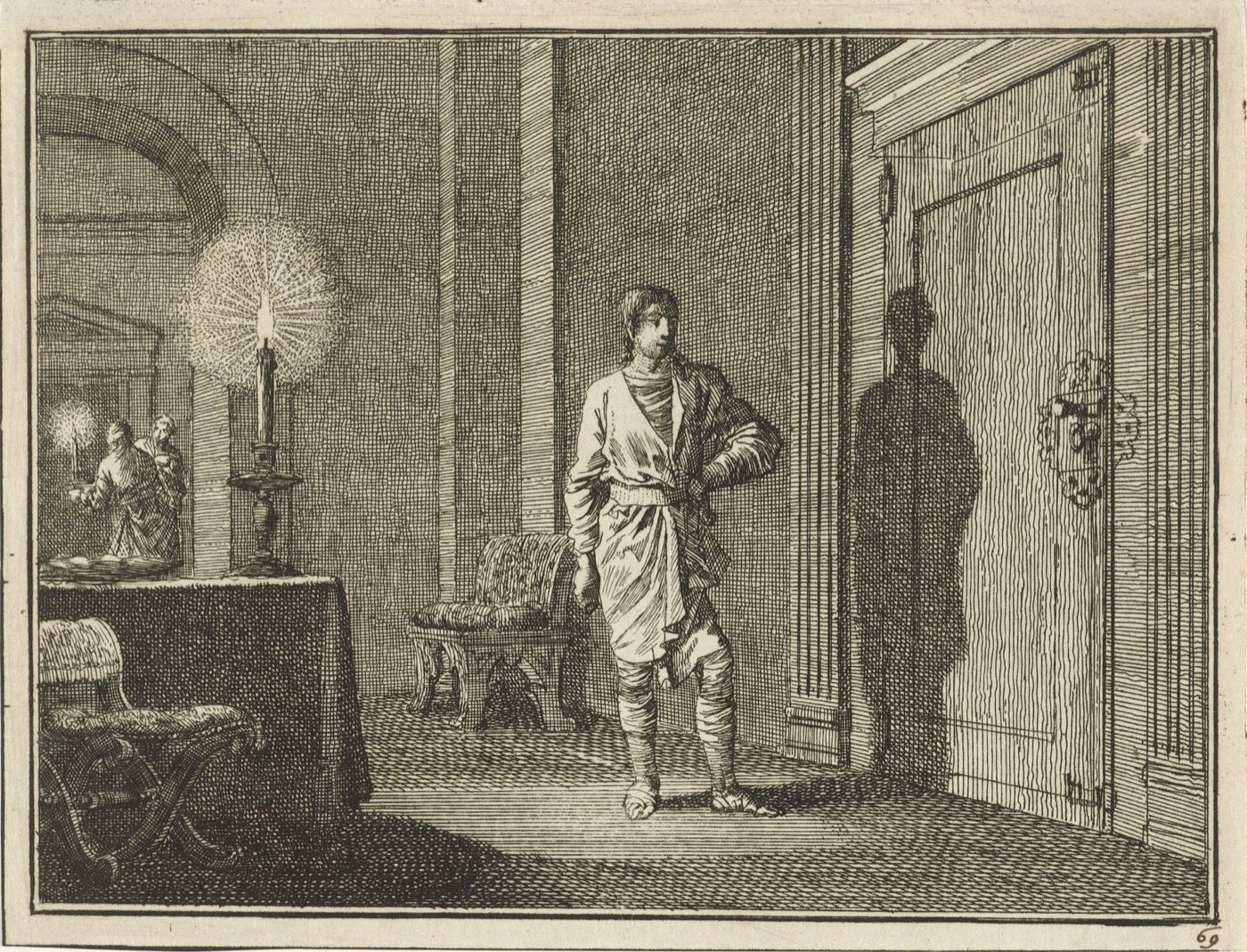
夜里的一间屋子。一个年轻人站在屋子中间,腰里束着带子,一只手叉在腰上,转过头,望着右边那扇关着的门。他的影子投在门上。左边桌上,一支高高的蜡烛点着,光散开来。左后方另一间屋里,一个人手里也拿着一支蜡烛,另一个人站在他身后。你看,这个年轻人在等什么?
扬·吕肯(Jan Luyken),《夜里站着等候主人的仆人的比喻》(Gelijkenis van de dienstknecht die ´s nachts op zijn heer staat te wachten),1712 年,蚀刻版画,荷兰阿姆斯特丹国立博物馆藏。公有领域。 Wikimedia Commons一起读路 12:35-40
(32–34 节)耶稣对门徒说,不要惧怕,要把财宝积在天上(见“当时现场”)。
35“你们腰里要束上带,灯也要点着,
36自己好像仆人等候主人从婚姻的筵席上回来。他来到叩门,就立刻给他开门。
37主人来了,看见仆人儆醒,那仆人就有福了。我实在告诉你们,主人必叫他们坐席,自己束上带,进前伺候他们。
38或是二更天来,或是三更天来,看见仆人这样,那仆人就有福了。
39家主若知道贼什么时候来,就必儆醒,不容贼挖透房屋,这是你们所知道的。
40你们也要预备,因为你们想不到的时候,人子就来了。”
当时现场
前面说了什么。 耶稣刚对门徒说:「你们这小群,不要惧怕,因为你们的父乐意把国赐给你们」(32 节);又说:「因为你们的财宝在哪里,你们的心也在哪里」(34 节)。马亨利说,接着他就嘱咐门徒,要预备好,并且一直预备着,等候基督来,那时凡把财宝积在天上的,都要进去享受。
Matthew Henry, Commentary on the Whole Bible, Vol. V,路 12:22-40。译自英文原著。
看英文原文
He charges them to get ready, and to keep in a readiness for Christ's coming, when all those who have laid up their treasure in heaven shall enter upon the enjoyment of it
束上带,点着灯。 马亨利说,那时的仆人穿长衣,要把衣服掖起来,“不然就挂在身上,碍手碍脚”;点着灯,是为了主人一到,就照着他进屋、上楼到他的房间。
Matthew Henry, Commentary on the Whole Bible, Vol. V,路 12:22-40。译自英文原著。
看英文原文
having their long garments tucked up (which otherwise would hang about them, and hinder them), and their lights burning, with which to light their master into the house, and up to his chamber.
二更天、三更天。 吉尔说,二更是晚上九点到十二点,三更是十二点到三点;婚筵常在夜里,而且很晚才散。
John Gill, Exposition of the Entire Bible,路 12:38。译自英文原著。
看英文原文
for the second watch was from nine o'clock till twelve; and this was coming early from an entertainment, or a wedding, which were commonly kept in the night, and late
for the third watch was from twelve o'clock to three, which was late
后面彼得问了一句。 耶稣讲完,「彼得说:主啊,这比喻是为我们说的呢?还是为众人呢?」(41 节)耶稣接着讲了忠心有见识的管家(42–48 节)。
三卷福音书对照
这一段的话,马太、马可也记了相近的,但分散在别处:
| 路加 | 马太、马可 | |
|---|---|---|
| 等候主人 | 「自己好像仆人等候主人从婚姻的筵席上回来」(路 12:36) | 「把权柄交给仆人,分派各人当作的工,又吩咐看门的儆醒」(可 13:34) |
| 什么时候来 | 「或是二更天来,或是三更天来」(路 12:38) | 「或晚上,或半夜,或鸡叫,或早晨」(可 13:35) |
| 贼 | 「家主若知道贼什么时候来,就必儆醒」(路 12:39) | 「家主若知道几更天有贼来,就必儆醒」(太 24:43) |
| 结论 | 「你们也要预备,因为你们想不到的时候,人子就来了」(路 12:40) | 「所以你们也要预备,因为你们想不到的时候,人子就来了」(太 24:44) |
主人回来、反过来伺候仆人(37 节),只有路加记了。
这些话为什么在两卷书里出现在不同的地方?克拉克说,路加这一段“看来是主在另一次讲的”。马亨利在本章开头说,可以想见,主耶稣在不同的时候、对不同的人讲过同样的道理。
Adam Clarke, Commentary on the Bible,路 12:40;Matthew Henry, Commentary on the Whole Bible, Vol. V,路 12 章导言。译自英文原著。
看英文原文
It is pretty evident that what is related here, from Luke 12:35 to Luke 12:49, was spoken by our Lord at another time.
for we may suppose that our Lord Jesus preached the same doctrines, and pressed the same duties, at several times, in several companies
讲解
看见什么。 仆人有三个样子:腰里束上带,灯点着,主人一叩门就立刻开。这一段说了两次「那仆人就有福了」(37、38 节),都是说醒着等的仆人。然后画面一转,从等主人换成防贼:家主若知道贼什么时候来,就会醒着。最后一句落在门徒身上:「你们也要预备」(40 节)。
为什么不告诉我们时候?马亨利说,若是事先知道什么时候受攻击,人预备好了也算不得什么;正因为不知道,所以要时时警醒。
Matthew Henry, Commentary on the Whole Bible, Vol. V,路 12:22-40。译自英文原著。
看英文原文
We are therefore kept at uncertainty concerning the precise time of his coming that we may be always ready; for it is no thanks to a man to be ready for an attack, if he know beforehand just the time when it will be made
如果我在场。 我是那“小群”里的一个。耶稣刚说不要惧怕,父乐意把国赐给我们;接着就说,要像等主人回来的仆人。马亨利说,我们是基督的仆人,“不只是做工的仆人,也是等候的仆人”。
Matthew Henry, Commentary on the Whole Bible, Vol. V,路 12:22-40。译自英文原著。
看英文原文
Christ is our Master, and we are his servants, not only working servants, but waiting servants
上一课的仆人从田里回来,还要预备晚饭;这一课的仆人,到了半夜还醒着。做工和等候,是同一个仆人的两件事。
神是怎样的神。 37 节是这一段最出人意料的地方:「主人必叫他们坐席,自己束上带,进前伺候他们」。上一课耶稣问:哪有主人会叫仆人先坐下吃饭呢?(路 17:7)这里,主人却真的这样做了。马亨利说,新郎在席上伺候新娘不稀奇,伺候仆人“却不是世人的规矩”。可是耶稣在门徒中间,如同服事人的,有一次他真的束上腰,伺候他们,就是给他们洗脚的时候。
Matthew Henry, Commentary on the Whole Bible, Vol. V,路 12:22-40。译自英文原著。
看英文原文
For the bridegroom to wait upon his bride at table is not uncommon, but to wait upon his servants is not the manner of men; yet Jesus Christ was among his disciples as one that served, and did once, to show his condescension, gird himself, and serve them, when he washed their feet
约翰记下了那一晚:「就离席站起来,脱了衣服,拿一条手巾束腰」(约 13:4)。
和我有什么关系。 等候不是坐着发呆。吉尔说,40 节的预备,“不是一般地预备着,而是实实在在地”活出恩典、尽本分,腰束着,灯点着。
John Gill, Exposition of the Entire Bible,路 12:40。译自英文原著。
看英文原文
Not habitually, but actually, in the exercise of grace, and the discharge of duty, with loins girt, and lights burning.
马亨利说,有福的仆人,是“等了很久,仍旧存着等候的心”的人。主人可能来得早,也可能来得很晚,二更,三更。难的不是醒一个钟头,是醒到他来。
Matthew Henry, Commentary on the Whole Bible, Vol. V,路 12:22-40。译自英文原著。
看英文原文
Blessed are those servants who, after having waited long, continue in a waiting frame, until the hour that their Lord comes
不同的看见
下面三位都是英国的解经家:马亨利(1662–1714)、吉尔(1697–1771)、克拉克(约 1760–1832)。各段都译自英文原著,出处附在后面。
经文自己说的(三家都照这个讲): 主人一定会回来,只是时候不知道;所以仆人要一直醒着,预备好;主人回来看见他们醒着,他们就有福了。下面三处,是读法不同的地方。
一、“人子就来了”,说的是哪一种来?
他讲的是基督再来,“我们的主人虽然现在离开了我们,还要再回来”。讲到 40 节,他又说:“他在我们死的时候来到我们这里,时候是不定的。”
Matthew Henry, Commentary on the Whole Bible, Vol. V,路 12:22-40。译自英文原著。
看英文原文
Christ our Master, though now gone from us, will return again
His coming to us, at our death, is uncertain
他列了三种:基督来,“或是毁灭耶路撒冷,或是在人死的时候,或是来审判”。三种都不知道时候,所以都要预备。
John Gill, Exposition of the Entire Bible,路 12:39。译自英文原著。
看英文原文
could it be known in what time Christ would come, either to the destruction of Jerusalem, or at death, or to judgment
克拉克: 他在这里没有另外讲,只说这一段是主在另一次讲的,请读者看马太 24 章的注。
怎么看: 三家都同意,人子要来,时候没有人知道。至于这里说的“来”,是指主再来,还是也包括人离世、耶路撒冷被毁,以及主再来时会发生哪些事,这一问,各教会的理解不尽相同,请向你所在的教会请教。
二、主人“自己束上带,伺候他们”,是真的吗?
耶稣在世的时候,真的这样做过一次,就是洗门徒的脚。这表明,主耶稣先去为他们预备了地方,将来要怎样欢欢喜喜地接他们进到另一个世界。
Matthew Henry, Commentary on the Whole Bible, Vol. V,路 12:22-40。译自英文原著。
看英文原文
it signified the joy with which they shall be received into the other world by the Lord Jesus, who is gone before, to prepare for them
“不是说基督真会这样做,或是以仆人的样子显现”,而是说他会欢欢喜喜、立刻领他的仆人进入他的喜乐。
John Gill, Exposition of the Entire Bible,路 12:37。译自英文原著。
看英文原文
not that Christ shall really do this, or appear in the form of a servant; but that he shall readily, cheerfully, and at once introduce his servants into his joy
他从当时的风俗讲:从这节可以看出,那时在婚筵上,新郎会像仆人一样伺候客人。
Adam Clarke, Commentary on the Bible,路 12:37。译自英文原著。
看英文原文
it was the custom of those days, as it was, not long since, among us, for the bridegroom, at the wedding supper, to wait as a servant upon the company
怎么看: 三家都说,这是主给醒着的仆人极大的尊荣。分别在于照字面读到什么地步:马亨利指向耶稣真做过的事,吉尔说这是比方,克拉克说是当时婚筵的风俗。经文自己的重点,是「那仆人就有福了」(37 节)。
三、腰带和灯,各指什么?
这一处有一部分是寓意读法:把腰带、灯各对应一样东西。比喻本身只说:仆人预备好了,等主人回来。
腰带是“真理的腰带”,就是「用真理当作带子束腰」(弗 6:14);灯,“或是指圣经”,“或是指信仰的告白”,要保持明亮,还有好行为,照在人前。
John Gill, Exposition of the Entire Bible,路 12:35。译自英文原著。
看英文原文
With the girdle of truth, Ephesians 6:14
may design either the Scriptures of truth
or the lamps of profession, which should be kept clear and bright, and good works
马亨利: 他照字面讲仆人的样子:腰束好了,主人差到哪里就去哪里;灯点着,好照主人进屋(见“当时现场”)。
“要殷勤、果断、预备好;把一切拦阻挪开。”
Adam Clarke, Commentary on the Bible,路 12:35。译自英文原著。
看英文原文
Be active, diligent, determined ready; let all hinderances be removed out of the way
怎么看: 吉尔把每样东西都找了对应,马亨利、克拉克只讲“预备好”这个意思。耶稣自己的落点在 40 节:「你们也要预备,因为你们想不到的时候,人子就来了」。
原文词眼
「主人必叫他们坐席,自己束上带,进前伺候他们」(37 节)
“束上带”,原文是 περιζώννυμι,Thayer 解作“用带子把衣服束在腰间”。他列出的经文,正好有三处在路加:仆人「腰里要束上带」(路 12:35),主人「自己束上带」(路 12:37),主人对仆人说「束上带子伺候我」(路 17:8)。
Thayer's Greek-English Lexicon of the New Testament,G4024。译自英文原著。
看英文原文
to fasten one's clothing about the loins with a girdle
passive, Luke 12:35. Middle to gird oneself: absolutely, Luke 12:37; Luke 17:8
上一课,束带的是仆人;这一课,束带的先是仆人,然后是主人。同一个词,主人和仆人换了位置。
Thayer 还列了两处:保罗说「用真理当作带子束腰」(弗 6:14);约翰在异象中看见人子「胸间束着金带」(启 1:13)。
Thayer's Greek-English Lexicon of the New Testament,G4024。译自英文原著。
看英文原文
with truth as a girdle, figuratively equivalent to to equip oneself with knowledge of the truth, Ephesians 6:14
请思考
没有标准答案,不打分。写下来,只给自己看。
- 耶稣先说「不要惧怕」(路 12:32),然后才说要醒着等。你想到主再来,心里是怕,还是盼望?
- “不只是做工的仆人,也是等候的仆人”。你的信仰生活里,做工多,还是等候多?
- 主人回来,反过来伺候仆人。你想象过主耶稣这样待你吗?读到这里,你有什么感受?
- 如果今晚有人叩门,你最希望自己正在做什么?
这周去做
这一周,想一件“等主人回来以前,我想先做好”的事:一通早该打的电话,一句早该说的对不起,一件答应了还没做的事。
选一件,这周做完。做完的那天晚上,读一遍路 12:37,为那位要“束上带”来伺候我们的主感谢。
延伸参考
- Matthew Henry, Commentary on the Whole Bible, Vol. V:路 12:22-40(英文原著,公有领域,CCEL 可免费读全文)
- 莫理斯(Leon Morris)著,丁道尔新约注释《路加福音》:路 12:35-40
本单元其它比喻单元五 · 门徒训练
- 两种盖房的人 太 7:24-27
- 好撒玛利亚人 路 10:25-37
- 葡萄园工人 太 20:1-16
- 盖楼与打仗 路 14:28-33
- 无用的仆人 路 17:7-10
- 警醒的仆人 路 12:35-40 本课
经文:和合本(1919),用字按本站规则现代化。“不同的看见”里的注释都译自英文原著(公有领域),每段可展开看英文原文。