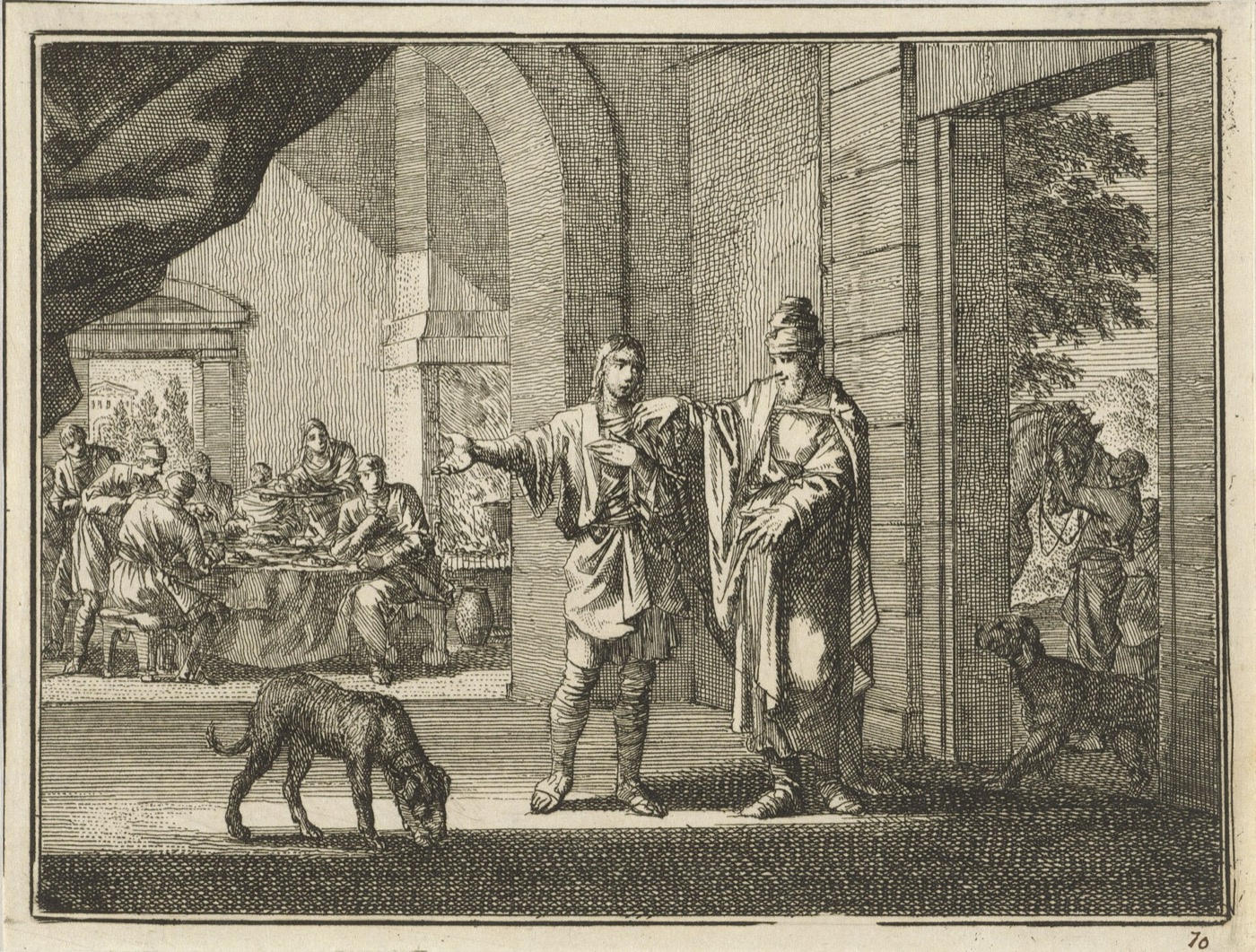
一座大屋子的門口,一位戴著高帽、穿著長袍的老者,和一個年輕人站在一起。年輕人伸出手,指著左邊的屋裡。左邊屋裡,一群人圍著桌子吃飯。右邊門外,有人牽著一匹馬。地上有兩隻狗。你看,年輕人指給老者看的,是什麼?
揚·呂肯(Jan Luyken),《忠心的管家的比喻》(Gelijkenis van de getrouwe huisbezorger),1712 年,蝕刻版畫,荷蘭阿姆斯特丹國立博物館藏。公有領域。呂肯這一張是為路加記的同一段話(路 12:42)刻的。 Wikimedia Commons一起讀太 24:45-51
(42–44 节)耶穌對門徒說,要儆醒,要預備,因為人子來的時候,是想不到的時候(見“當時現場”)。
45“誰是忠心有見識的僕人,為主人所派,管理家裡的人,按時分糧給他們呢?
46主人來到,看見他這樣行,那僕人就有福了。
47我實在告訴你們,主人要派他管理一切所有的。
48倘若那惡僕心裡說:‘我的主人必來得遲’,
49就動手打他的同伴,又和酒醉的人一同吃喝,
50在想不到的日子,不知道的時辰,那僕人的主人要來,
51重重地處治他,定他和假冒為善的人同罪;在那裡必要哀哭切齒了。”
當時現場
前面說了什麼。 耶穌剛說:「所以你們要儆醒,因為不知道你們的主是哪一天來到」(太 24:42);又拿防賊作比方:「家主若知道幾更天有賊來,就必儆醒」(太 24:43);接著說:「所以你們也要預備」(太 24:44)。馬亨利說,為什麼要預備?因為主來的那一天,對預備好的人是極其快樂、安慰的,對沒有預備的人卻是極其悽慘、可怕的。這一則比喻,就是把這兩種結局擺在眼前。
Matthew Henry, Commentary on the Whole Bible, Vol. V,太 24:42-51。譯自英文原著。
看英文原文
Because the issue of our Lord's coming will be very happy and comfortable to those that shall be found ready, but very dismal and dreadful to those that shall not
管理家裡的人。 那時的大戶人家,主人會從僕人當中挑一個,管理全家的僕人。路加記這段話,把這個僕人叫作“管家”(路 12:42)。馬亨利說,大戶人家的管家若管得好,主人常常提拔他,叫他管理全部產業。舊約裡的約瑟就是這樣:「主人派他管理家務,把一切所有的都交在他手裡」(創 39:4)。
Matthew Henry, Commentary on the Whole Bible, Vol. V,太 24:42-51。譯自英文原著。
看英文原文
The allusion is to the way of great men, who, if the stewards of their house conduct themselves well in that place, commonly prefer them to be the managers of their estates
按時分糧。 吉爾說,路加這裡說的是分給他們“當得的一份”;家裡每個人照他的年紀、胃口、消化的能力,都要分到合適的一份。
John Gill, Exposition of the Entire Bible,太 24:45。譯自英文原著。
看英文原文
even "their portion" of it, as in Luke 12:42
everyone in the family, according to his age, appetite, and digestion, is to have his proper part and portion given him
彼得問了一句。 路加記這段話,是在彼得問了一句之後:「主啊,這比喻是為我們說的呢?還是為眾人呢」(路 12:41)。耶穌沒有直接回答“為誰”,卻反問:「誰是那忠心有見識的管家」(路 12:42)。
三卷福音書對照
這一段話,路加也記了,幾乎逐字相同;馬可沒有記這一則:
| 馬太 | 路加 | |
|---|---|---|
| 怎樣稱呼 | 「誰是忠心有見識的僕人」(45 節) | 「誰是那忠心有見識的管家」(路 12:42) |
| 惡僕打誰 | 「就動手打他的同伴」(49 節) | 「就動手打僕人和使女」(路 12:45) |
| 怎樣吃喝 | 「又和酒醉的人一同吃喝」(49 節) | 「並且吃喝醉酒」(路 12:45) |
| 和誰同罪 | 「定他和假冒為善的人同罪」(51 節) | 「定他和不忠心的人同罪」(路 12:46) |
「在那裡必要哀哭切齒了」(51 節),只有馬太記了。路加接著還多兩節:「因為多給誰,就向誰多取;多託誰,就向誰多要」(路 12:48)。
“假冒為善的人”和“不忠心的人”,哪一個是耶穌原來的話?吉爾說,很可能兩種說法耶穌都用過。
John Gill, Exposition of the Entire Bible,太 24:51。譯自英文原著。
看英文原文
very likely both phrases were used by Christ
講解
看見什麼。 兩個僕人,同一個主人,同一個職分,同樣不知道主人什麼時候回來。分別只在一件事:主人不在的這段日子,各人做了什麼。一個照著吩咐,按時分糧;一個心裡說「我的主人必來得遲」(48 節),就打同伴,和醉酒的人吃喝。
45 節是一句問話:「誰是忠心有見識的僕人」。馬亨利說,這一問暗示,合乎這個樣子的人不多。
Matthew Henry, Commentary on the Whole Bible, Vol. V,太 24:42-51。譯自英文原著。
看英文原文
Which supposes that there are but few who answer this character
“忠心”和“有見識”是兩樣。馬亨利說:作個好僕人,老實或許就夠了;作個好管家,還要有智慧。
Matthew Henry, Commentary on the Whole Bible, Vol. V,太 24:42-51。譯自英文原著。
看英文原文
Honesty may suffice for a good servant, but wisdom is necessary to a good steward
如果我在場。 我是門徒,剛剛聽耶穌說要儆醒、要預備。惡僕的事,不是從打人開始的,是從心裡一句話開始的:「我的主人必來得遲」。馬亨利說,他作惡的根源,是在實際上不信基督會再來;他又說,那些嘴裡喊“主啊,主啊”的人心裡說什麼,基督都知道。
Matthew Henry, Commentary on the Whole Bible, Vol. V,太 24:42-51。譯自英文原著。
看英文原文
The cause of his wickedness; and that is, a practical disbelief of Christ's second coming
Christ knows what they say in their hearts
神是怎樣的神。 主人回來,看見僕人這樣行,「主人要派他管理一切所有的」(47 節)。馬亨利說,世上最仁慈的主人給他最可靠的僕人的尊榮,和主耶穌在來世要賜給忠心警醒的僕人那極重的榮耀相比,算不得什麼。
Matthew Henry, Commentary on the Whole Bible, Vol. V,太 24:42-51。譯自英文原著。
看英文原文
But the greatest honour which the kindest master ever did to his most tried servants in this world, is nothing to that weight of glory which the Lord Jesus will confer upon his faithful watchful servants in the world to come.
主人“來得遲”,也不是主人的錯。馬亨利說,基督遲延來到,是他忍耐的恩典,卻被惡人大大地濫用。彼得後來也寫道:「其實不是躭延,乃是寬容你們」(彼後 3:9)。
Matthew Henry, Commentary on the Whole Bible, Vol. V,太 24:42-51。譯自英文原著。
看英文原文
The delay of Christ's coming, though it is a gracious instance of his patience, is greatly abused by wicked people
和我有什麼關係。 惡僕打的,是「他的同伴」(49 節)。馬亨利說,就是管家,也要把家裡所有的僕人看作同作僕人的,所以不可轄管他們。
Matthew Henry, Commentary on the Whole Bible, Vol. V,太 24:42-51。譯自英文原著。
看英文原文
Even the stewards of the house are to look upon all the servants of the house as their fellow servants, and therefore are forbidden to lord it over them.
有福的僕人,是主人來的時候「看見他這樣行」(46 節)的人:不是主人快到了才忙起來,而是一直在做。馬亨利記了一件事:有人勸加爾文少做一點,他有些不高興地回答:“什麼,你要我的主人來的時候,看見我閒著嗎?”
Matthew Henry, Commentary on the Whole Bible, Vol. V,太 24:42-51。譯自英文原著。
看英文原文
When Calvin was persuaded to remit his ministerial labours, he answered, with some resentment, "What, would you have my Master find me idle?"
下一課,耶穌接著說:「那時,天國好比十個童女,拿著燈,出去迎接新郎」(太 25:1)。等候的人,還是那個問題:主來得遲,你怎樣等?
不同的看見
下面三位都是英國的解經家:馬亨利(1662–1714)、吉爾(1697–1771)、克拉克(約 1760–1832)。各段都譯自英文原著,出處附在後面。
經文自己說的(三家都照這個講): 主人一定會回來,時候不知道;主人回來看見僕人忠心做事,就賞他;看見僕人欺壓同伴、放縱自己,就重重地處治他。下面三處,是讀法不同的地方。
一、這個僕人是誰?
這個比喻適用於所有基督徒,因為他們都承認自己是神的僕人、也有作僕人的本分;但看來特別是對傳道人的警戒,因為這裡說的僕人是一個管家。
Matthew Henry, Commentary on the Whole Bible, Vol. V,太 24:42-51。譯自英文原著。
看英文原文
this parable, with which the chapter closes, is applicable to all Christians, who are in profession and obligation God's servants; but it seems especially intended as a warning to ministers; for the servant spoken of is a steward
他從路加記的彼得那一問講:耶穌這樣回答,看來更是特別為門徒說的,雖然也可以用在別人身上;“管家”這個名字,正合使徒和傳道的人。
John Gill, Exposition of the Entire Bible,太 24:45。譯自英文原著。
看英文原文
by this answer, it looks as if it was more especially designed for them, though it may be applied to other
a name that is very proper for the apostles and ministers of the word
他先說,人人都該這樣等候基督來,像僕人等候出門的主人回來;然後說,這裡是一份“傳道人本分的摘要”,列了六樣:是主差派的,不是自己派的;是僕人,不是家主;要忠心;要有智慧;要給家裡的人真正有養分的食物;要按時。
Adam Clarke, Commentary on the Bible,太 24:45。譯自英文原著。
看英文原文
All should live in the same expectation of the coming of Christ, which a servant has with respect to the return of his master
Here is an abstract of the duties of a minister of Christ.
怎麼看: 三家都說,這話是對所有跟從基督的人說的,又特別對在教會裡受託照管人的說。輕重不同:馬亨利、克拉克兩層都講,吉爾更偏重使徒和傳道人。路加記耶穌最後的話是:「多給誰,就向誰多取」(路 12:48)。
二、「重重地處治他」:是怎樣的處治?
他列了兩種讀法:一種是“把他從活人之地剪除”,從義人的會中剪除;一種照英文譯本讀作“把他切開”,就是叫他的靈魂和身體分開。
Matthew Henry, Commentary on the Whole Bible, Vol. V,太 24:51。譯自英文原著。
看英文原文
"he shall cut him off from the land of the living," from the congregation of the righteous
Or, as we read it, shall cut him asunder, that is, part body and soul
他也提到古時把人切開的刑罰,但說這裡不可照字面理解,不是說這個惡僕要受那樣的肉身之死,而是說他要受最重的刑罰。
John Gill, Exposition of the Entire Bible,太 24:51。譯自英文原著。
看英文原文
It must not here be understood literally, that this wicked servant should be put to such a corporeal death; but that he should be punished in the severest manner
他說這是古時幾個國家都用過的刑罰。他又把惡僕的三樣罪和三樣刑罰對著列:不信主快來,就忽然受審判;在教會裡濫用權柄,就被隔絕於聖徒的交通;放縱肉體,就和假冒為善的人一同哀哭。
Adam Clarke, Commentary on the Bible,太 24:50-51。譯自英文原著。
看英文原文
This refers to an ancient mode of punishment used in several countries.
A separation from the communion of saints, and from all the gifts which he has abused: this answers to the abuse of his authority in the Church of Christ.
怎麼看: 三家都說,這是極重的刑罰。分別在於這個詞要照字面讀到什麼地步。經文自己接著說的是:「定他和假冒為善的人同罪;在那裡必要哀哭切齒了」(51 節)。這個詞本身,見下面的“原文詞眼”。
三、這個惡僕,原本是不是主的僕人?
經文稱他「那惡僕」(48 節),稱他的主是「那僕人的主人」(50 節)。這一處,三家說法相近,但再往前一步,就碰到各教會理解不同的地方。
這個惡僕也許有恩賜、有才幹,甚至在教會裡身居高位,卻沒有神的恩典。主是他的主,“不是憑救贖和恩典,而是憑創造和他的告白”。
John Gill, Exposition of the Entire Bible,太 24:48、24:50。譯自英文原著。
看英文原文
though he may have gifts and talents, yet destitute of the grace of God
Not by redemption and grace, but by creation and profession
他說,這個僕人就是那種嘴裡喊“主啊,主啊”的人;人中最壞的是惡的基督徒,惡的基督徒當中最壞的是惡的傳道人。
Matthew Henry, Commentary on the Whole Bible, Vol. V,太 24:42-51。譯自英文原著。
看英文原文
who with their lips cry, Lord, Lord, as this servant here
the vilest of men is a wicked Christian, and the vilest of them a wicked minister
他也許不在外面說出來,卻在心裡說;神鑑察他的心,知道他教導的,他自己並不相信。
Adam Clarke, Commentary on the Bible,太 24:48。譯自英文原著。
看英文原文
It may be, he does not outwardly profess this, but he says it in his heart, and God searches his heart, and knows that he professes to teach what he does not believe.
怎麼看: 三家都說,這個惡僕口裡稱主,心裡卻不信主會來。至於一個真信主的人會不會最終失落,一個人怎樣知道自己是忠心的僕人,這一問,各教會的理解不盡相同,請向你所在的教會請教。
原文詞眼
「重重地處治他,定他和假冒為善的人同罪」(51 節)
“重重地處治”,原文是 διχοτομέω,字面是“切成兩半”。Thayer 說,舊約希臘文譯本用它說把祭牲切成塊子:「要把羊切成塊子」(出 29:17);新約只用了兩次,就是這裡和路 12:46。
Thayer's Greek-English Lexicon of the New Testament,G1371。譯自英文原著。
看英文原文
to cut into two parts (Exodus 29:17): Matthew 24:51; Luke 12:46
Thayer 接著說,許多人以為這裡指古時把人切成兩半的酷刑;但後面的話暗示,這個受刑的人還活著(還要「定他和假冒為善的人同罪」),所以這個解釋站不住;這裡更宜譯作“用鞭子重重地責打”。
Thayer's Greek-English Lexicon of the New Testament,G1371。譯自英文原著。
看英文原文
in these passages many suppose reference to be made to that most cruel mode of punishment
But in the text the words which follow, and which imply that the one thus 'cut asunder' is still surviving, oppose this interpretation; so that here the word is more fitly translated cut up by scourging, scourge severely
和合本譯作「重重地處治他」,沒有照字面譯作“切開”,正合 Thayer 這一讀法。路加在下一節也說:「那僕人必多受責打」(路 12:47)。“不同的看見”第二處三家的分別,就在這個詞上。
請思考
沒有標準答案,不打分。寫下來,只給自己看。
- 惡僕的事,是從心裡一句「我的主人必來得遲」開始的。你心裡有沒有類似的一句話?
- “作個好僕人,老實或許就夠了;作個好管家,還要有智慧。”在你受託的事上(家裡、工作、教會),你更缺哪一樣?
- 你身邊有哪些人,是主交給你“按時分糧”的?他們現在需要的“一份”是什麼?
- 如果主人今天回來,你希望他看見你正在做什麼?
這週去做
想一個主交在你手裡、你可以照顧的人:家裡的孩子或老人、小組裡的弟兄姊妹、同事、鄰居。
這一週,為他“按時分糧”一次:一頓飯、一通電話、一段經文、一段時間的陪伴,照他需要的給。做完那天晚上,讀一遍 46 節:「主人來到,看見他這樣行,那僕人就有福了。」
延伸參考
- Matthew Henry, Commentary on the Whole Bible, Vol. V:太 24:42-51(英文原著,公有領域,CCEL 可免費讀全文)
- 法蘭士(R. T. France)著,丁道爾新約註釋《馬太福音》,校園書房出版社(ISBN 9789575874988):太 24:45-51
本單元其它比喻單元八 · 末世
- 無花果樹發芽 太 24:32-35
- 忠心與惡僕 太 24:45-51 本課
- 十個童女 太 25:1-13
- 綿羊山羊 太 25:31-46
經文:和合本(1919),用字按本站規則現代化。「不同的看見」裡的註釋都譯自英文原著(公有領域),每段可展開看英文原文。