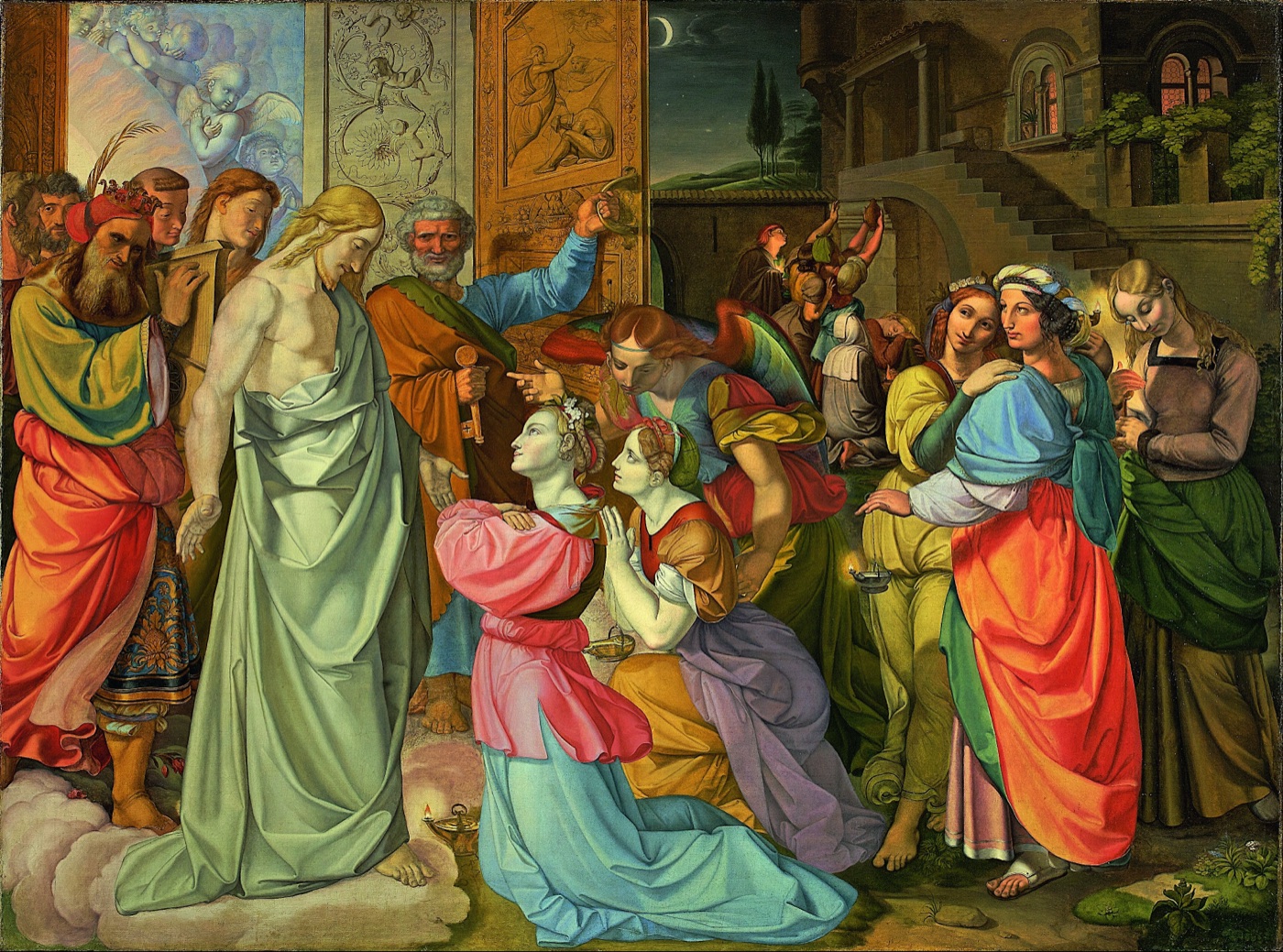
一扇大門正要關上。門邊站著一個披長袍的人,一位老人一手拿著鑰匙,一手握著門環。門前兩個女子跪著,仰頭望著門裡;右邊幾個女子擠在一起,有人低頭護著手裡的小燈。天上掛著一彎月亮,是夜裡。畫家把誰畫在門裡,誰畫在門外?
彼得·馮·科內利烏斯(Peter von Cornelius)《聰明與愚拙童女的比喻》(The Parable of Wise and Foolish Virgins,未完成),約 1813–1816 年,油畫,德國杜塞爾多夫藝術宮博物館藏。公有領域。 Wikimedia Commons一起讀太 25:1-13
1“那時,天國好比十個童女拿著燈,出去迎接新郎。
2其中有五個是愚拙的,五個是聰明的。
3愚拙的拿著燈,卻不預備油;
4聰明的拿著燈,又預備油在器皿裡。
5新郎遲延的時候,她們都打盹睡著了。
6半夜有人喊著說:‘新郎來了,你們出來迎接他!’
7那些童女就都起來收拾燈。
8愚拙的對聰明的說:‘請分點油給我們,因為我們的燈要滅了。’
9聰明的回答說:‘恐怕不夠你我用的;不如你們自己到賣油的那裡去買吧。’
10她們去買的時候,新郎到了。那預備好了的,同他進去坐席,門就關了。
11其餘的童女隨後也來了,說:‘主啊,主啊,給我們開門!’
12他卻回答說:‘我實在告訴你們,我不認識你們。’
13所以,你們要儆醒,因為那日子、那時辰,你們不知道。”
當時現場
誰在場。 這是耶穌受難前幾天,在橄欖山上。門徒私下來問他:「什麼時候有這些事?你降臨和世界的末了,有什麼預兆呢」(太 24:3)。耶穌講了很多,其中一句是:「但那日子、那時辰,沒有人知道,連天上的使者也不知道,子也不知道,惟獨父知道」(太 24:36)。
一連幾個比喻。 接著耶穌說:「所以你們要儆醒,因為不知道你們的主是哪一天來到」(太 24:42),又講了忠心和惡僕的比喻(太 24:45-51)、十個童女、按才受託(太 25:14-30)。惡僕心裡說「我的主人必來得遲」(太 24:48),十個童女的比喻說「新郎遲延的時候」(5 節)。Thayer 的希臘文辭典把這兩處列在同一個詞下:“耽延,遲延”。
Thayer's Greek-English Lexicon of the New Testament,G5549。译自英文原著。
看英文原文
to linger, delay, tarry: Matthew 25:5
followed by an infinitive, Matthew 24:48
夜裡迎新郎。 馬亨利說,這是“猶太人有時用的風俗”:新郎在夜裡很晚的時候,由朋友陪著到新娘家去,陪伴新娘的女子聽到新郎快到了,就拿著燈出去,照著他進門。克拉克也說:“猶太人的婚禮通常在夜裡舉行。”所以燈要點著,油要夠。
Matthew Henry, Commentary on the Whole Bible, Vol. V,太 25:1-13;Adam Clarke, Commentary on the Bible,太 25:6。译自英文原著。
看英文原文
It was a custom sometimes used among the Jews on that occasion, that the bridegroom came, attended with his friends, late in the night, to the house of the bride
The Jewish weddings were generally celebrated in the night
十個童女,放在一起看:
| 愚拙的五個 | 聰明的五個 | |
|---|---|---|
| 一開始 | 「拿著燈,卻不預備油」(3 節) | 「拿著燈,又預備油在器皿裡」(4 節) |
| 新郎遲延 | 都打盹睡著了(5 節) | 都打盹睡著了(5 節) |
| 半夜聽見喊聲 | 「都起來收拾燈」,可是「我們的燈要滅了」(7–8 節) | 「都起來收拾燈」(7 節) |
| 結果 | 去買油,回來時「門就關了」(10 節) | 「同他進去坐席」(10 節) |
十個人一樣拿著燈,一樣出去迎接,一樣睡著了,一樣被喊醒。只有一件事不一樣:有沒有帶油。
講解
看見什麼。 十個童女看起來都一樣:都拿著燈,都出去迎接新郎(1 節)。新郎來晚了,「她們都打盹睡著了」(5 節),聰明的也睡了,比喻沒有為這件事責備誰。
分別是在半夜才顯出來的。喊聲一來,十個人都起來收拾燈;愚拙的發現:「我們的燈要滅了」(8 節)。她們向聰明的借油,聰明的說「恐怕不夠你我用的」(9 節)。馬亨利留意到,聰明的童女“沒有責備愚拙的疏忽,沒有誇自己有先見,也沒有說叫人絕望的話,而是在那光景下給了她們最好的勸告”。
Matthew Henry, Commentary on the Whole Bible, Vol. V,太 25:1-13。译自英文原著。
看英文原文
These wise virgins do not upbraid the foolish with their neglect, nor boast of their own forecast, nor torment them with suggestions tending to despair, but give them the best advice the case will bear
可是去買油要時間。「她們去買的時候,新郎到了」(10 節)。
如果我在場。 門徒問的是“什麼時候”(太 24:3)。耶穌沒有給他們一個日子,而是講了十個人怎樣等。比喻的最後一句,回答了他們的問題:「那日子、那時辰,你們不知道」(13 節)。不知道,所以要預備。
“聰明”這個詞,Thayer 的辭典解釋是“精明,懂得顧到自己的事”;他列的經文裡,還有那「好比一個聰明人,把房子蓋在磐石上」(太 7:24),和那「忠心有見識的僕人」(太 24:45)。在馬太福音裡,這幾個“聰明人”都是同一種人:聽了就去行,主人不在的時候也照樣忠心。
Thayer's Greek-English Lexicon of the New Testament,G5429。译自英文原著。
看英文原文
prudent, i. e. mindful of one's interests: Matthew 10:16; Matthew 24:45; Luke 12:42; opposed to μωρός, Matthew 7:24
神是怎樣的神。 新郎會遲延,但新郎一定會來:「半夜有人喊著說:新郎來了」(6 節)。馬亨利說:“基督雖然遲延,過了我們以為的時候,卻不會過了他所定的時候。”
Matthew Henry, Commentary on the Whole Bible, Vol. V,太 25:1-13。译自英文原著。
看英文原文
But though Christ tarry past our time, he will not tarry past the due time.
門關了以後,外面的人說「主啊,主啊,給我們開門」,聽見的是「我不認識你們」(11–12 節)。這句話很重。耶穌在登山寶訓的末了也說過:「凡稱呼我主啊、主啊的人,不能都進天國;惟獨遵行我天父旨意的人,才能進去」(太 7:21),那裡也有一句「我從來不認識你們」(太 7:23)。這比喻不是要我們去猜誰在門外,而是要我們自己現在就預備。
和我有什麼關係。 油借不來,也不能在最後一刻才去買。馬亨利說:“得著恩典是要時間的工夫,不能匆匆忙忙地做成。”
Matthew Henry, Commentary on the Whole Bible, Vol. V,太 25:1-13。译自英文原著。
看英文原文
Getting grace is a work of time, and cannot be done in a hurry.
十個人都有燈,從外面看不出誰有油。有沒有油,是在平常的日子裡,一點一點預備的。
不同的看見
下面三位都是英國的解經家:馬亨利(1662–1714)、吉爾(1697–1771)、克拉克(約 1760–1832)。各段都譯自英文原著,出處附在後面。
經文自己說的(三家都照這個講): 十個童女的分別,在有沒有預備油(3–4 節);「那預備好了的」進去坐席,門就關了(10 節);耶穌的結論是「所以,你們要儆醒,因為那日子、那時辰,你們不知道」(13 節)。下面三處,是經文沒有講明、歷代讀法不同的地方。
一、油代表什麼?
“心就是那器皿”;“恩典就是我們這器皿裡要有的油”。
Matthew Henry, Commentary on the Whole Bible, Vol. V,太 25:1-13。译自英文原著。
看英文原文
The heart is the vessel, which it is our wisdom to get furnished
Grace is the oil which we must have in this vessel
油“不是指今生的福氣,不是指屬靈的福氣,不是指福音,也不是指聖靈的恩賜……而是指神的靈自己”,“或是聖靈在人歸正時種在人心裡的重生、成聖的恩典”。
John Gill, Exposition of the Entire Bible,太 25:3。译自英文原著。
看英文原文
by oil is meant, not temporal blessings, nor spiritual ones, nor the Gospel, nor the gifts of the Spirit, all which are sometimes signified by oil; but either the Spirit of God himself
or the regenerating and sanctifying grace of the Spirit, even all the graces which are implanted by him in conversion
“油,是神的恩典和救恩,或那使人生發仁愛的信心。器皿,是盛油的心。燈,是自稱享有基督福音光明的那份宣認。”
Adam Clarke, Commentary on the Bible,太 25:1。译自英文原著。
看英文原文
The oil, the grace and salvation of God, or that faith which works by love. The vessel, the heart in which this oil is contained. The lamp, the profession of enjoying the burning and shining light of the Gospel of Christ.
怎麼看: 這是寓意讀法:給每一樣東西找一個對應。三家都把器皿讀成心,把油讀成裡面的東西:馬亨利說恩典,吉爾說聖靈或聖靈的恩典,克拉克說恩典、救恩或信心。耶穌自己沒有說油是什麼。他說的是:有油的是「那預備好了的」(10 節),結論是「你們要儆醒」(13 節)。三家的讀法有一點是一樣的:燈是外面看得見的,油是裡面的,外面一樣,裡面不一樣。
二、“都打盹睡著了”,是說什麼?
是鬆懈:“好像她們已經不再盼望他來了。”“聰明的童女保住了燈火,卻沒有保住自己醒著。”他又說:“古時的人大多把童女的打盹睡覺理解為死……加爾文也這樣講。但我認為,還是照我們上面所講的理解為好。”
Matthew Henry, Commentary on the Whole Bible, Vol. V,太 25:1-13。译自英文原著。
看英文原文
They all slumbered and slept; as if they had given over looking for him
The wise virgins kept their lamps burning, but did not keep themselves awake.
The ancients generally understood the virgins' slumbering and sleeping of their dying
So Calvin. But I think it is rather to be taken as we have opened it.
讀作死亡:“聖經常用睡覺指死,所以睡覺之前的打盹,可以看作指死之前身體的衰退和疾病。”
Adam Clarke, Commentary on the Bible,太 25:5。译自英文原著。
看英文原文
As sleep is frequently used in the sacred writings for death, so drowsiness, which precedes sleep, may be considered as pointing out the decays of the constitution, and the sicknesses which precede death.
“這打盹睡覺,不是指身體的死”,而是“聰明的童女死氣沉沉、昏昏欲睡的屬靈光景”。
John Gill, Exposition of the Entire Bible,太 25:5。译自英文原著。
看英文原文
by this slumber, and sleep, is not meant a natural death
but a dead, lifeless, and sleepy frame of spirit in the wise virgins
怎麼看: 三家正好三種讀法:馬亨利說是鬆懈,克拉克說是死,吉爾說是屬靈上的昏沉。經文自己說的是:十個「都打盹睡著了」(5 節),聰明的也一樣,比喻沒有為睡覺責備誰;分別她們的,是有沒有油。所以 13 節的“儆醒”,不只是不睡覺,更是「預備好了」(10 節)。
三、新郎遲延,指多久?指什麼時候?
這段遲延的時期,“或是從基督昇天到他來向猶太人施行報應,或是從那時到他第二次再來”;他又說,“這段時期似乎就是老底嘉教會那種光景所指的時期,接著就是基督再來和末後的審判”。
John Gill, Exposition of the Entire Bible,太 25:5。译自英文原著。
看英文原文
The space of time here referred to, is either from the ascension of Christ, to his coming to take vengeance on the Jews; or from thence to his second coming
this interval of time seems to regard that period which is pointed out by the Laodicean church state, which will usher in the coming of Christ, and the last judgment
“新郎來到一個人那裡,可以指這人的死;來到世界,是最後的審判。遲延,在前一種是從人出生到死的那段時間,在後一種是從世界開始到末了的那段時間。”他又說,這個比喻“看來同時關乎”耶路撒冷被毀和審判的日子。
Adam Clarke, Commentary on the Bible,太 25:1、5。译自英文原著。
看英文原文
The coming of the bridegroom to an individual may imply his death: his coming to the world - the final judgment. The delay - the time from a man's birth till his death, in the first case; in the second, the time from the beginning to the end of the world.
for the parable appears to relate to both those periods
“我們確定要來的事,常以為就在眼前;使徒時代就有許多人以為主的日子到了,其實不是。”
Matthew Henry, Commentary on the Whole Bible, Vol. V,太 25:1-13。译自英文原著。
看英文原文
What we look for as certain, we are apt to think is very near; many in the apostles' times imagined that the day of the Lord was at hand, but it is not so.
怎麼看: 遲延多久,指的是哪一段時期,三家說法不同:吉爾把它連到教會歷史的某個時期,克拉克說可以指人的一生,也可以指世界的末了,馬亨利提醒人不要以為就在眼前。經文自己說的只有一句:「那日子、那時辰,你們不知道」(13 節),耶穌在前一章也說「沒有人知道」(太 24:36)。主再來的時候與次序,這一問,各教會的理解不盡相同,請向你所在的教會請教。
原文詞眼
比喻的最後一句:「所以,你們要儆醒」(13 節)。
Thayer 的希臘文辭典解釋,這個詞從“從睡中被喚醒、醒著”來,本義是“守望、醒著”;比喻的意思是“專心留意,小心,警覺——免得因為鬆懈懶惰,忽然遭遇大禍”,他列的經文正有太 24:42 和太 25:13。
Thayer's Greek-English Lexicon of the New Testament,G1127。译自英文原著。
看英文原文
from ἐγρήγορα, to have been roused from sleep, to be awake
Metaphorically, to watch i. e. give strict attention to, be cautious, active: — to take heed lest through remissness and indolence some destructive calamity suddenly overtake one, Matthew 24:42; Matthew 25:13
有意思的是,比喻裡十個童女都睡著了(5 節),耶穌的結論仍是“儆醒”。這裡的儆醒,不是一夜不睡,而是 Thayer 說的“不鬆懈”:在平常的日子裡,把油預備好。保羅也這樣勸人:「所以我們不要睡覺,像別人一樣,總要儆醒謹守」(帖前 5:6)。
請思考
沒有標準答案,不打分。寫下來,只給自己看。
- 十個童女從外面看都一樣。你的信仰裡,有哪些是“燈”(別人看得見的),哪些是“油”(只有神看得見的)?
- 新郎遲延,十個都睡著了。你有沒有過一段日子,等神等得累了,信心也打起盹來?
- 愚拙的想在最後一刻借油。你有沒有什麼事,一直想“以後再說”?
- 再看一次科內利烏斯的畫:門正要關上,門前有人跪著,有人護著手裡的小燈。如果你在這幅畫裡,你在哪裡?
這週去做
這週每天留出十分鐘,不為別的事,只讀經、禱告——就當是往器皿裡添一點油。
想一件你一直說“以後再說”的、和神有關的事(一次和好、一個認罪、一個答應過的服事),這週去做第一步。
週末問自己:這一週,我的燈裡還有油嗎?
延伸參考
- Matthew Henry, Commentary on the Whole Bible, Vol. V:太 25:1-13(英文原著,公有領域,CCEL 可免費讀全文)
- 法蘭士(R. T. France)著,丁道爾新約註釋《馬太福音》,校園書房出版社(ISBN 9789575874988):太 25:1-13
- 施諾格拉斯《主耶穌的比喻》:十個童女一章
本單元其它比喻單元八 · 末世
- 無花果樹發芽 太 24:32-35 即將上線
- 忠心與惡僕 太 24:45-51 即將上線
- 十個童女 太 25:1-13 本課
- 綿羊山羊 太 25:31-46 即將上線
經文:和合本(1919),用字按本站規則現代化。「不同的看見」裡的註釋都譯自英文原著(公有領域),每段可展開看英文原文。