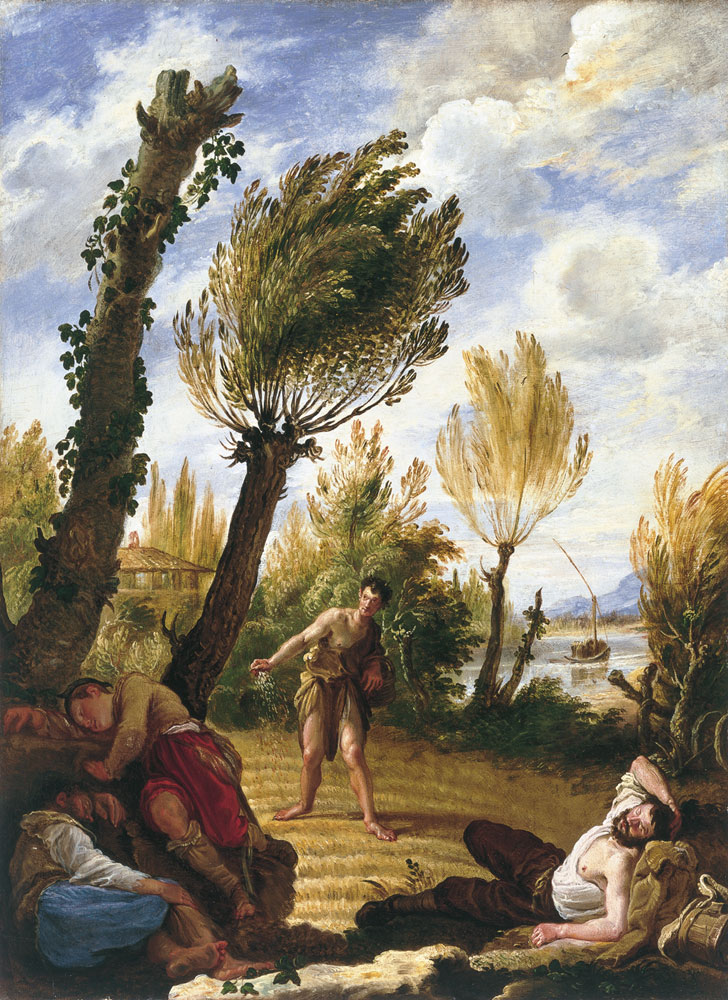
一片剛翻過的田,地上一壟一壟。田中間,一個光著腳的人走過來,腰邊掛著一個袋子,一隻手正往地上撒。前面的樹下,有三個人睡著了:一個趴在樹根上,一個縮著身子低著頭,一個仰面躺著,手搭在頭上。遠處有房子、河和一隻小船;樹被風吹得彎向一邊。他撒的是什麼?睡著的人知道嗎?
多梅尼科·費蒂(Domenico Fetti)《稗子的比喻》(The Parable of the Weeds),約 1622 年,油畫木板,西班牙馬德里提森-博內米薩博物館藏。公有領域。 Wikimedia Commons一起讀太 13:24-30、36-43
24耶穌又設個比喻對他們說:“天國好像人撒好種在田裡,
25及至人睡覺的時候,有仇敵來,將稗子撒在麥子裡,就走了。
26到長苗吐穗的時候,稗子也顯出來。
27田主的僕人來告訴他說:‘主啊,你不是撒好種在田裡嗎?從哪裡來的稗子呢?’
28主人說:‘這是仇敵作的。’僕人說:‘你要我們去薅出來嗎?’
29主人說:‘不必,恐怕薅稗子,連麥子也拔出來。
30容這兩樣一齊長,等著收割。當收割的時候,我要對收割的人說,先將稗子薅出來,捆成捆,留著燒;惟有麥子,要收在倉裡。’”
(31–35 节)耶穌又講了芥菜種、面酵兩個比喻(見那兩課)。
36當下耶穌離開眾人,進了房子。他的門徒進前來說:“請把田間稗子的比喻講給我們聽。”
37他回答說:“那撒好種的,就是人子;
38田地,就是世界;好種,就是天國之子;稗子,就是那惡者之子;
39撒稗子的仇敵,就是魔鬼;收割的時候,就是世界的末了;收割的人,就是天使。
40將稗子薅出來用火焚燒,世界的末了也要如此。
41人子要差遣使者,把一切叫人跌倒的和作惡的,從他國裡挑出來,
42丟在火爐裡,在那裡必要哀哭切齒了。
43那時,義人在他們父的國裡,要發出光來,像太陽一樣。有耳可聽的,就應當聽!”
當時現場
誰在場。 還是撒種比喻的那一天:「當那一天,耶穌從房子裡出來,坐在海邊」(太 13:1),人太多,他上了船,對岸上的眾人講。稗子是這一天講的第二個比喻。講完以後,耶穌進了房子,門徒才來問他(36 節)。馬亨利說,耶穌先前解釋撒種的比喻,是門徒沒有問就講了;這一個,是他們來問了才講的。
Matthew Henry, Commentary on the Whole Bible, Vol. V,太 13:24-43。译自英文原著。
看英文原文
Christ had expounded the foregoing parable unasked, but for the exposition of this they ask him.
人睡覺的時候。 「及至人睡覺的時候,有仇敵來」(25 節)。睡覺不是錯,人總要睡覺。馬亨利說:“人總得有睡覺的時候,這是沒法子的事”;所以要叫教會里一個假冒的人也沒有,就像農夫睡著的時候攔住仇敵糟蹋他的田一樣,是做不到的。
Matthew Henry, Commentary on the Whole Bible, Vol. V,太 13:24-43。译自英文原著。
看英文原文
It was while men slept; and there is no remedy but men must have some sleeping time.
It is as impossible for us to prevent hypocrites being in the church, as it is for the husbandman, when he is asleep, to hinder an enemy from spoiling his field.
耶穌自己的解釋。 這個比喻,耶穌自己講明瞭大部分(37–39 節)。下面這張表,就是讀這一課的定盤星:
| 比喻裡 | 耶穌說 |
|---|---|
| 撒好種的人 | 「那撒好種的,就是人子」(37 節) |
| 田 | 「田地,就是世界」(38 節) |
| 好種(麥子) | 「好種,就是天國之子」(38 節) |
| 稗子 | 「稗子,就是那惡者之子」(38 節) |
| 撒稗子的仇敵 | 「撒稗子的仇敵,就是魔鬼」(39 節) |
| 收割的時候 | 「收割的時候,就是世界的末了」(39 節) |
| 收割的人 | 「收割的人,就是天使」(39 節) |
耶穌沒有解釋的,有兩樣:睡覺的“人”是誰,來問話的“僕人”是誰。
講解
看見什麼。 僕人問了兩個問題:「從哪裡來的稗子呢」(27 節)?「你要我們去薅出來嗎」(28 節)?主人回答了兩句:「這是仇敵作的」(28 節);「不必,恐怕薅稗子,連麥子也拔出來」(29 節)。
第一句說明:稗子不是主人撒的。第二句說明:主人知道有稗子,卻不急著拔,要「容這兩樣一齊長,等著收割」(30 節)。
如果我在場。 門徒跟著耶穌,看見法利賽人敵對他,看見有人跟了一陣又走了。他們心裡大概也想問:既然天國來了,為什麼還有這麼多壞人?要不要把他們除掉?
雅各和約翰後來真的問過:「主啊,你要我們吩咐火從天上降下來,燒滅他們」(路 9:54)?耶穌轉過身來責備了他們。馬亨利講到 28 節僕人急著要去薅,就想到這一句,說基督的僕人有時“沒有先請教主人,就熱心過了頭,冒著傷害教會的危險,要把他們以為是稗子的統統拔掉”。
Matthew Henry, Commentary on the Whole Bible, Vol. V,太 13:24-43。译自英文原著。
看英文原文
The over-hasty and inconsiderate zeal of Christ's servants, before they have consulted with their Master, is sometimes ready, with the hazard of the church, to root out all that they presume to be tares: Lord, wilt thou that we call for fire from heaven?
神是怎樣的神。 他不是惡的源頭:「這是仇敵作的」(28 節)。他也不是不管:收割的時候,稗子要燒,麥子要收在倉裡(30 節);「那時,義人在他們父的國裡,要發出光來,像太陽一樣」(43 節)。
在撒種和收割之間,他選擇等。馬亨利說,沒有人能毫無差錯地分辨稗子和麥子,“所以基督的智慧和恩典是:寧可容讓稗子,也不叫麥子有一點危險”。
Matthew Henry, Commentary on the Whole Bible, Vol. V,太 13:24-43。译自英文原著。
看英文原文
It is not possible for any man infallibly to distinguish between tares and wheat, but he may be mistaken; and therefore such is the wisdom and grace of Christ, that he will rather permit the tares, than any way endanger the wheat.
和我有什麼關係。 我們都容易當那個急著去薅的僕人:看見教會里、身邊有人不像樣,就想把他分出來。這個比喻提醒我們:我們的眼睛會看錯;分開稗子和麥子,是收割的時候、由「收割的人,就是天使」(39 節)去做的。保羅也說:「所以時候未到,什麼都不要論斷,只等主來」(林前 4:5)。
這不是說對惡不聞不問(見“不同的看見”第一處),是說:把最後的判斷留給主。也要回過頭來問自己:在主的田裡,我是麥子,還是長得像麥子的稗子?
不同的看見
下面三位都是英國的解經家:馬亨利(1662–1714)、吉爾(1697–1771)、克拉克(約 1760–1832)。各段都譯自英文原著,出處附在後面。
經文自己說的(三家都照這個講): 撒好種的是人子,田地是世界,好種是天國之子,稗子是那惡者之子,仇敵是魔鬼,收割是世界的末了,收割的人是天使(37–39 節);在那以前,主人吩咐兩樣一齊長(30 節)。下面兩處,是歷代讀法不同的地方。
一、田地是“世界”,還是教會?“不要薅”是對誰說的?
他說這裡的“世界”,“是指分散在全世界的有形教會”。他說,公開犯罪、成為絆腳石的人,教會要責備、要遠離;但教會執行紀律“要非常謹慎、有節制”,免得麥子被踩壞,甚至被拔出來。
Matthew Henry, Commentary on the Whole Bible, Vol. V,太 13:24-43。译自英文原著。
看英文原文
the world here is the visible church, scattered all the world over, not confined to one nation
It is certain, scandalous offenders are to be censured, and we are to withdraw from them
Great caution and moderation must be used in inflicting and continuing church censures, lest the wheat be trodden down, if not plucked up.
田地可以指全世界,也可以指世界各地的教會。“不必”這句話,若是對官長說的,意思是“不可為異端的見解用刀劍逼迫人、處死人”;他自己取的是對傳道人說的,意思是:不是每一個被懷疑是稗子的人,都要從教會的團契中除去。他說這個比喻的用意,是要人知道:“在現今的光景裡,不能指望有一個純淨完全的教會。”
John Gill, Exposition of the Entire Bible,太 13:24-30。译自英文原著。
看英文原文
or the church, the visible Gospel church state throughout the world
and if to magistrates, the sense of it is, that they should not persecute with the sword, or put men to death for heretical opinions; but if to ministers of the word, which sense I choose, the meaning is, that not everyone suspected to be a tare, or a nominal professor, is to be removed from the communion of the church
to show, that a pure and perfect church cannot be expected in the present state of things
“總的來說,世界可以稱為神的田;具體來說,是那些自稱藉著基督信神的人。”他說,每一位傳道人都該把不肯悔改的罪人從教會里分出去,“可是不可再進一步:不可因為一個人信仰不純正,就在身體或財物上逼迫他”。他又說:“魯莽急躁的熱心,和完全沒有嚴格的紀律,一樣可怕。”
Adam Clarke, Commentary on the Bible,太 13:24-30。译自英文原著。
看英文原文
In general, the world may be termed the field of God; and in particular, those who profess to believe in God through Christ are his field or farm
Though every minister of God should separate from the Church of Christ every incorrigible sinner, yet he should proceed no farther: the man is not to be persecuted in his body or goods, because he is not sound in the faith
A zeal which is rash and precipitate is as much to be feared as the total lack of strict discipline.
怎麼看: 三家在兩件事上一致:不可用刀劍、在身體財物上逼迫人;教會仍然要有紀律,只是要謹慎。經文自己說的是「田地,就是世界」(38 節)。至於教會怎樣執行紀律、什麼情形要把人分出去,這一問,各教會的理解不盡相同,請向你所在的教會請教。
二、為什麼容稗子一起長?稗子會變成麥子嗎?
叫兩樣一齊長,“不是因為神愛稗子、喜悅稗子……完全是為了顧惜麥子,不是為了稗子”。
John Gill, Exposition of the Entire Bible,太 13:30。译自英文原著。
看英文原文
nor is this suffered and permitted, because of any love God has unto them, or any delight in, or approbation of them
for it is entirely a tender regard to the wheat, and not to the tares, that they are ordered to grow together
“稗子若繼續留在蒙恩的環境裡,可能變成好麥子;所以要忍耐他們。”他在這句話前面引了保羅的話,說抵擋的人不可剪除,要用溫柔勸戒:「或者神給他們悔改的心,可以明白真道」(提後 2:25)。
Matthew Henry, Commentary on the Whole Bible, Vol. V,太 13:24-43。译自英文原著。
看英文原文
The tares, if continued under the means of grace, may become good corn; therefore have patience with them.
“這惡若不被容忍,惡人怎能悔改歸正呢?變了種的麥子移到好土裡,可能變成好麥子;照樣,罪人可以接在基督裡,因信他的名成為神的兒子。”
Adam Clarke, Commentary on the Bible,太 13:36-43。译自英文原著。
看英文原文
Were not this evil tolerated, how could the wicked be converted? The bastard wheat, by being transplanted to a better soil, may become good wheat; so sinners may be engrafted in Christ, and become sons of God through faith in his name
怎麼看: 經文給的理由只有一個:「恐怕薅稗子,連麥子也拔出來」(29 節)。稗子會不會變成麥子,比喻沒有說。吉爾從神對蒙揀選之人的顧惜來讀,馬亨利、克拉克從神給人悔改的機會來讀,這碰到神的揀選和人的悔改怎樣放在一起。這一問,各教會的理解不盡相同,請向你所在的教會請教。
原文詞眼
「有仇敵來,將稗子撒在麥子裡」(25 節)。
“稗子”原文是 ζιζάνιον。Thayer 的希臘文辭典解釋:“一種毒麥,雜種麥……樣子像麥子,只是子粒是黑的”;他列的經文全在馬太 13 章。
Thayer's Greek-English Lexicon of the New Testament,G2215。译自英文原著。
看英文原文
a kind of darnel, bastard wheat (but see references below), resembling wheat except that the grains are black
克拉克說,這個字“該譯作雜種麥、變了種的麥子”;他也提到古希臘農書裡說的一種毒麥,摻在麵包裡,吃了叫人眼睛發昏。吉爾說,這裡說的不是那種“從麥子中間拔掉也不傷麥子”的雜草,而是變了種的麥子,有時和麥子長在同一個根上,“所以拔它,就不能不連麥子也拔出來”。
John Gill, Exposition of the Entire Bible,太 13:25。译自英文原著。
看英文原文
which should rather be translated bastard or degenerate wheat
and, mixed in the bread, causes dimness of the eyes to those who eat of it.
for not what we call tares, or vetches, can be meant, which may be removed from the wheat without danger, but rather this degenerate wheat; or that wheat which is blasted, and which may be observed sometimes to grow upon the same root, and therefore cannot be taken away, without rooting up the wheat also.
三家對這種草到底是什麼,說法不完全一樣,但有一點相同:它長得像麥子。所以經文說,要「到長苗吐穗的時候,稗子也顯出來」(26 節)。沒有結穗以前,連種田的人也分不出來。
請思考
沒有標準答案,不打分。寫下來,只給自己看。
- 你有沒有像那些僕人一樣,看見教會里或身邊有人“不像樣”,就很想把他分出去?那時你心裡在想什麼?
- 「這是仇敵作的」(28 節)。你遇到的惡事裡,有沒有哪一件,你一直以為是神做的?
- 稗子要到結穗才顯出來。你身上有什麼,是別人看不出來、只有主知道的?
- 再看一次費蒂的畫:撒稗子的人走過田間,旁邊的人都睡著了。如果你是其中一個睡著的人,醒來看見稗子,你會怎麼想?
這週去做
想一個你心裡已經把他當作“稗子”的人。這一週,不評論他,也不在別人面前說他;每天為他禱告一次,求主按他的時候做工。
週末問自己:這一週,我是更急著分辨別人,還是更多省察自己?
延伸參考
- Matthew Henry, Commentary on the Whole Bible, Vol. V:太 13:24-43(英文原著,公有領域,CCEL 可免費讀全文)
- 法蘭士(R. T. France)著,丁道爾新約註釋《馬太福音》,校園書房出版社(ISBN 9789575874988):太 13:24-30、36-43
- 施諾格拉斯《主耶穌的比喻》:稗子一章
本單元其它比喻單元三 · 天國的比喻
- 撒種 太 13:1-23
- 種子自長 可 4:26-29
- 稗子 太 13:24-30、36-43 本課
- 芥菜種 太 13:31-32 即將上線
- 麵酵 太 13:33 即將上線
- 藏寶 太 13:44 即將上線
- 尋珠 太 13:45-46 即將上線
- 撒網 太 13:47-50 即將上線
- 家主 太 13:52 即將上線
- 燈臺 可 4:21-25 即將上線
經文:和合本(1919),用字按本站規則現代化。「不同的看見」裡的註釋都譯自英文原著(公有領域),每段可展開看英文原文。