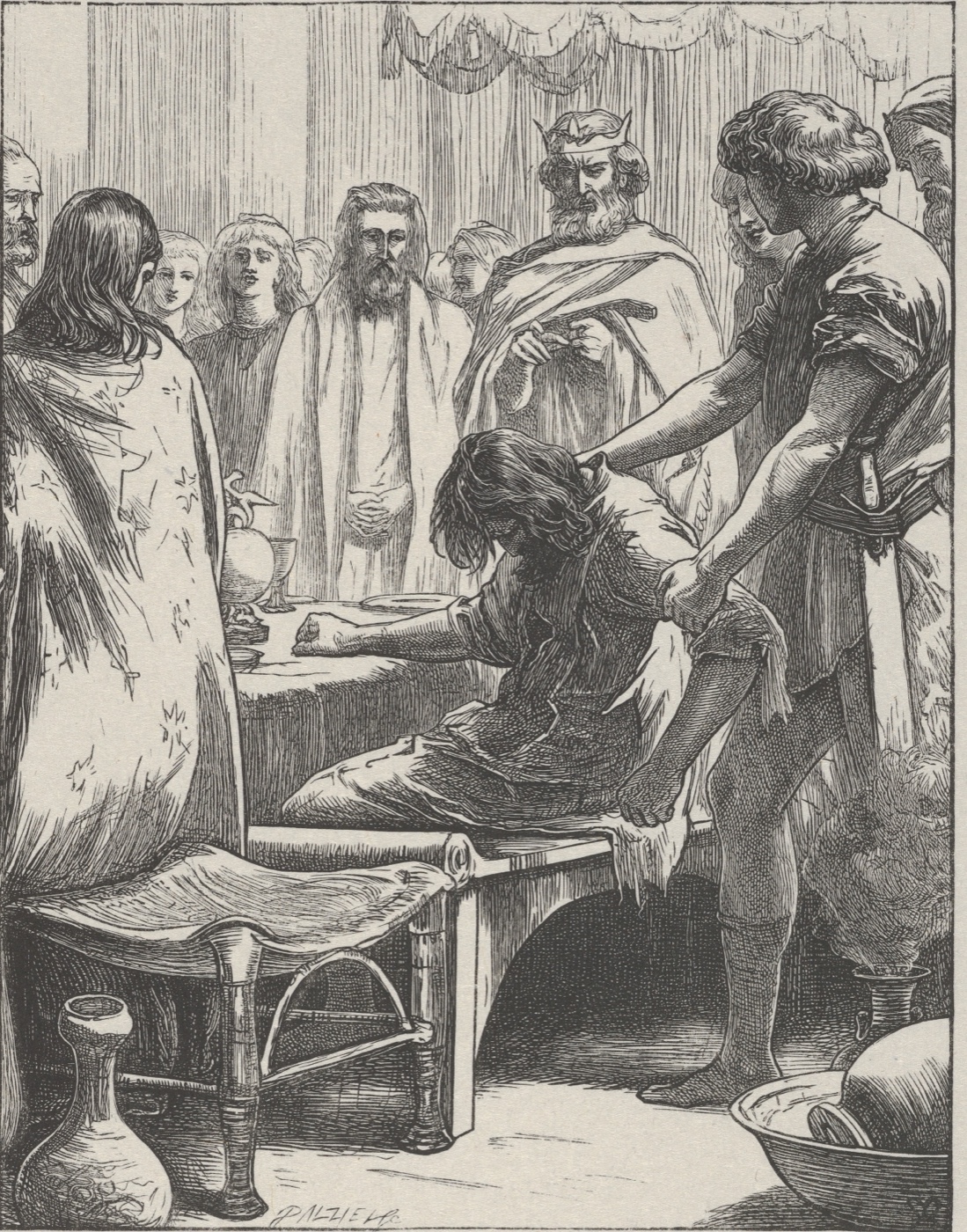
一张长桌旁,一个人低着头坐在凳子上,一只手握着拳放在桌上,身上的衣服破了好几处。一个年轻人一手按着他的肩,一手拉着他。后面站着一个戴王冠的人,正看着他。四周站着许多客人,有的望着这边,有的合着手。最左边一个人背对着我们,披着一件带花纹的长袍。你看,低着头的这个人,身上穿的和别人有什么不同?
约翰·埃弗雷特·米莱(John Everett Millais)画,达尔齐尔兄弟(Dalziel Brothers)刻版,《婚筵》(The Marriage Feast),1864 年,木刻版画,出自《我主我救主耶稣基督的比喻》,美国纽约大都会艺术博物馆藏。公有领域。 Wikimedia Commons一起读太 22:1-14
1耶稣又用比喻对他们说:
2“天国好比一个王为他儿子摆设娶亲的筵席,
3就打发仆人去,请那些被召的人来赴席,他们却不肯来。
4王又打发别的仆人,说:‘你们告诉那被召的人,我的筵席已经预备好了,牛和肥畜已经宰了,各样都齐备,请你们来赴席。’
5那些人不理就走了;一个到自己田里去,一个作买卖去;
6其余的拿住仆人,凌辱他们,把他们杀了。
7王就大怒,发兵除灭那些凶手,烧毁他们的城;
8于是对仆人说:‘喜筵已经齐备,只是所召的人不配。
9所以你们要往岔路口上去,凡遇见的,都召来赴席。’
10那些仆人就出去到大路上,凡遇见的,不论善恶都召聚了来,筵席上就坐满了客。
11王进来观看宾客,见那里有一个没有穿礼服的,
12就对他说:‘朋友,你到这里来怎么不穿礼服呢?’那人无言可答。
13于是王对使唤的人说:‘捆起他的手脚来,把他丢在外边的黑暗里;在那里必要哀哭切齿了。’
14因为被召的人多,选上的人少。”
当时现场
还是在圣殿里。 前一个比喻讲完,「祭司长和法利赛人听见他的比喻,就看出他是指着他们说的」(太 21:45)。耶稣接着讲了这一个。马亨利说,这个比喻和前一个讲的是同一件事,就是福音怎样传给人、人又怎样对待它,“只是换了一个比方”。
Matthew Henry, Commentary on the Whole Bible, Vol. V,太 22:1-14。译自英文原著。
看英文原文
this parable represents the gospel offer, and the entertainment it meets with, as the former, but under another similitude.
王子的婚筵。 这不是普通人家请客,是王为儿子娶亲摆的筵席。被请的人先接到一次邀请(3 节),筵席预备好了,王又打发人去说「各样都齐备」(4 节)。
岔路口。 9 节王叫仆人「往岔路口上去」。克拉克说,这是几条路汇成一条、通进城里的地方,“各处来的人在那里会合”。
Adam Clarke, Commentary on the Bible,太 22:9。译自英文原著。
看英文原文
the places where two or more roads met in one, leading into the city, where people were coming together from various quarters of the country.
路加也记了一个相似的比喻,在下一课“大筵席”(路 14:15-24)。
讲解
看见什么。 王请了三次:先打发仆人去请(3 节),又打发别的仆人去请(4 节),最后叫仆人到岔路口去,「凡遇见的,都召来赴席」(9 节)。
头一批被请的人,有两种不来的样子。一种是「不理就走了;一个到自己田里去,一个作买卖去」(5 节);一种是「拿住仆人,凌辱他们,把他们杀了」(6 节)。马亨利说,“不理”原文的意思是“不放在心上”;许多人灭亡,“不是因为对这些事有什么直接的反感,只是一种占了上风的不在乎”。
Matthew Henry, Commentary on the Whole Bible, Vol. V,太 22:1-14。译自英文原著。
看英文原文
Amelesantes—They were careless. Note, Multitudes perish eternally through mere carelessness, who have not any direct aversion, but a prevailing indifference, to the matters of their souls, and an unconcernedness about them.
种田、做买卖都不是坏事。马亨利引了一句拉丁谚语:“这些合法的事害了我们”,是在这些事“被不当地对待的时候”。
Matthew Henry, Commentary on the Whole Bible, Vol. V,太 22:1-14。译自英文原著。
看英文原文
Licitis perimus omnes—These lawful things undo us, when they are unlawfully managed
7 节王发兵、「烧毁他们的城」,克拉克说,这是指提多(Titus)攻破耶路撒冷,“大约在这话以后四十一年”。说这比喻的耶稣,后来也为这座城叹息:「我多次愿意聚集你的儿女,好像母鸡把小鸡聚集在翅膀底下,只是你们不愿意。」(太 23:37)
Adam Clarke, Commentary on the Bible,太 22:2。译自英文原著。
看英文原文
the total destruction of Jerusalem by Titus, the son of Vespasian, which happened about forty-one years after.
筵席坐满了,「不论善恶」(10 节)。克拉克把这一节和前面几课连起来:教会像“田,假麦子和真麦子一同生长”(太 13:26-27),像“网,聚拢各样的水族,好的坏的都有”(太 13:48)。
Adam Clarke, Commentary on the Bible,太 22:10。译自英文原著。
看英文原文
The Field, where the bastard wheat and the true grain grow together, Matthew 13:26, Matthew 13:27.
The Net, which collects of all kinds, both good and bad, Matthew 13:48.
然后「王进来观看宾客」(11 节),看见一个没有穿礼服的人。13 节的“外边的黑暗”“哀哭切齿”,马亨利说,到这里救主“不知不觉从比喻滑进了比喻所指的事”。我们照经文读,不再往下讲。
Matthew Henry, Commentary on the Whole Bible, Vol. V,太 22:1-14。译自英文原著。
看英文原文
Our Saviour here insensibly slides out of this parable into that which it intimates
如果我在场。 我大概是从岔路口被叫进来的那一个。马亨利说,那份惊讶,就像“走在路上的人,忽然被请去赴一场婚筵”。我本来不在名单上,也没想过会被请。
Matthew Henry, Commentary on the Whole Bible, Vol. V,太 22:1-14。译自英文原著。
看英文原文
such a surprise as it would be to wayfaring men upon the road to be met with an invitation to a wedding feast.
神是怎样的神。 王一请再请。马亨利说:“你看基督的心多么挂念可怜人的灵魂!”又说,没有谁被关在外面,“除了那些把自己关在外面的人”。
Matthew Henry, Commentary on the Whole Bible, Vol. V,太 22:1-14。译自英文原著。
看英文原文
See how much Christ's heart is set upon the happiness of poor souls!
none are excluded but those that exclude themselves.
8 节王说「只是所召的人不配」。马亨利说:“罪人灭亡,不在于神,在于他们自己。”
Matthew Henry, Commentary on the Whole Bible, Vol. V,太 22:1-14。译自英文原著。
看英文原文
It is not owing to God, that sinners perish, but to themselves.
和我有什么关系。 马亨利问:“这一切都齐备了,我们倒还没预备好吗?”
Matthew Henry, Commentary on the Whole Bible, Vol. V,太 22:1-14。译自英文原著。
看英文原文
Is all this ready; and shall we be unready?
那个没穿礼服的人,是被叫进来、也坐了下来的人。马亨利注意到,王没有责备仆人放他进来,因为“礼服是里面的东西”;直到王亲自进来,他才被看出来。马亨利的结论不是叫我们去查别人,是问自己:“在教会里有一席之地的人,常常这样问自己是好的:‘我是怎么进来的?我有礼服吗?’我们若肯这样审判自己,就不至于受审。”
Matthew Henry, Commentary on the Whole Bible, Vol. V,太 22:1-14。译自英文原著。
看英文原文
He does not chide the servants for letting him in (the wedding garment is an inward thing, ministers must go according to that which falls within their cognizance)
This hypocrite was never discovered to be without a wedding garment, till the king himself came in to see the guests.
It is good for those that have a place in the church, often to put it to themselves, "How came I in hither? Have I a wedding-garment?" If we would thus judge ourselves, we should not be judged.
不同的看见
下面三位都是英国的解经家:马亨利(1662–1714)、吉尔(1697–1771)、克拉克(约 1760–1832)。各段都译自英文原著,出处附在后面。
经文自己说的(三家都照这个讲): 王一再邀请,头一批被请的人不来;王就叫仆人到岔路口去请,筵席坐满了;王进来,看见一个没有穿礼服的人,那人「无言可答」(12 节);最后一句是「被召的人多,选上的人少」(14 节)。下面两处,是读法不同的地方。
一、“礼服”是什么?
他先说不是什么:“不是好行为,不是圣洁的生活和言行,不是圣灵的哪一样恩典……也不是成圣的全部工作”,“乃是基督的义”。这义“像衣服一样,在他们以外,穿在他们身上”;那个人没有这件礼服,就是基督的义“没有算在他身上”。
John Gill, Exposition of the Entire Bible,太 22:11。译自英文原著。
看英文原文
by which is meant, not good works, or a holy life and conversation, nor any particular grace of the Spirit, as faith, or charity, or humility, or repentance, or any other, nor the whole work of sanctification, nor the Holy Ghost, but the righteousness of Christ
this, like a garment, is without them, and put upon them
it was not imputed to him
两样都讲。礼服是“心里的光景、生活的样式,与福音、与我们所承认的信仰相称”;启示录说的细麻衣,是“圣徒的义,他们真实的圣洁和成圣,和基督成了他们的义”;穿着礼服的,是那些“披戴主耶稣……靠着信基督而活”的人。
Matthew Henry, Commentary on the Whole Bible, Vol. V,太 22:1-14。译自英文原著。
看英文原文
If the gospel be the wedding feast, then the wedding garment is a frame of heart, and a course of life agreeable to the gospel and our profession of it
The righteousness of saints, their real holiness and sanctification, and Christ, made Righteousness to them, is the clean linen, Rev. xix. 8.
Those, and those only, who put on the Lord Jesus, that have a Christian temper of mind, and are adorned with Christian graces, who live by faith in Christ, and to whom he is all in all, have the wedding garment.
礼服“就是内心和生活的圣洁”。他又说,请客的主人给每位客人都预备了礼服,客人向管筵席的要,就能领到;所以这个人“若去要,本可以有一件合适的礼服”。
Adam Clarke, Commentary on the Bible,太 22:11。译自英文原著。
看英文原文
we may at once perceive what our Lord means by the marriage garment - it is Holiness of heart and life
The person who invited the guests prepared such a garment for each, for the time being; and with which he was furnished on his application to the ruler of the feast.
he might have had a proper marriage garment, if he had applied for it.
怎么看: 比喻没有说礼服是什么,也没有说是谁预备的。新约别处用过“衣服”的说法:「你们受洗归入基督的,都是披戴基督了」(加 3:27);「这细麻衣就是圣徒所行的义」(启 19:8)。礼服是基督的义算给人,还是人里外的圣洁,或是两样分不开,这一问,各教会的理解不尽相同,请向你所在的教会请教。
二、“被召的人多,选上的人少”
“被召”是在福音的传讲下“外面的召”;“选上”是“在基督里,从永远就被拣选,得恩典,也得荣耀”。外面被召的人当中,只有少数是“被神大能的恩典,里面有效地召”出来的。
John Gill, Exposition of the Entire Bible,太 20:16(他在 22:14 指向此处)。译自英文原著。
看英文原文
many be called; externally, under the ministration of the Gospel
few chosen; in Christ from all eternity, both to grace and glory
even but a few of those that are outwardly called, are inwardly and effectually called by the powerful grace of God
他反问:“绝对弃绝、或略过的教义,在这个人身上哪里看得出来?”他说这个人“本可以得救,却没有得救”;选上的人少,“是因为他们不到筵席的主人那里去要礼服”。
Adam Clarke, Commentary on the Bible,太 22:12-14。译自英文原著。
看英文原文
Where does the doctrine of absolute reprobation or preterition appear in his case?
he might have been saved, but he was not
few, comparatively, are chosen to dwell with God in glory, because they do not come to the master of the feast for a marriage garment
许多人被召赴婚筵,“少数人被选上穿礼服,就是借着圣灵使人成圣而得救”。
Matthew Henry, Commentary on the Whole Bible, Vol. V,太 22:1-14。译自英文原著。
看英文原文
many called to the wedding feast, but few chosen to the wedding garment, that is, to salvation, by sanctification of the Spirit.
怎么看: 三家都看见:邀请是向许多人发出的,没穿礼服的人「无言可答」(12 节)。“选上”是神从永远的拣选,还是也看人有没有回应,这一问,各教会的理解不尽相同,请向你所在的教会请教。总论一课讲过同一类问题,可以对照着读。
原文词眼
「朋友,你到这里来怎么不穿礼服呢?」(12 节)
这里的“朋友”是 ἑταῖρος。Thayer 说,这个词用在称呼里,是“和气的称呼:朋友(我的好朋友)”。他列的经文只有三处,都在马太福音。
Thayer's Greek-English Lexicon of the New Testament,G2083。译自英文原著。
看英文原文
vocative in kindly address, friend (my good friend): Matthew 20:13; Matthew 22:12; Matthew 26:50.
另外两处是:葡萄园的家主对抱怨的工人说「朋友,我不亏负你」(太 20:13);犹大带人来拿耶稣,耶稣对他说「朋友,你来要作的事,就作吧」(太 26:50)。三处都是对方理亏的时候,开口仍然叫“朋友”。
这一声怎么听,三家听得不一样:马亨利说“这是扎心的一句:看来像朋友,装作朋友,口头上的朋友”;克拉克说这个字“该译作‘同伴’”;吉尔说是“反话,或者因为他自称是神和基督的朋友”。
Matthew Henry, Commentary on the Whole Bible, Vol. V,太 22:1-14;Adam Clarke, Commentary on the Bible,太 22:12;John Gill, Exposition of the Entire Bible,太 22:12。译自英文原著。
看英文原文
Friend! That was a cutting word; a seeming friend, a pretended friend, a friend in profession
Rather, companion: so εταιρε should be translated.
Either in an ironical way, or because he professed to be a friend of God and Christ
「那人无言可答」(12 节)的“无言可答”,原文是 φιμόω。Thayer 说本义是“给牲口的嘴笼上笼头”,像「牛在场上踹谷的时候,不可笼住它的嘴」(林前 9:9);引申为“堵住嘴,叫人说不出话”。同一章后面说耶稣「堵住了撒都该人的口」(太 22:34),也是这个词。
Thayer's Greek-English Lexicon of the New Testament,G5392。译自英文原著。
看英文原文
to close the mouth with a muzzle, to muzzle
metaphorically, to stop the mouth, make speechless, reduce to silence: τινα, Matthew 22:34
passive, to become speechless, hold one's peace, Matthew 22:12
王开口叫他“朋友”,他却一句话也答不上来。
请思考
没有标准答案,不打分。写下来,只给自己看。
- 头一批被请的人,多半不是恨这个王,只是“不理”。有什么事,是你一直“不理就走了”的?
- 你本来不在名单上,却被请进来了。想到这一点,你心里是什么感觉?
- 马亨利说,在教会里的人常常问自己:“我是怎么进来的?我有礼服吗?”你会怎样回答?
- 王对那个人还叫“朋友”。这一声“朋友”,你听起来是什么味道?
这周去做
想一样你常常拿来推掉神的事:工作、家务、手机、一个习惯。这一周每天留出一小段时间,不让它挤掉,用来读经、祷告。
周末问自己:如果今天就是筵席齐备的日子,我预备好了吗?
延伸参考
- Matthew Henry, Commentary on the Whole Bible, Vol. V:太 22:1-14(英文原著,公有领域,CCEL 可免费读全文)
- 法兰士(R. T. France)著,丁道尔新约注释《马太福音》,校园书房出版社(ISBN 9789575874988):太 22:1-14
- 施诺格拉斯《主耶稣的比喻》:娶亲筵席一章
本单元其它比喻单元四 · 邀请与拒绝
- 不结果的无花果树 路 13:1-9
- 两个儿子 太 21:23-32
- 凶恶园户 太 21:33-46
- 娶亲筵席 太 22:1-14 本课
- 大筵席 路 14:15-24 即将上线
经文:和合本(1919),用字按本站规则现代化。“不同的看见”里的注释都译自英文原著(公有领域),每段可展开看英文原文。