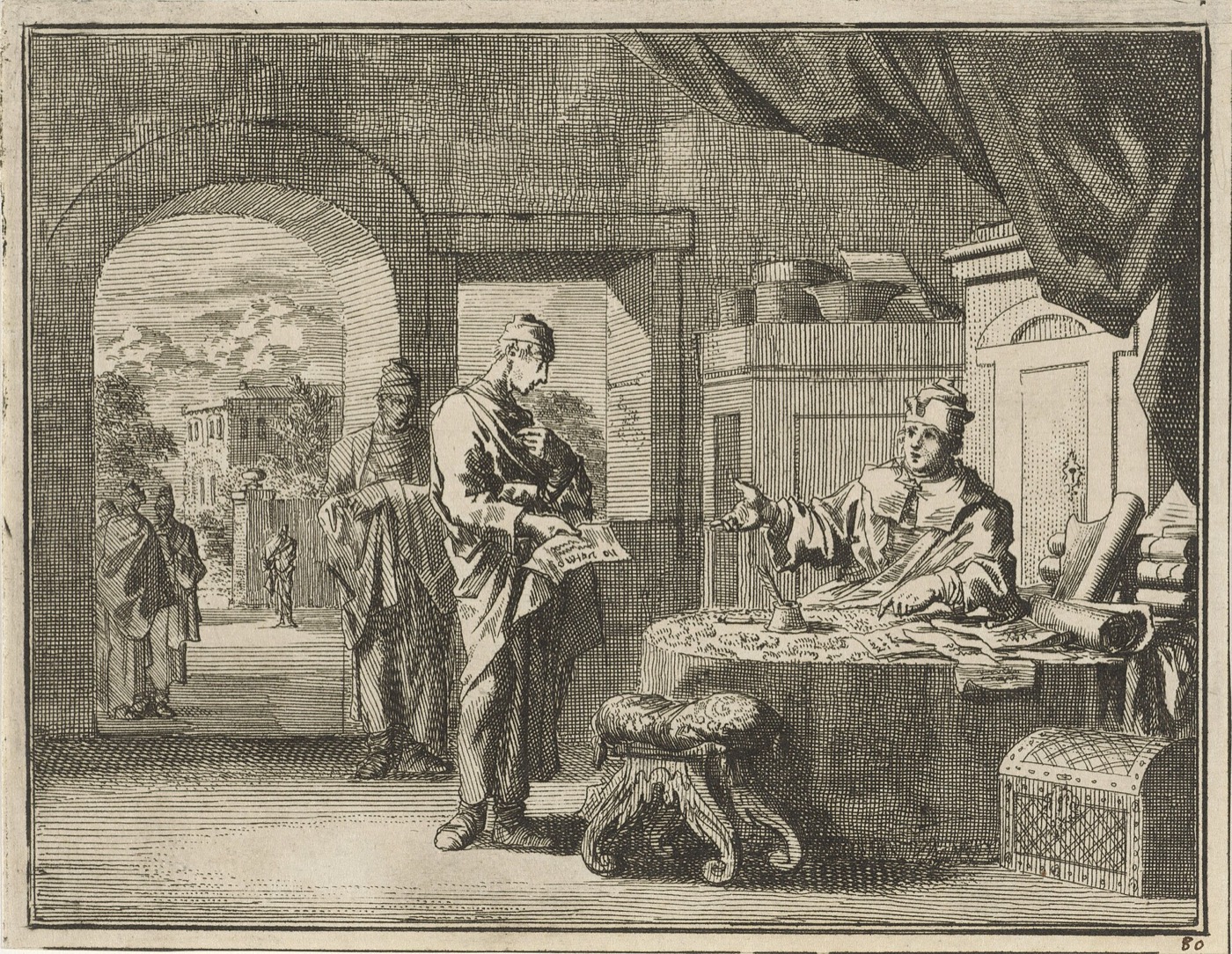
一间宽敞的屋子。右边,一个人坐在圆桌后面,桌上摊着纸,有墨水瓶和羽毛笔,身后堆着一卷卷的文书,地上放着一只箱子。他伸出一只手,掌心朝上,对着面前的人。站着的那个人低着头,手里拿着一张纸,另一只手放在下巴边。他身后又进来一个人。门外的拱门下,两个人站着说话;再远一点的院门口,还有一个人。你看,那张纸上写的会是什么?
扬·吕肯(Jan Luyken),《不义的管家的比喻》(Gelijkenis van de onrechtvaardige rentmeester),1712 年,蚀刻版画,荷兰阿姆斯特丹国立博物馆藏。公有领域。 Wikimedia Commons一起读路 16:1-13
(15 章)法利赛人和文士私下议论耶稣接待罪人,耶稣对他们讲了迷羊、失钱、浪子三个比喻(见“当时现场”)。
1耶稣又对门徒说:“有一个财主的管家,别人向他主人告他浪费主人的财物。
2主人叫他来,对他说:‘我听见你这事怎么样呢?把你所经管的交代明白,因你不能再作我的管家。’
3那管家心里说:‘主人辞我,不用我再作管家,我将来作什么?锄地呢,无力;讨饭呢,怕羞。
4我知道怎么行,好叫人在我不作管家之后,接我到他们家里去。’
5于是把欠他主人债的,一个一个地叫了来,问头一个说:‘你欠我主人多少?’
6他说:‘一百篓油。’管家说:‘拿你的帐,快坐下,写五十。’
7又问一个说:‘你欠多少?’他说:‘一百石麦子。’管家说:‘拿你的帐,写八十。’
8主人就夸奖这不义的管家作事聪明;因为今世之子,在世事之上,较比光明之子更加聪明。
9我又告诉你们,要借着那不义的钱财结交朋友,到了钱财无用的时候,他们可以接你们到永存的帐幕里去。
10人在最小的事上忠心,在大事上也忠心;在最小的事上不义,在大事上也不义。
11倘若你们在不义的钱财上不忠心,谁还把那真实的钱财托付你们呢?
12倘若你们在别人的东西上不忠心,谁还把你们自己的东西给你们呢?
13一个仆人不能事奉两个主;不是恶这个爱那个,就是重这个轻那个。你们不能又事奉神,又事奉玛门。”
当时现场
听的是谁。 前面一章,「法利赛人和文士私下议论说:这个人接待罪人,又同他们吃饭」(路 15:2),耶稣就对他们讲了迷羊、失钱、浪子。这一章开头说「耶稣又对门徒说」(1 节)。吉尔说,这个比喻是对门徒讲的,正如前一章的几个比喻是对法利赛人讲的。
John Gill, Exposition of the Entire Bible,路 16:1。译自英文原著。
看英文原文
which is directed to the disciples, as those in the preceding chapter are to the Pharisees
“浪费”这个词。 管家被告「浪费主人的财物」(1 节);前一章的小儿子「在那里任意放荡,浪费赀财」(路 15:13)。两处原文是同一个词。Thayer 解这个词,本义是“分散、驱散”,用在财物上是“挥霍、浪费”,正好列了这两节。
Thayer's Greek-English Lexicon of the New Testament,G1287。译自英文原著。
看英文原文
of property, to squander, waste: Luke 15:13; Luke 16:1
一百篓油,一百石麦子。 克拉克说,这些欠债的是佃户,交租交债“不是用钱,是用实物,像麦子、油和地里别的出产”。“篓”原文是“罢特”,约合他那时的七加仑半;“石”原文是“柯珥”,约有七十五加仑多。两样差了约十倍,数目都不小。
Adam Clarke, Commentary on the Bible,路 16:4、6、7。译自英文原著。
看英文原文
who paid their debts and rents, not in money, but in kind; such as wheat, oil, and other produce of their lands.
It is equal to the ephah, i.e. to seven gallons and a half of our measure.
It contained about seventy-five gallons and five pints English.
“快坐下写”。 马亨利注意到,管家很着急:“快坐下,写好,免得我们正在商量的时候被人撞见,起了疑心。”
Matthew Henry, Commentary on the Whole Bible, Vol. V,路 16:1-18。译自英文原著。
看英文原文
Sit down quickly, and do it, lest we be taken treating, and suspected.
“玛门”。 13 节的“玛门”,Thayer 解作“钱财”;他说在这一节和太 6:24,钱财被说成一个人,和神对立。
Thayer's Greek-English Lexicon of the New Testament,G3126。译自英文原著。
看英文原文
riches: Matthew 6:24 and Luke 16:13 (where it is personified and opposed to God; cf. Philippians 3:19)
后面有人听了发笑。 耶稣讲完,「法利赛人是贪爱钱财的,他们听见这一切话,就嗤笑耶稣」(路 16:14)。
讲解
看见什么。 一个管家被告浪费主人的财物,主人叫他交账走人。他心里盘算:锄地没力气,讨饭怕丢脸。于是趁着还在任上,把主人的欠债人一个一个叫来,油减一半,麦子减两成。故事最出人意料的是 8 节:「主人就夸奖这不义的管家作事聪明」。
主人怎么会夸奖一个不义的人?这是历来公认最难懂的比喻之一。马亨利在这里先立了一条原则:比喻不可强解到它原本的用意以外。
Matthew Henry, Commentary on the Whole Bible, Vol. V,路 16:1-18。译自英文原著。
看英文原文
Parables must not be forced beyond their primary intention
三家都同意,夸的不是他的不义。马亨利说:“他不是因为这人对主人不忠而夸他,是因为这人为自己打算得聪明。”经文自己也一直叫他「不义的管家」(8 节)。
Matthew Henry, Commentary on the Whole Bible, Vol. V,路 16:1-18。译自英文原著。
看英文原文
He does not commend him because he had done falsely to his master, but because he had done wisely for himself.
如果我在场。 我是门徒,手里没有多少钱。马亨利替耶稣说出这一层:“你们在世上虽然所有的不多,也要想想,怎样用这一点点去行善。”
Matthew Henry, Commentary on the Whole Bible, Vol. V,路 16:1-18。译自英文原著。
看英文原文
though you have but little in this world, consider how you may do good with that little.
那个管家被辞以后,才开始想“我将来作什么”。马亨利说,他若早些想就好了,“可是醒悟得晚,总比不醒悟好”。
Matthew Henry, Commentary on the Whole Bible, Vol. V,路 16:1-18。译自英文原著。
看英文原文
He would have done well to have considered this before he had so foolishly thrown himself out of a good place by his unfaithfulness; but it is better to consider late than never.
神是怎样的神。 比喻里的财物,从头到尾都是主人的,管家只是经管。马亨利说,我们所有的一切,“产业都是神的;我们只是有使用权”,而且要照主的吩咐,为他的荣耀去用。
Matthew Henry, Commentary on the Whole Bible, Vol. V,路 16:1-18。译自英文原著。
看英文原文
Whatever we have, the property of it is God's; we have only the use of it, and that according to the direction of our great Lord, and for his honour.
所以 12 节说钱财是「别人的东西」。克拉克说,那是因为钱财属于神,神也没有定意让它作任何人的福分。
Adam Clarke, Commentary on the Bible,路 16:12。译自英文原著。
看英文原文
Because they belong to God, and he has not designed that they should be any man's portion.
神却另外有东西要给我们,是「你们自己的东西」(12 节)。马亨利说,属灵的、永远的财富才是“我们自己的”,进到心里,再也分不开。
Matthew Henry, Commentary on the Whole Bible, Vol. V,路 16:1-18。译自英文原著。
看英文原文
But spiritual and eternal riches are our own (they enter into the soul that becomes possessed of them) and inseparably
和我有什么关系。 10 节是一句俗话:「人在最小的事上忠心,在大事上也忠心」。克拉克说,人正是在小事上一次次行得正直,才养成在大事上忠心、守良心的习惯。
Adam Clarke, Commentary on the Bible,路 16:10。译自英文原著。
看英文原文
it is by habituating himself to act uprightly in little things that he acquires the gracious habit of acting with propriety fidelity, honor, and conscience, in matters of the greatest concern.
9 节「要借着那不义的钱财结交朋友」,不是说不义得来的钱可以拿去行善抵罪。克拉克说得很重:若说人用不义的手段发了财,只要分给穷人,就能使这钱成圣,给自己买一张进神国的通行证,那是把主的话扭曲得可怕;不义之财,要还给原主。
Adam Clarke, Commentary on the Bible,路 16:9。译自英文原著。
看英文原文
To insinuate that, if a man have acquired riches by unjust means, he is to sanctify them, and provide himself a passport to the kingdom of God, by giving them to the poor, is a most horrid and blasphemous perversion of our Lord's words. Ill gotten gain must be restored to the proper owners
后来税吏长撒该遇见耶稣,说的正是这样的话:「我若讹诈了谁,就还他四倍」(路 19:8)。
最后,13 节把话说到底:「你们不能又事奉神,又事奉玛门」。这句话在登山宝训里耶稣也说过(太 6:24)。马亨利说,这两个主人的利益分得太开,事奉他们“永远调和不来”。
Matthew Henry, Commentary on the Whole Bible, Vol. V,路 16:1-18。译自英文原著。
看英文原文
So divided are their interests that their services can never be compounded.
不同的看见
下面三位都是英国的解经家:马亨利(1662–1714)、吉尔(1697–1771)、克拉克(约 1760–1832)。各段都译自英文原著,出处附在后面。
经文自己说的(三家都照这个讲): 管家不义,被辞是他自己招来的;他被夸,是因为作事“聪明”,懂得趁着还有机会为将来打算;耶稣要门徒在钱财上忠心,因为不能又事奉神,又事奉玛门。下面三处,是读法不同的地方。
一、8 节夸奖他的“主人”是谁?
是管家的主人,不是耶稣。这位主人“大大称赞他这个不义仆人的手段和机巧”,可是对这件事,并不比对他先前浪费财物更赞同。
Adam Clarke, Commentary on the Bible,路 16:8。译自英文原著。
看英文原文
He spoke highly of the address and cunning of his iniquitous servant.
but his master no more approved of his conduct in this, than he did in his wasting his substance before.
“不是讲这比喻的主耶稣基督”,是管家的主人;夸的是“这人的机巧,不是他的良善”。从 8 节下半“因为今世之子……”起,才是基督的话。
John Gill, Exposition of the Entire Bible,路 16:8、9。译自英文原著。
看英文原文
Not the Lord Jesus Christ, who delivered this parable
the wit, and not the goodness of the man is commended
These are the words of Christ, as are also the latter part of the preceding verse
他说也可以读成管家的主人,主人虽然恼他的奸诈,却欣赏他的机巧;但那样,这节下半就得是主耶稣的话,“所以我想整节都是指他”。他还提出一个可能:管家减掉的,也许本来就是过重的租,“这样做对主人也许也好,对佃户也只是公道”。
Matthew Henry, Commentary on the Whole Bible, Vol. V,路 16:1-18。译自英文原著。
看英文原文
It may be meant of his lord, the lord of that servant, who, though he could not but be angry at his knavery, yet was pleased with his ingenuity and policy for himself; but, taking it so, the latter part of the verse must be the words of our Lord, and therefore I think the whole is meant of him.
Yet perhaps herein he did well for his master too, and but justly with the tenants.
怎么看: 夸奖他的是比喻里的主人,还是讲比喻的主,三家读法不同;但三家都说,被夸的不是不义,是“聪明”。耶稣自己的落点在 8 节下半:今世之子为今世打算,比光明之子为永远打算还用心。
二、9 节结交的“朋友”是谁?谁“接你们到永存的帐幕里去”?
可以用钱财结交朋友,“不是靠买,也不是靠功德,是靠举荐”:神和基督、天使和圣徒、穷人,都可以成为我们的朋友。他又说,先去了荣耀里的穷圣徒,会迎接在世上周济过他们的人。
Matthew Henry, Commentary on the Whole Bible, Vol. V,路 16:1-18。译自英文原著。
看英文原文
yet we may make to ourselves friends with it, not by way of purchase or merit, but recommendation; so we may make God and Christ our friends, the good angels and saints our friends, and the poor our friends
The poor saints that are gone before to glory will receive those that in this world distributed to their necessities.
这朋友“不是圣父、圣子、圣灵”,神固然是圣徒的朋友,“却不是用钱结交来的”;朋友也许是穷圣徒。至于接人进去的,不是穷人,也不是天使,而是“神和基督接圣徒进荣耀”;人被接进去,是“在行善的路上,却不是因为行善”。
John Gill, Exposition of the Entire Bible,路 16:9。译自英文原著。
看英文原文
not God, Father, Son, and Spirit. These indeed are friends to the saints, but they are not made so by money
though it may be the poor saints are intended
for not they, but God and Christ, receive the saints to glory
in a way of welldoing, though not for it
“看来不是指穷人”:周济人的可能比受周济的穷人先死,受周济的人也未必都进天国。他说这是希伯来人的说法,“他们可以接你们”就是“你们要被接去”,意思是神要接纳你们,“只要你们忠心使用他的恩赐和恩典”。
Adam Clarke, Commentary on the Bible,路 16:9。译自英文原著。
看英文原文
It does not appear that the poor are meant
they may receive you, for ye shall be received; i.e. God shall admit you, if you make a faithful use of his gifts and graces.
怎么看: 三家都说,永存的帐幕不是用钱买的;也都说,怎样用钱财,和将来大有关系。至于善用钱财和得救是什么关系,是“不是因为行善”,还是“只要忠心使用”,这一问,各教会的理解不尽相同,请向你所在的教会请教。
三、财主、管家、欠债的,各指谁?
这一处有一部分是寓意读法:把比喻里的人和东西各对应一样。比喻本身只说:一个不义的管家,为自己的将来打算得很聪明。
财主“指的是神”;管家不是指所有的人,也不是指门徒,“而是指法利赛人”。欠债的人欠的是油和麦子,这两样是礼仪律献祭要用的,所以“帐”可以指律法。
John Gill, Exposition of the Entire Bible,路 16:1、7。译自英文原著。
看英文原文
by whom God is meant
but the Pharisees are meant
Inasmuch now as oil and wheat were things expended in the observance of the ceremonial law, and these men's debts lay in them, it may have regard to the deficiency of the Jews in those things: wherefore by "the bill" may be meant the law
比喻里的管家代表所有的世人:我们在世上所有的,我们都只是管家。
Matthew Henry, Commentary on the Whole Bible, Vol. V,路 16:1-18。译自英文原著。
看英文原文
in which all the children of men are represented as stewards of what they have in this world, and we are but stewards.
克拉克: 他不逐一找对应,只从当时的风俗讲管家、欠债人和帐(见“当时现场”)。
怎么看: 吉尔把比喻读成对法利赛人的写照,这和「法利赛人是贪爱钱财的」(路 16:14)连得上;马亨利读成每个人的写照,这和「耶稣又对门徒说」(1 节)连得上。马亨利自己立的原则,也可以用在这里:比喻不可强解到它原本的用意以外。
原文词眼
「有一个财主的管家,别人向他主人告他浪费主人的财物」(1 节)
“管家”,原文是 οἰκονόμος,由“家”和“分配、管理”两个字合成。Thayer 解作“管理一家或家务的人”;他说在这个比喻里,是“管理田产的人”。
Thayer's Greek-English Lexicon of the New Testament,G3623。译自英文原著。
看英文原文
the manager of a household or of household affairs
the manager of a farm or landed estate, an overseer (A. V. steward): Luke 16:1, 3, 8
这个词在路加福音还出现在另一处:「谁是那忠心有见识的管家」(路 12:42)。Thayer 把这一节和保罗的话列在一起:「所求于管家的,是要他有忠心」(林前 4:2)。他又说,彼得书信里,每一个照着神托付的恩赐去帮助弟兄的基督徒,都是「神百般恩赐的好管家」(彼前 4:10)。
Thayer's Greek-English Lexicon of the New Testament,G3623。译自英文原著。
看英文原文
and any and every Christian who rightly uses the gifts intrusted to him by God for the good of his brethren
还有一个词值得对照。路 12:42 的“有见识”,和 16:8 的“更加聪明”,原文是同一个词,Thayer 解作“精明,顾得到自己的利益”。
Thayer's Greek-English Lexicon of the New Testament,G5429。译自英文原著。
看英文原文
prudent, i. e. mindful of one's interests: Matthew 10:16; Matthew 24:45; Luke 12:42
comparitive φρονιμώτερος, Luke 16:8
路 12 章的管家,又忠心,又有见识;这个管家有见识,却不忠心。耶稣要门徒两样都有:像他一样为将来打算,又在「最小的事上忠心」(10 节)。
请思考
没有标准答案,不打分。写下来,只给自己看。
- 主人夸奖一个不义的管家,你第一次读到时,心里有什么疑问?读完这一课,那疑问有没有不同?
- 如果我手里的钱、时间、房子、手艺都是“主人的财物”,我经管得怎样?哪一样我最容易当作“我自己的”?
- 管家为几个月后的日子费尽心思。我为永远的事,花的心思有他的一半吗?
- 「你们不能又事奉神,又事奉玛门」(13 节)。在你的生活里,钱在什么时候最像一个“主人”?
这周去做
这一周,拿一张纸,写下你手上“经管”的东西:钱、时间、一间屋子、一样手艺……每一样旁边,写一个可以用它去帮助的人的名字。
选一样,这周去做。如果想起有什么欠了还没还的,一笔钱、一样借来的东西,先去还。
延伸参考
- Matthew Henry, Commentary on the Whole Bible, Vol. V:路 16:1-18(英文原著,公有领域,CCEL 可免费读全文)
- 莫理斯(Leon Morris)著,丁道尔新约注释《路加福音》:路 16:1-13
本单元其它比喻单元六 · 钱财
- 无知的财主 路 12:16-21
- 不义的管家 路 16:1-13 本课
- 财主与拉撒路 路 16:19-31 即将上线
- 按才受托 太 25:14-30 即将上线
- 弥拿 路 19:11-27 即将上线
经文:和合本(1919),用字按本站规则现代化。“不同的看见”里的注释都译自英文原著(公有领域),每段可展开看英文原文。