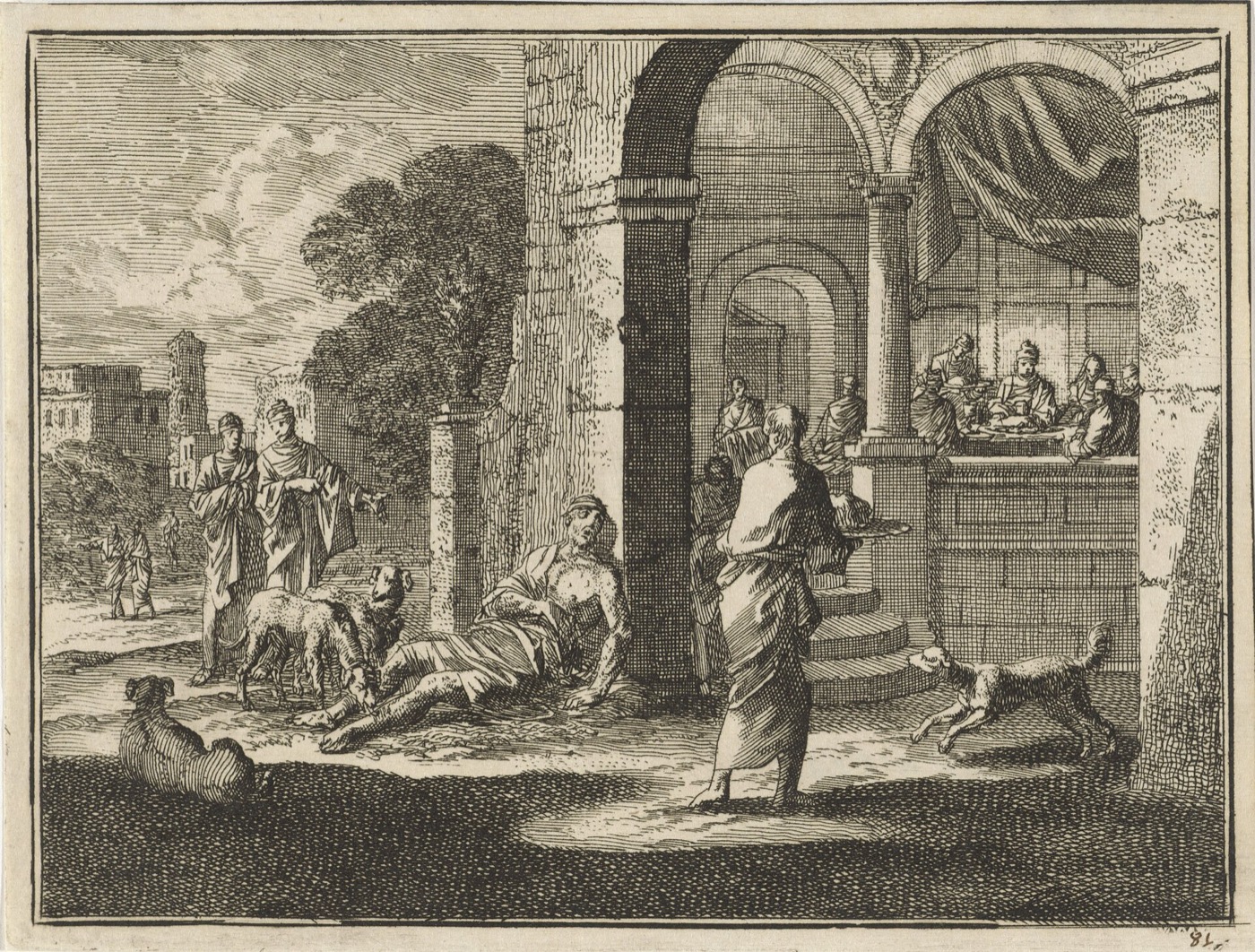
一座有拱门的大房子外面。墙根下,一个瘦弱的人半躺在地上,衣服敞开,闭着眼,几只狗围在他身边。拱门里面高起的地方,挂着帘子,一群人围着桌子吃饭。一个人背对着我们,手里端着一盘东西,正往台阶那边走。左边路上,两个人站着说话,其中一个伸手指着。你看,桌子和墙根,隔着多远?
扬·吕肯(Jan Luyken),《财主与贫穷的拉撒路》(De rijke man en de arme Lazarus),1712 年,蚀刻版画,荷兰阿姆斯特丹国立博物馆藏。公有领域。 Wikimedia Commons一起读路 16:19-31
(14–18 节)法利赛人听了耶稣论钱财的话,就嗤笑他;耶稣对他们说话(见“当时现场”)。
19“有一个财主,穿着紫色袍和细麻布衣服,天天奢华宴乐。
20又有一个讨饭的,名叫拉撒路,浑身生疮,被人放在财主门口,
21要得财主桌子上掉下来的零碎充饥,并且狗来舔他的疮。
22后来那讨饭的死了,被天使带去放在亚伯拉罕的怀里;财主也死了,并且埋葬了。
23他在阴间受痛苦,举目远远地望见亚伯拉罕,又望见拉撒路在他怀里,
24就喊着说:‘我祖亚伯拉罕哪,可怜我吧!打发拉撒路来,用指头尖蘸点水,凉凉我的舌头;因为我在这火焰里,极其痛苦。’
25亚伯拉罕说:‘儿啊,你该回想你生前享过福,拉撒路也受过苦;如今他在这里得安慰,你倒受痛苦。
26不但这样,并且在你我之间,有深渊限定,以致人要从这边过到你们那边,是不能的;要从那边过到我们这边,也是不能的。’
27财主说:‘我祖啊,既是这样,求你打发拉撒路到我父家去,
28因为我还有五个弟兄,他可以对他们作见证,免得他们也来到这痛苦的地方。’
29亚伯拉罕说:‘他们有摩西和先知的话,可以听从。’
30他说:‘我祖亚伯拉罕哪,不是的;若有一个从死里复活的,到他们那里去的,他们必要悔改。’
31亚伯拉罕说:‘若不听从摩西和先知的话,就是有一个从死里复活的,他们也是不听劝。’”
当时现场
听的是谁。 耶稣刚讲完不义的管家,说「你们不能又事奉神,又事奉玛门」(路 16:13)。接着,「法利赛人是贪爱钱财的,他们听见这一切话,就嗤笑耶稣」(路 16:14)。马亨利说,法利赛人拿基督讲贪爱世界的道取笑,这个比喻就是要叫这些讥诮的人认真起来。
Matthew Henry, Commentary on the Whole Bible, Vol. V,路 16:19-31。译自英文原著。
看英文原文
The Pharisees made a jest of Christ's sermon against worldliness; now this parable was intended to make those mockers serious.
律法和先知。 在这个比喻之前,耶稣还说了一句:「律法和先知,到约翰为止」(路 16:16)。比喻的最后,亚伯拉罕两次提到「摩西和先知的话」(29、31 节)。
紫色袍和细麻布。 马亨利说,细麻布是贴身穿的,图舒服;紫色是为了排场,“那是王侯穿的”。
Matthew Henry, Commentary on the Whole Bible, Vol. V,路 16:19-31。译自英文原著。
看英文原文
He had purple for state, for that was the wear of princes
和前一个比喻的对照。 马亨利说,浪子的比喻把福音的恩典摆在我们面前,叫人得鼓励;这个比喻却把将来的忿怒摆在我们面前,是要唤醒我们。
Matthew Henry, Commentary on the Whole Bible, Vol. V,路 16:19-31。译自英文原著。
看英文原文
As the parable of the prodigal son set before us the grace of the gospel, which is encouraging to us all, so this sets before us the wrath to come, and is designed for our awakening
讲解
看见什么。 前一半在今生:一道门,门里天天宴乐,门外一个人浑身生疮,想得桌上掉下来的零碎。后一半在死后:一切倒过来,拉撒路在亚伯拉罕怀里得安慰,财主在阴间受痛苦。财主求了两件事:一滴水给自己,一个人去警告五个弟兄。两件都没有得着。比喻停在最后一句:「若不听从摩西和先知的话,就是有一个从死里复活的,他们也是不听劝」(31 节)。
马亨利有一句话,把前后两半连在一起:“不给人一点零碎的,也得不着一滴水。”
Matthew Henry, Commentary on the Whole Bible, Vol. V,路 16:19-31。译自英文原著。
看英文原文
He that denied a crumb is denied a drop.
如果我在场。 我是那五个弟兄中的一个,还活着,手里也有「摩西和先知的话」(29 节)。马亨利说,这是他们的特权,也是他们的本分:有,就要听。
Matthew Henry, Commentary on the Whole Bible, Vol. V,路 16:19-31。译自英文原著。
看英文原文
Here is their privilege: They have Moses and the prophets; and their duty
财主以为,要是有人从死里复活去说,弟兄们就会信。马亨利说,愚昧人总以为,任何叫人知罪的方法,都比神自己定下的好。
Matthew Henry, Commentary on the Whole Bible, Vol. V,路 16:19-31。译自英文原著。
看英文原文
Foolish men are apt to think any method of conviction better than that which God has chosen and appointed.
神是怎样的神。 比喻里有名字的,不是财主,是门口那个讨饭的。神记得这个人。克拉克说,拉撒路的名字是“以利以谢”的缩写,意思是“神的帮助”,给一个又穷又苦、除了从天上来的帮助以外别无帮助的人,正合适。
Adam Clarke, Commentary on the Bible,路 16:20。译自英文原著。
看英文原文
a name properly given to a man who was both poor and afflicted, and had no help but that which came from heaven.
拉撒路死了,经文没有提他的埋葬,却说他「被天使带去」(22 节)。迎接他的亚伯拉罕,在世时也是大富户。马亨利说:“亚伯拉罕又大又富,在天上却不嫌把贫穷的拉撒路放在怀里。富足的圣徒和贫穷的圣徒,在天上相会。”
Matthew Henry, Commentary on the Whole Bible, Vol. V,路 16:19-31。译自英文原著。
看英文原文
Abraham was a great and rich man, yet in heaven he does not disdain to lay poor Lazarus in his bosom. Rich saints and poor meet in heaven.
和我有什么关系。 拉撒路「被人放在财主门口」(20 节),天天就在那里。马亨利说,这个人是“一个真正需要周济的人,自己就会说话”,而且就摆在财主自家门口。
Matthew Henry, Commentary on the Whole Bible, Vol. V,路 16:19-31。译自英文原著。
看英文原文
Here was a real object of charity, and a very moving one, which spoke for itself; it was presented to him at his own gate.
马亨利又说,没有钱的人也可以帮:“不能拿钱包帮穷人的,可以出力;借不出一文钱的,可以伸一只手。”
Matthew Henry, Commentary on the Whole Bible, Vol. V,路 16:19-31。译自英文原著。
看英文原文
Those that are not able to help the poor with their purses should help them with their pains; those that cannot lend them a penny should lend them a hand
31 节后来真的应验了。耶稣叫另一个拉撒路从死里出来(约 11:43-44),结果「祭司长商议连拉撒路也要杀了」(约 12:10)。克拉克说:“信心有神所给的凭据就满足了;不信的心,凭据永远不够。”
Adam Clarke, Commentary on the Bible,路 16:31。译自英文原著。
看英文原文
Christ caused this to be exemplified, in the most literal manner, by raising Lazarus from the dead. And did this convince the unbelieving Jews? No.
Faith is satisfied with such proofs as God is pleased to afford! Infidelity never has enow.
吉尔也说,这一节表明,人对写成的话语,无论是读的还是讲的,都当存敬重的心。
John Gill, Exposition of the Entire Bible,路 16:31。译自英文原著。
看英文原文
This shows the regard that ought to be had to the written word, as read, or preached
不同的看见
下面三位都是英国的解经家:马亨利(1662–1714)、吉尔(1697–1771)、克拉克(约 1760–1832)。各段都译自英文原著,出处附在后面。
经文自己说的(三家都照这个讲): 财主和拉撒路生前的境遇,死后倒了过来,而且不能再改;活着的人有摩西和先知的话,要听从。下面三处,是读法不同的地方。
一、财主的罪在哪里?
有钱不是罪,穿紫色袍、细麻布衣服,摆丰盛的筵席,只要家道担得起,也不是罪。“这财主的罪,不在他的衣着饮食,而在他只顾自己。”经文没有说他打过拉撒路、赶过他,“却暗示他轻看他”,不关心,也不照顾。
Matthew Henry, Commentary on the Whole Bible, Vol. V,路 16:19-31。译自英文原著。
看英文原文
It is no sin to be rich, no sin to wear purple and fine linen, nor to keep a plentiful table, if a man's estate will afford it.
The sin of this rich man was not so much his dress or his diet, but his providing only for himself.
We are not told that he abused him, or forbade him his gate, or did him any harm, but it is intimated that he slighted him; he had no concern for him, took no care about him.
经文没有说他心硬。拉撒路想得零碎,“这愿望很可能得着了”,因为经文没有说财主把他从门口赶走。主耶稣没有把他描写成“没有人性的怪物”,只是一个“懒散的人,在今生寻求、也得了他的福分,对来生一点也不关心”。
Adam Clarke, Commentary on the Bible,路 16:19、21。译自英文原著。
看英文原文
And it is likely this desire was complied with, for it is not intimated that he spurned away the poor man from the gate
Let us consider all the circumstances, and we shall see that our blessed Lord has not represented this man as a monster of inhumanity, but merely as an indolent man, who sought and had his portion in this life, and was not at all concerned about another.
吉尔: 他把财主读作一群人,不是某一个人(见第三处)。
怎么看: 马亨利看重“只顾自己”,克拉克看重“只顾今生”,两样其实连在一起。经文自己没有写财主做了什么坏事,只写了一道门:拉撒路天天在门外,财主天天在门里。亚伯拉罕对他说的,是「你该回想你生前享过福」(25 节)。
二、阴间、火焰、深渊,能照字面读到什么地步?
拉撒路的灵魂离了身体以后,“并没有死,也没有随身体睡了”。但他又说,财主和亚伯拉罕的对话,是描述常用的写法;得荣耀的圣徒和受刑的罪人之间,“很可能不会真有这样的对话”。
Matthew Henry, Commentary on the Whole Bible, Vol. V,路 16:19-31。译自英文原著。
看英文原文
His soul existed in a state of separation from the body. It did not die, or fall asleep, with the body
Though it is probable that there will not be, nor are, any such dialogues or discourses between glorified saints and damned sinners, yet it is very proper, and what is usually done in descriptions
他照字面讲,把火焰里“实实在在的痛苦”,列为失丧之人所受刑罚的第四样。
Adam Clarke, Commentary on the Bible,路 16:22。译自英文原著。
看英文原文
Actual torment in the flames of the bottomless pit forms a fourth circumstance in the punishment of the lost.
26 节的“深渊”,“不是指天然的距离”,而是神不能改变的定旨,把受刑的和蒙福的各自的境况永远定住了。
John Gill, Exposition of the Entire Bible,路 16:26。译自英文原著。
看英文原文
But not this natural space, be it what it will, but the immutable decree of God is intended here, which has unalterably fixed the state of the damned, and of the blessed
怎么看: 三家都同意,人死后的境况是真实的,而且死后不能再改。至于阴间、亚伯拉罕的怀里、火焰、深渊各是什么样子,人死后到复活之前是怎样的情形,这一问,各教会的理解不尽相同,请向你所在的教会请教。
三、财主、拉撒路、狗,各指谁?
这一处有一部分是寓意读法:把比喻里的人各对应一样。比喻本身只说:一个财主,一个讨饭的,死后境况倒了过来。
“财主指的是犹太人全体”,“特别是指法利赛人”;拉撒路“是主耶稣基督自己”;舔他疮的狗,不是犹太人,“而是外邦人”。
John Gill, Exposition of the Entire Bible,路 16:19、20、21。译自英文原著。
看英文原文
but by the rich man are meant, the Jews in general
and particularly the Pharisees are designed
but our Lord Jesus Christ himself is here meant
but rather the Gentiles, who were so called by the Jews
他照描述讲,只在一处找了对应:“亚伯拉罕在这里代表基督,因为审判的事都交给了他。”
Matthew Henry, Commentary on the Whole Bible, Vol. V,路 16:19-31。译自英文原著。
看英文原文
Abraham in this description represents Christ, for to him all judgment is committed
克拉克: 他不找对应,把财主当作一个人来讲(见第一处)。
怎么看: 吉尔的读法和「法利赛人是贪爱钱财的」(路 16:14)连得上,也和 31 节“有一个从死里复活的”连得上。不论怎样对应,比喻自己的落点只有一个:「他们有摩西和先知的话,可以听从」(29 节)。
原文词眼
「后来那讨饭的死了,被天使带去放在亚伯拉罕的怀里」(22 节)
“怀”,原文是 κόλπος,指胸前。克拉克说,这是借犹太人坐席的样子说的:几个人侧卧在榻上,一个人的头靠近旁边那人的胸前,就说他“在那人的怀里”。门徒约翰在最后的晚餐上就是这样,「那门徒便就势靠着耶稣的胸膛」(约 13:25)。
Adam Clarke, Commentary on the Bible,路 16:21。译自英文原著。
看英文原文
By the phrase, Abraham's bosom, an allusion is made to the custom at Jewish feasts, when three persons reclining on their left elbows on a couch, the person whose head came near the breast of the other, was said to lie in his bosom. So it is said of the beloved disciple, John 13:25.
Thayer 说,“在亚伯拉罕的怀里”,就是得了紧挨着亚伯拉罕的座位,和他同享乐园里的福乐。
Thayer's Greek-English Lexicon of the New Testament,G2859。译自英文原著。
看英文原文
to obtain the seat next to Abraham, i. e. to be partaker of the same blessedness as Abraham in paradise, Luke 16:23
财主天天坐席,拉撒路连桌下的零碎也难得着;如今,拉撒路坐上了最近主人的位子。
同一个词,约翰也用来说主耶稣:「只有在父怀里的独生子将他表明出来」(约 1:18)。Thayer 说,这是“和父有最亲密的关系”。
Thayer's Greek-English Lexicon of the New Testament,G2859。译自英文原著。
看英文原文
lying (turned) unto the bosom of his father (God), i. e. in the closest and most intimate relation to the Father, John 1:18
路加在别处还用过一次,讲给人的福气:「用十足的升斗,连摇带按,上尖下流的,倒在你们怀里」(路 6:38)。
体裁说明
这一则是 6 则“有体裁说明”的比喻之一。下面把几种看法摆出来,不下结论。
路加没有说这是“比喻”,人物还有名字。 这一段开头只说「有一个财主」(19 节),没有“耶稣设一个比喻”。在耶稣所有的比喻里,只有这一则的人物有名字。所以历来有人说,这是一件真事。
两种看法。 吉尔说,贝撒(Beza)收藏的最古抄本,这一段开头有“他又设一个比喻”,可见这“不是一件真事的记载”。克拉克说,这段记载“或是比喻,或是真事”:若是比喻,就是可能发生的事;若是真事,就是已经发生过的事;不论怎样看,“都一样有教训”。
John Gill, Exposition of the Entire Bible,路 16:19;Adam Clarke, Commentary on the Bible,路 16:19。译自英文原著。
看英文原文
which shows, that this is not a history of matter of fact
This account of the rich man and Lazarus is either a parable or a real history. If it be a parable, it is what may be: if it be a history, it is that which has been.
The account is equally instructive in whichsoever of these lights it is viewed.
马亨利走了第三条路。他说这一则不像别的比喻,别的比喻是借世上的事比喻属灵的事,这里却直接描写;他问:“这是比喻吗?这里比的是什么呢?”所以他宁可叫它“描述”。他又说,不必把它看成某一件具体发生过的事,它说的却是天天都在发生的真实。
Matthew Henry, Commentary on the Whole Bible, Vol. V,路 16:19-31。译自英文原著。
看英文原文
This parable is not like Christ's other parables, in which spiritual things are represented by similitudes borrowed from worldly things
Is this a parable? What similitude is there in this?
Yet we need not call it a history of a particular occurrence, but it is matter of fact that is true every day
为什么拉撒路有名字,财主没有。 马亨利转述提洛森(Tillotson)主教的话:在这样的描述里点出某个财主的名字,会招人怨恨。克拉克说,提拉撒路的名字,是因为他品格好、结局荣耀,也因为神的心意是叫义人永远被记念。
Matthew Henry, Commentary on the Whole Bible, Vol. V,路 16:19-31;Adam Clarke, Commentary on the Bible,路 16:20。译自英文原著。
看英文原文
as Bishop Tillotson observes, he has no name given him, as the poor man has, because it had been invidious to have named any particular rich man in such a description as this
His name is mentioned, because his character was good, and his end glorious; and because it is the purpose of God that the righteous shall be had in everlasting remembrance.
怎么看: 叫它比喻、真事还是描述,三家读出来的教训是一样的。读的时候,跟着 31 节,回到摩西和先知的话。
请思考
没有标准答案,不打分。写下来,只给自己看。
- 拉撒路天天在财主门口。我的“门口”有谁?我是不是天天经过,却没有看见?
- 财主求的是一滴水、一个从死里复活的人。我心里是不是也觉得:要是神给我一个更大的神迹,我就会更认真?
- 比喻里有名字的是拉撒路,不是财主。想到神记得那些没人记得的人,你有什么感受?
- 「他们有摩西和先知的话,可以听从」(29 节)。我手里的圣经,我听了多少?
这周去做
这一周,留心你的“门口”:每天经过、却很少停下来的那个人,可能是楼下的清洁工、公司里没人搭理的同事、一位很久没人探望的老人。
选一个人,这周做一件小事:一顿饭、一次探望、一句问候。马亨利说,借不出一文钱的,可以伸一只手。
延伸参考
- Matthew Henry, Commentary on the Whole Bible, Vol. V:路 16:19-31(英文原著,公有领域,CCEL 可免费读全文)
- 莫理斯(Leon Morris)著,丁道尔新约注释《路加福音》:路 16:19-31
本单元其它比喻单元六 · 钱财
- 无知的财主 路 12:16-21
- 不义的管家 路 16:1-13
- 财主与拉撒路 路 16:19-31 本课
- 按才受托 太 25:14-30 即将上线
- 弥拿 路 19:11-27 即将上线
经文:和合本(1919),用字按本站规则现代化。“不同的看见”里的注释都译自英文原著(公有领域),每段可展开看英文原文。