💬 Famous Quotes
📋 Basic Information
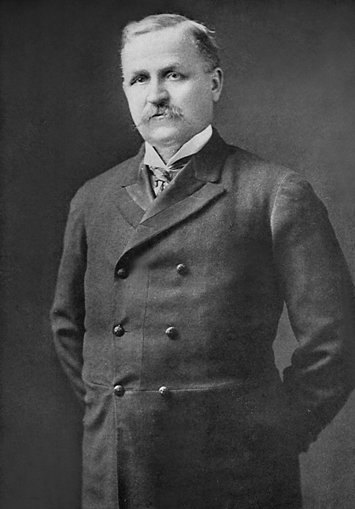
📖 Biography
Early Life and Coming to China
William Scott Ament was born in 1851 in Owosso, Michigan, USA. He graduated from the theological seminary of Oberlin College in Ohio and was ordained in 1876. In 1877 he and his wife, Mary Alice Penfield, were sent to China by the American Board of Commissioners for Foreign Missions (ABCFM) and assigned to the North China Mission, studying and serving in turn at Yantai (Chefoo) in Shandong, Tongzhou (Luhe) in Hebei, and Beijing. From the 1880s he was based at the Congregational compound at Dengshikou in Beijing, where he led the mission's preaching in the city, its boys' and girls' schools and its clinic.
Protecting Christians in the Boxer Uprising
When the Boxer movement broke out in 1900, he travelled alone with a train of carts to bring the Congregational co-workers at Tongzhou to Beijing. They first gathered at the Methodist compound (Xiaoshun Hutong) and organised self-defence together with the other missions, then moved into the British Legation for the fifty-five-day siege. He was the central organiser of the American Board missionaries in Beijing. After the Eight-Nation Alliance entered Beijing, he was appointed the American Board's representative for assessing losses. He assessed the Christian population and property losses across Zhili and oversaw the distribution of post-war indemnities, including helping local Christians redeem their houses and repair churches.
The Public Controversy
In February 1901 the American writer Mark Twain published "To the Person Sitting in Darkness" in the North American Review, insinuating that Ament had claimed excessive indemnities. The affair set off a fierce debate in the United States about missions in China. Ament wrote an open letter in reply and gave an account of the figures. The episode later became an important case study of the Boxer indemnities and of public opinion in China and the West.
Relief Work and Schools
Apart from the controversy, after the war Ament devoted himself to famine relief in Zhili, restoring churches for Christian communities, and taking part in the American Board's educational work in North China (Luhe College and others, later merged into Yenching University), and he supported Chinese preachers in taking charge of congregations. He died of illness in San Francisco, California, USA, in January 1909 and was buried in his hometown of Owosso, Michigan. His biography, William Scott Ament: Missionary of the American Board to China (1911), was published by the American Board and is an important source for the study of the American Board's North China work and the aftermath of the Boxer Uprising.