💬 Famous Quotes
📋 Basic Information
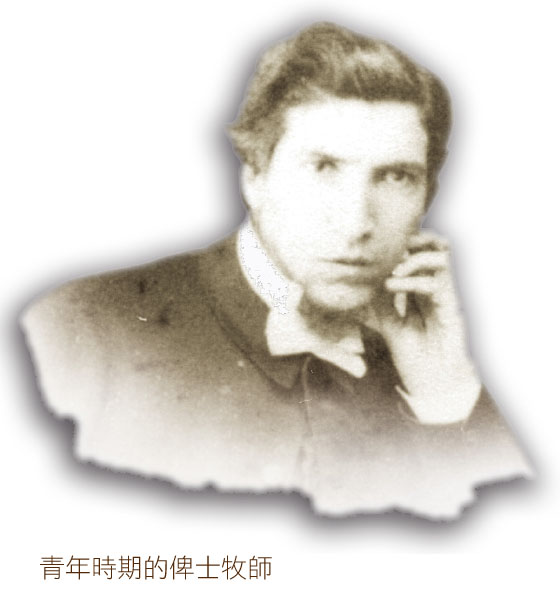
📖 Biography
George Piercy (Rev. George Piercy, 27 February 1829 – 16 July 1913) was the first missionary to China of the Wesleyan Methodist Missionary Society of Britain. He preached in China for 31 years, built churches, opened schools and hospitals, and translated Western devotional books into written vernacular Cantonese. He has been called “The Father of the Chinese Methodist Church.” He was a minister, an educator and a Bible translator.
Life
George Piercy was born in Pickering, Yorkshire, in northern England. As a young man he worked as a seaman; after two voyages he turned to farming for a living.
On 31 January 1851 (the 1st year of Xianfeng), Piercy, aged 21, arrived in Hong Kong at his own expense as a voluntary missionary. Only after arriving did he learn that Sergeant Ross, the Methodist soldier in the British forces whom he had planned to contact, had died of illness a week earlier. In December of the same year he went north to Canton (Guangzhou) to preach.
The Qing government had signed the Treaty of Nanking about ten years before, but it was still difficult for Westerners to enter China. Unable to enter the city, he handed out tracts at the city gates. Later, with the help of Liang Fa (梁发), a Chinese minister of the London Missionary Society, he began missionary work, evangelizing discreetly at the Thirteen Hongs in Canton in the guise of a clerk of a trading house. He also wrote continually to the British Methodist Church, reporting on the work and its progress.
In April 1852 Piercy applied to become an overseas missionary of the British Methodists. His application was approved, and the society sent two more ministers, Rev. W. R. Beach (毕治) and Rev. Josiah Cox (郭修理), to China, bringing with them a document from the Methodist missionary society in London appointing Piercy a minister.
In 1853 Piercy at last received the church's backing: he was formally ordained a minister and recognized as the first Methodist missionary sent to China. On Zengsha Street outside the South Gate of Canton he opened the Zengsha Wesleyan Chapel (增沙惠师礼堂), with an attached boys' school, Xinsha Academy (新沙书院). With these the Canton District was formed (it later grew into the South China District of the British Methodist Church, which had seven districts under it, including Hong Kong, and was named the Chinese Methodist Church in 1914), and he served as its first chairman.
When the Second Opium War broke out, the Methodist missionaries took refuge in Macau, and it was in Macau that the first Chinese Methodist church members in China came into being.
After the Treaty of Tientsin (Tianjin) was signed in 1858, Piercy and the other missionaries who had sheltered in Macau returned to work in Canton. Because of Macau's favorable environment, however, they decided to keep their residence there as a place of rest for Methodist missionaries, and set up a system by which families took turns going to Macau on leave. The missionaries opened chapels and preached, and founded Shengdao Academy (圣道书院) at Zengsha in Canton to train Chinese ministers.
In 1860 he pioneered work in Foshan, Guangdong, renting a house on Gudong Street for preaching. In 1861 he bought a house at Zengsha in Nanguan (the southern suburb) as a chapel, later called Zengsha Church. In 1862 he bought a house at Dishifu in Xiguan (the western suburb) and rebuilt it as a gospel hall with an attached school, later called Shifu Church; he also set up a gospel hall on Gaodi Street, later called Gaodi Church.
After returning to England in 1882, he continued to preach to Chinese sailors in the West India Docks area of London. He died at Pickering, Yorkshire, on 16 July 1913, and was buried there.
Writings
For mission work in Guangdong, Piercy translated and wrote popular works in written vernacular Cantonese (also called “Yangcheng tuhua” or “Yangcheng tubai,” the local speech of Canton), including:
- Gongdao Shu (The Book of Common Prayer)
- Weili Qi Pian Jiangzhang [Seven Sermons of Wesley]
- Tianlu Licheng (The Pilgrim's Progress, in the local speech) (Yangcheng tubai, 1871)
- Xiaochu Xundao [Instruction for Beginners], Canton: Taiping Tang Tract Society, the 7th year of Tongzhi (1868)
- Yiliya Jilüe [A Brief Account of Elijah], Canton: engraved by the Zengsha Book Room, the 2nd year of Tongzhi (1863) (written under the inspiration of Yuese Jilüe [A Brief Account of Joseph], a historical novel in chapters by Ho Tsun-sheen (何进善))
- Qimeng Shige [Hymns for Beginners], Canton: Wesleyan Chapel, the 2nd year of Tongzhi (1863)
- Chuxue Wenda [Questions and Answers for Beginners] (4 volumes, 1861–1864)
- Jiaohui Fayao [Essentials of Church Law]
- Dili Lüelun [A Brief Treatise on Geography] (1855)
- Xin Daowen Quanshu [New Complete Book of Prayers] (1859)
- Shengjing Zeyao Xianglun [Selected Passages of Scripture Explained in Detail] (1863)
- Gesong Shizhang [Hymns of Praise] (1863)
- Love for China: Exemplified in Memorials of Mary Gunson, the First Female teacher in Connection with the Wesleyan Methodist Mission at Canton (1865)
- A Veteran Missionary's Evidence as to the Evils of Opium in China (1896)
- The Chinese in London: A Fact and an Appeal (1883)
Bible translations in written vernacular Cantonese:
- Luke (1871); Colossians (1872); Paul's Shorter Letters to the Churches (1872); Galatians–Philemon (1872); Genesis (Old Testament) (1873); Genesis and Galatians–Philemon (1872-1873); New Testament (Gospels of Matthew, Mark, Luke and John, Acts, Colossians (1873/1871-1873)); New Testament (1877); Romans–Revelation (1877); Matthew (1882); Mark (1882); Genesis (1887); New Testament: Romans–Revelation (1899)
Family
Piercy's grandfather was a blacksmith; his parents, John and Hannah Piercy, made their living by farming. He was the sixth of seven children.
His first wife, Joan Wannop (温乐锺, 1830-1878), was likewise a missionary to China of the Wesleyan Methodist Missionary Society. She and Rev. Piercy had three sons and two daughters in China:
- John
- George Piercy, Jr. (1856–1941), the second son, who bore his father's name and was later known as the younger Piercy
- James Edward
- Jane (died in infancy)
- Anne Frances
A family photograph from 1862 shows his children Jane, John and the younger George.
In 1878 Joan Wannop fell suddenly ill with tuberculosis and died in Canton.
In 1882 Piercy returned to London, England, and remarried. His second wife was the Methodist woman missionary Anne Maria Taylor, and they had two sons and two daughters:
- Wilfred Ashton, the eldest son
- Lilian Mary, the eldest daughter
- Arthur Conrad, the second son
- Annie, the second daughter
Biographies and Histories
- Huang Zuo (黄作), ed., Huanan Xundao Gonghui Bainian Jianshi (1851-1950) [A Brief Centennial History of the Methodist Church in South China] (Hong Kong: Hong Kong District, 1950)
- John Rose (卢约翰), translated by Yang Lin (杨林), Kunan Chongchong de Jiaohui: Xundao Gonghui Huanan Jiaoqu Kaiji Yibai Nian de Lishi (1851-1951) [A Church of Many Sufferings: A History of the First Hundred Years of the Methodist Church, South China District] (Hong Kong: Methodist Church, Hong Kong, 1984)
- Wen Guowei (文国伟), Xundao Weili Ru Shenzhou [Methodism Enters China] (Hong Kong: Methodist Church, Hong Kong, 1995)
- Lu Longguang (卢龙光), Tang Kaijian (汤开建), Zhang Zhao (张照), Yan Xiaohua (颜小华), Kunan zhong Chengzhang de Jiaohui: Yingguo Xundao Gonghui Foshan Chuanjiao Fazhan Shi, 1851-1949 [A Church That Grew in Suffering: A History of the British Methodist Mission in Foshan, 1851-1949] (Hong Kong: Christian Study Centre on Chinese Religion and Culture, 2011. ISBN 9789627706250)
- Jane Ashby, A Life Remembered: George Piercy, 1829-1913: The Yorkshire Farm Boy Who Founded a Mission in Canton, China; Chinese translation (创建广州教会的约克郡农场男孩俾士的生活回忆,1829—1913), 2016