💬 Famous Quotes
📋 Basic Information
📖 Biography
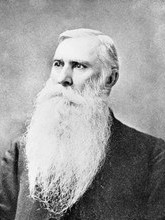
Andrew Young John William Allen (3 January 1836 – 30 May 1907), Chinese name Lin Lezhi (林乐知), was a nineteenth-century missionary to China of the Methodist Episcopal Church, South. He lived in China for 47 years and was known for running newspapers, founding schools and translating books; he had a great influence on the reform movement of the late Qing period.
Early life
Allen was born on the Allen estate in Burke County, Georgia, in the United States. Both his parents died when he was very young, and he was raised by his aunt and uncle, the Hutchins family, who were deeply loving Christians.
After primary school Allen entered Starrsville High School in Newton County, and during that time he accepted the Christian faith and joined the Methodist Episcopal Church, South. At 18 he entered Emory College in the United States, graduating in 1858 with a Bachelor of Arts degree. Soon after graduating he was ordained a minister, at only 22 years of age. In the same year Allen married Miss Mary Houston. Mary was also a gifted woman, who had graduated with distinction from Wesleyan College, Macon, Georgia.
The Second Great Awakening in America, which began in the early nineteenth century, influenced the young Allen, and a Methodist family who lived next door also stirred his feelings. When he took part in the activities of the Methodist church at that time, the preachers described to the congregation the backward conditions across the ocean in mainland China, such as poverty, the binding of women's feet, the abandonment of infants and the taking of concubines, in order to call people to go overseas as missionaries. All of this strengthened his resolve.
Since both husband and wife had a calling to overseas mission, soon after their marriage they were together sent by the mission board of the Methodist Episcopal Church, South, to the distant and mysterious land of China.
At the end of 1859 the Allens, with their newborn baby girl, boarded a ship in New York for China. Sailing across the Atlantic, around the Cape of Good Hope in Africa, across the Indian Ocean and by way of Hong Kong, they reached Shanghai in July 1860 (the 10th year of Xianfeng), after a voyage of 210 days. From then on Allen made Shanghai his base and began a missionary career of 47 years, giving the best years of his life to China without reserve.
Missionary career: a one-man mission station
When the Allens arrived in China in 1860 the country was in turmoil. In the north, the Anglo-French forces had entered Beijing and the Xianfeng Emperor had fled to Rehe. In the south, the Taiping armies had swept across Jiangnan, and countless people were displaced. Allen had planned to open a mission field in Hangzhou, and so was forced to stay in Shanghai for the time being. Soon after arriving in China he took the Chinese name Lin Yuehan (林约翰); later, drawing on the Chinese saying that "a Confucian scholar is ashamed if there is a single thing he does not know", he changed it to Lin Lezhi (林乐知), with the courtesy name Rongzhang (荣章), showing his deep interest in Chinese culture.
In 1861, his second year in Shanghai, the American Civil War broke out, and Allen's home state of Georgia joined the Southern side. Because of the war the mission board could not provide for its missionaries overseas, and Allen's funds were cut off; besides his mission work he had to take on other jobs to support his family. He worked for a time as a salesman and as an insurance broker to make a living. Later, through the introduction of Feng Guifen (冯桂芬), Allen obtained a post as English instructor at the Guang Fangyan Guan (广方言馆), a school run by the Qing government; soon afterwards, at the request of Xu Shou (徐寿), he went to translate books at the Translation Department of the Jiangnan Arsenal in Shanghai, while also serving as editor of the Shanghai Xinbao (《上海新报》), the Chinese-language newspaper of the North-China Herald office (字林洋行).
Allen described these hard days as follows: "For four whole years we received not a cent from our home church, nor a single line from relatives and friends. The family's livelihood fell into difficulty, and at first we got by for a time by pawning and selling mission property. But this could not go on for long, and to feed my wife and children I could only set aside the proper work of mission for a time and go out to work for wages." His colleague John Fryer (傅兰雅) described Allen this way: "Every morning he taught English at the Guang Fangyan Guan, in the afternoon he went to the Jiangnan Arsenal to translate foreign books, in the evening he edited the newspaper, and on the Lord's Day he preached everywhere. In ten years he never had a moment's rest."
Allen worked this hard for 16 years. According to later records in the Church News, his main translations of this period numbered more than 10, including Science Primers: Natural History (《格致启蒙博物》), Science Primers: Chemistry (《格致启蒙化学》), Science Primers: Astronomy (《格致启蒙天文》), Science Primers: Geography (《格致启蒙地理》), A General History of the World (《万国史》), A History of Europe (《欧罗巴史》), A History of Germany (《德国史》), A History of Russia (《俄罗斯国史》), A History of India (《印度国史》), An Account of Eastern Diplomacy (《东方交涉记》), The Statesman's Yearbook of the Nations (《列国岁计政要》), Armies of the Nations (《列国陆军制》), Newspapers (《新闻纸》) and Primer of Geology (《地学启蒙》). In 1876 the Qing government, to honour his contributions to translation and teaching, granted him an official rank of the fifth grade, and later "by imperial favour the rank of the fourth grade". During the same period Allen's understanding of Chinese society and culture grew ever deeper, and one question he kept turning over was how Christianity could be adapted to Chinese culture so that it might spread widely in China.
The strategy of "those below follow those above"
From the 1870s Allen turned from direct street preaching to the "those below follow those above" method of mission: first influencing the scholar-official class, and then reaching the common people. This method required the missionary:
- first, to understand and study Chinese society seriously, and to transform China in a way suited to the characteristics of its culture;
- second, to blend Christian teaching with the Confucian culture that was dominant in China, and then gradually replace Confucian culture with Christian culture;
- third, to use the spread of advanced Western science and culture as a means, such as promoting education, building hospitals and running newspapers, to raise the quality of the Chinese people, extend the influence of Christianity and draw more Chinese to the Christian faith.
Through teaching and translation Allen brought a great deal of Western knowledge and technology into China, to influence what the Chinese saw and heard and so give them a favourable view of Christianity. For this reason he paid close attention to the state of Chinese society, and especially to analysing the social structure of the late Qing. After carefully observing China's domestic and foreign affairs, Allen concluded that for the gospel to spread widely it was necessary to win the "scholars" (士) and befriend the "officials" (官). He held that in China "the scholars are the first of the four classes of people", and that officials and merchants mostly came from among the scholars; to win the scholars was to win Chinese culture and society. He therefore adopted a "top-down" strategy of mission: to begin with the officials and scholars of the upper class, trying to make officials and gentry Christians so that "those below follow those above", and then to preach the gospel to ordinary people. Done this way, he believed, the work would yield double the result for half the effort. In the 1860s and 1870s he therefore made friends with a number of scholars and officials, such as Feng Guifen, Li Hongzhang (李鸿章), Ding Richang (丁日昌) and Zhang Zhidong (张之洞). These men were generally open-minded and eager for new knowledge; what they valued was Allen's broad Western learning, while Allen, relying on the social standing of these officials and gentry, sought through them to spread the gospel from the top down. Through these contacts Allen became a good friend of officials and prominent figures in the Shanghai area at that time.
The strategy of "Confucianism and the Bible agree"
Allen also placed great weight on using Confucian teaching to explain Christian doctrine. He compared the Confucian "Three Bonds and Five Constants" point by point with Christian teaching and concluded that the two agreed in reason and sentiment and did not differ in essence. Citing the classics and the Scriptures, he found in Christian teaching instructions on the relations between ruler and subject, father and son, husband and wife, and even brothers and friends, and concluded: what Confucianism values is the five relationships, and Christianity also values the five relationships, as the Bible bears witness. He further held that Confucianism speaks of "benevolence" (仁), while in Christianity "love is benevolence"; Confucianism speaks of "righteousness" (义), and "the LORD delights in righteousness"; Confucianism speaks of "propriety" (礼), and the Bible tells people to "give way to one another in courtesy"; Confucianism speaks of "wisdom" (智), and the Bible says "the gift of wisdom is more precious than pearls"; Confucianism speaks of "faithfulness" (信), and the Bible has "resting in faith", that is, faith is the highest virtue. In short, in Allen's view Confucius and Jesus were alike, and Confucianism and Christianity were in agreement.
The strategy of "Western learning first, then the Western religion"
Another of Allen's strategies was to proceed "from the branches to the root", meaning Western learning first and then the Western religion: first to spread Western scientific knowledge so that the scholar-officials of Chinese society would have their minds opened and their horizons broadened, and would then yield to the realm of new Western thought, after which Christian doctrine could gradually be introduced. Allen advocated a strategy of "using learning to support the teaching", and from this came his two ways of pursuing his missionary goals: "running newspapers" and "founding schools".
Editor of the Wanguo Gongbao
On 5 September 1868 Allen founded the Church News (《教会新报》), a weekly that focused on articles explaining doctrine and on "letters from fellow believers everywhere" to keep Christians in touch with one another. On 5 September 1874 the Church News was renamed the Wanguo Gongbao (《万国公报》). It remained a weekly, but its contents began to become non-religious, with an emphasis on introducing "new Western learning", and it was appreciated by many intellectuals. In 1883, after 750 issues, it ceased publication for financial reasons.
In 1887 the Society for the Diffusion of Useful Knowledge (广学会) was founded and decided to make the paper its official organ, still edited by Allen. The Wanguo Gongbao therefore resumed publication in 1889, but with the English name changed to The Review of the Times, appearing once a month. Intellectuals of the time who wanted to learn about Western knowledge had to read the Wanguo Gongbao, calling it "the great collection of new Western learning". During the reform movement after the First Sino-Japanese War (1895–1898) its circulation reached as high as 38400 copies, and in 1903 it rose to more than 54,000, making it the most widely circulated periodical in China at the time. From important government officials such as Li Hongzhang and Zhang Zhidong to the Emperor of Japan, readers subscribed to it for many years. Sun Yat-sen's "Letter to Li Hongzhang" and "Memorial to Li Hongzhang" were also published in the Wanguo Gongbao.
After Allen died of illness in Shanghai on 30 May 1907, the Wanguo Gongbao ceased publication in July.
The Anglo-Chinese College and the McTyeire School
- In 1882 Allen founded the Anglo-Chinese College (中西书院) in Shanghai to train people for China's modernization. Its first intake was more than 400 students, while St. John's College at the time had only seventy or eighty.
- The college's permanent campus was built in Hongkou (opposite today's Jingling Church on Kunshan Road; Jingling Church was originally called Jinglin Church, meaning "the church that honours Lin Lezhi").
- In 1900 the Methodist Episcopal Church, South, decided to merge the Buffington Institute in Suzhou, the Kung Hang School (1896) and the Anglo-Chinese College in Shanghai, and to expand them into Soochow University, with its campus at Tianci Zhuang in Suzhou. Allen was chairman of the board and David L. Anderson (孙乐文) was president. The main building of Soochow University was named "Lin Hall" (林堂).
- After the Anglo-Chinese College was merged into Soochow University, its original buildings became Soochow University's Second Affiliated Middle School.
- In 1892 the McTyeire School (中西女塾, later 中西女中) opened on the west side of Moore Memorial Church (慕尔堂, today's Mu'en Church on Xizang Road); most of its students came from wealthy Shanghai families.
- On 30 May 1907 Allen died of illness in Shanghai.
Works
- Women in All Lands (《全球五大洲女俗通考》).
- Zhongdong Zhanshi Benmo [A Full Account of the Sino-Japanese War] (《中东战事本末》), published in 1896. It exposed the truth of the First Sino-Japanese War and criticized long-standing bad habits in China, shaking Chinese intellectual circles.
- Yindu Li Ying Shier Yi Shuo [On Twelve Benefits of India's Subjection to Britain] (《印度隶英十二益说》).
- Allen, Young John 1836-1907, translator: Life of Chrysostom (《基扫斯登信道记》). Shanghai: Society for the Diffusion of Useful Knowledge, 1923. Christian Literature Society collection, Hong Kong Baptist University Library; Chinese Christian Archives Preservation Project.
- Allen, Young John 1836-1907, translator: Life of Martin Luther (《路得改教纪略》). Shanghai: Society for the Diffusion of Useful Knowledge, 1923; reprinted 1937 (copy held by Hong Kong Baptist University Library). Christian Literature Society collection, Hong Kong Baptist University Library; Chinese Christian Archives Preservation Project.