💬 Famous Quotes
📋 Basic Information
📖 Biography
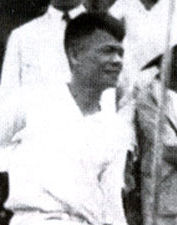
Montagu Harry Proctor-Beauchamp (April 19, 1860 – 1939), Chinese name Zhang Bicheng (章必成), was a British missionary of the China Inland Mission. He was one of the Cambridge Seven who joined the China Inland Mission and went to China as missionaries in 1885.
Early life
He was born on April 19, 1860, in London, the fourth son of his family. He entered Trinity College, University of Cambridge, in 1879, received a BA in 1883 and an MA in 1914.
Mission in China
In 1885, influenced by the well-known missionary Hudson Taylor, Proctor-Beauchamp was one of the Cambridge Seven who resolved at that time to join the China Inland Mission and go to China as missionaries. They left London on February 5, 1885, and arrived in Shanghai on March 18. After studying Chinese for some time, they put on Chinese clothing and set out for the interior by separate routes: C. T. Studd and the Polhill-Turner brothers went west up the Yangtze and Han rivers to Hanzhong, while Proctor-Beauchamp accompanied them only as far as Hankou, then travelled separately north via Tianjin to Shanxi, joining William Cassels, Dixon Hoste and Stanley Smith at Taiyuan; he studied the language at Taiyuan and Pingyang and later worked at Xizhou. He afterwards moved to Sichuan, helping William Cassels and other China Inland Mission missionaries of Anglican background to establish a diocese of the Church of England in Sichuan Province.
He withdrew from China during the Boxer upheaval of 1900 and returned to China in 1902. In 1906 Proctor-Beauchamp became an Anglican clergyman in Sichuan. He married Florence Barclay, a woman missionary of the China Inland Mission, and they had children.
Later years
In 1910 Proctor-Beauchamp returned to England. From 1914 to 1918 he served as vicar of Monkton Combe in Somerset, from 1916 to 1921 as a chaplain in the British Army, and from 1921 to 1928 as clerical deputation for the Army Scripture Readers' Society.
On August 12, 1915, he succeeded his elder brother in the baronetcy.
Proctor-Beauchamp resumed work for the China Inland Mission intermittently, including serving as a member of deputations to India and West China in 1929–1930 and 1935–1936. In 1935 his son became a second-generation missionary to China, and he too returned to China. In 1939 Proctor-Beauchamp died at his son's mission station in Langzhong, Sichuan, and was buried in the cemetery of St. John's Cathedral in Langzhong.
Writings
- Days of Blessing in Inland China (1887; related literature: compiled by the China Inland Mission, Beauchamp being one of the participants)