💬 Famous Quotes
📋 Basic Information
📖 Biography
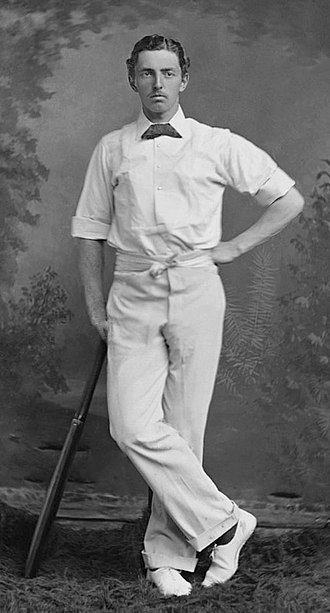
Charles Thomas Studd (December 2, 1860 – July 16, 1931), Chinese name Shi Dade (施达德), was a well-known English cricketer who represented England in major matches. In 1885 he changed course to become a missionary (as one of the Cambridge Seven) and worked successively in China, India and Africa.
Life
Studd was born on December 2, 1860, in Spratton, Northamptonshire, England, the youngest of the three Studd brothers famous as cricketers (Kynaston, George and Charles). His father, Edward Studd, had become very wealthy by growing indigo in India. After retiring to England he became an avid follower of horse racing and established a large racing stable.
At 16 Studd showed a talent for cricket, and at 18 (in 1879) he was captain of the Eton College cricket team. He left Eton the same year and entered Trinity College, Cambridge, graduating in 1883. He played in the most famous cricket contest in the world, the Ashes, and was an outstanding batsman.
In 1877, introduced by a friend named Wensheng (文生), Studd's father Edward Studd attended the evangelistic meetings of Moody and Sankey at the Drury Lane theatre and became a devout Christian. He gave up his racing business and became zealous in spreading the gospel. During the summer holidays of 1878, Edward Studd invited preachers to the family estate, and through a private conversation with one of the speakers Studd experienced new birth and, like his father, became a Christian who was "in earnest."
In 1884 Studd's elder brother George fell seriously ill, which forced Studd to think about the serious questions of life. He therefore decided to give up cricket and joined the China Inland Mission founded by Hudson Taylor. In February 1885 he set out for China as a missionary together with 6 other Cambridge graduates (together known as the Cambridge Seven): Montague Beauchamp, Stanley Smith, Cecil H. Polhill-Turner, A. T. Polhill-Turner, Dixon Edward Hoste and William W. Cassels.
In 1888, in Tianjin, China, Studd married Priscilla Stewart, a woman missionary from Ireland. Before the marriage Studd had already resolved to do as Jesus told the rich young ruler in the Bible and sell everything he had. He had inherited about 29,000 pounds sterling and gave away the greater part of it: 5,000 pounds to Moody's Bible school in Chicago, 5,000 pounds to George Müller's mission work and orphans in Bristol, 5,000 pounds to George Holland's work among the poor of Whitechapel in London, and 5,000 pounds to Frederick Booth-Tucker of the Salvation Army for its work in India, besides a number of smaller gifts. The remaining 3,400 pounds or so his bride, after their marriage, likewise gave away entirely to the Lord's work.
After their marriage they had 4 daughters (Grace, Dorothy, Edith and Pauline) and 2 sons.
Studd died on July 16, 1931, at Ibambi in the Belgian Congo.