💬 Famous Quotes
📋 Basic Information
📖 Biography
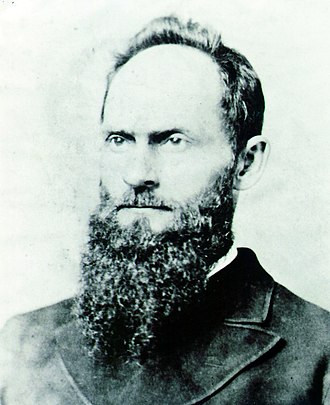
George Leslie Mackay, whose Chinese name is transliterated as Xie Ruili (偕叡理) (Pe̍h-ōe-jī: Má-kai; Tâi-lô: Má-kai; 21 March 1844 – 2 June 1901), was born in Ontario, Canada. He was a minister of the Canadian Presbyterian mission; although he was not a physician, he had taken courses in anatomy and physiology. In the late 19th century he went to Taiwan to preach and practise medicine, and his name stands alongside that of James Laidlaw Maxwell (马雅各). In Taiwan he was generally known as “Dr. Mackay” (马偕博士) or “Pastor Xie” (偕牧师). His life has been praised with the words “Rather burn out, than rust out,” and his motto was “All for Christ” (Tâi-lô: Lóng sī uī Ki-tok).
Early Life
Mackay's family were originally tenant farmers in Sutherland in the Scottish Highlands. The enclosure movement brought on by Britain's Industrial Revolution led to the Highland Clearances, and members of the Mackay family fled one after another to Canada; his parents emigrated in 1830.
On 21 March 1844, Mackay (Rev. George Leslie MacKay, D.D.) was born in the village of Zorra in Oxford County, Ontario, Canada. He had three older brothers and two older sisters and was the youngest in the family. His father, George MacKay (1799–1884), was an elder of the Presbyterian “Old Log Church” in Zorra; his mother was Helen (1801–1885). The Old Log Church was built in 1832 by immigrants from Sutherland, Ross, Inverness and other shires of the Scottish Highlands, and its first minister was Rev. Donald McKenzie (1798–1884) from Scotland. The local theology was a “stern old Calvinism”: fearing God, teaching children to read the Bible and believe in the Lord, heeding the voice of one's conscience, keeping the Sabbath and delighting in it, and honouring and loving the minister.
The year of Mackay's birth (1844) was the year of the great split in the Presbyterian Church in Canada. McKenzie became Superintendent of Education for Zorra; he encouraged villagers to sit for teaching certificates and teach in rural schools, with their salaries paid by the government. In all, McKenzie led 38 young men into missionary work, including Mackay, who went to Taiwan.
In 1850, at the age of 6, Mackay entered primary school in Woodstock. In 1855 (aged 11) he finished primary school and entered the Toronto Normal School, graduating in 1858 (aged 14). From 1859 (aged 15) he taught at Maplewood School and Maitland School for five or six years. In September 1866, at 22, he entered Knox College at the University of Toronto for further study. In September 1867 he transferred to Princeton Theological Seminary in the United States, graduating on 26 April 1870 and returning to Canada.
In August 1870 Mackay was sent to serve the New Market church in Toronto. That autumn he applied to the Foreign Mission Committee of the Canadian Presbyterian Church, volunteering as an overseas missionary. Although the church had set up its foreign mission committee several years earlier, all its work was still at the preparatory stage, and it had never handled an application like his. Many considered him a rash young man and treated him coolly, and the application was not approved at once. While waiting, in November he went to the theological faculty of the University of Edinburgh in Britain for further study, under teachers including the great evangelist Dr. Duff (都福).
In April 1871 Mackay received a letter from the chairman of the Foreign Mission Committee of the Canadian Presbyterian Church (Rev. Professor William MacLaren, D.D.) saying that his application had been approved and submitted to the General Assembly. In mid-June the General Assembly met in Quebec and resolved to send him to China as a missionary, so he packed up and returned to Canada. On 19 September 1871 the Presbytery of Toronto, commissioned by the General Assembly, ordained Mackay as a minister at a Toronto church. Knowing little about China, Mackay sought out and bought the books on China displayed in bookshops. He was also keenly interested in the much-noticed naturalist Wallace's account of the Malay Archipelago and related books. One question stayed in his mind: “Do the animals and plants of islands off the edge of a continent develop into different species because of geographical isolation?”
Early Years in Taiwan (30 December 1871 – 1 January 1880)
Journey to Tamsui
On 19 October 1871 Mackay said farewell to family and friends at home and took the train from Woodstock to San Francisco in the United States. On 1 November he sailed from San Francisco on the SS America across the Pacific, by way of Japan, to Hong Kong. On board he met several missionaries serving in China; one of them, David (大卫), an American Presbyterian missionary stationed at the American Presbyterian Mission Press in Shanghai, gave Mackay a table of Chinese character radicals.
He reached Hong Kong on 5 December 1871. The next day, accompanied by two representatives of the English Presbyterian Church, he took a steamer up the river to the English Presbyterian mission station in Guangdong. Members of the mission meeting suggested that he go to Shantou, but a layman, Mr. Smith, was already responsible for evangelism there. After a period of investigation, Mackay decided to work in Tamsui.
On 30 December 1871 Mackay arrived at Takow (now Kaohsiung), Taiwan. At that time the Qihou (旗后) hospital in Takow had been taken over by Dr. David Manson, younger brother of Dr. Patrick Manson. The hospital on Jilaokou Street (二老口街) in Tainan (near today's Bo'ai Hall of the school for the deaf) was in the charge of Dr. Matthew Dickson, and Dr. James Laidlaw Maxwell had left Taiwan for Britain in November 1871. Mackay wrote in his diary: “…Dr. Manson took me ashore; he was generous and kind to people,” referring to Dr. David Manson.
On 1 January 1872 Mackay went from Takow (Kaohsiung) to Alikang (阿里港, now Ligang Township, Pingtung County) to visit Rev. Hugh Ritchie (1840–1879), and stayed with him as a guest for 2 months. On 7 March Ritchie accompanied Mackay from Takow on the steamer Hailoong (海龙号) to northern Taiwan; when they passed Tainan, Dr. Matthew Dickson joined them.
At 3 p.m. on 9 March 1872, the party of 3 landed at Hobe (沪尾, now Tamsui).
Early Mission Work
On 11 March, Ritchie and Dickson set out to walk south overland to inspect Dashe (大社) in Taichung, the northernmost preaching station of the southern district (at that time Taiwan was divided into southern and northern districts at the Dajia River), and Mackay gladly went with them. On 2 April, in front of the Dashe chapel, Mackay parted from Ritchie and Dickson, who continued south. Mackay spent over a month travelling through and surveying the northern district, returning to Hobe (Tamsui) at 4 p.m. on 6 April.
On 10 April (4 days later), Mackay rented a house and began preaching, establishing the first church in the north. Church history therefore records that on 10 April 1872 Mackay founded the first church in northern Taiwan, the Tamsui Church. On 1 June he began giving medical treatment in his rented lodging.
On Sunday 14 April, Mackay put together the Taiwanese he had learned while staying with Ritchie and preached in Taiwanese for the first time. Knowing that he could not fulfil his mission without fluency in the local language, he learned colloquial Taiwanese from his servant and from boys herding cattle, and eventually spoke it fluently. On 19 April his first disciple, Yan Qinghua (严清华), appeared. An educated young man, he put several questions to Mackay, and Mackay gave him a hymnbook. From then on Yan Qinghua (“A Hoa,” 阿华) often came to hear the gospel and brought friends with him. Early on 25 April, A Hoa arrived at Mackay's house smiling and in high spirits, presented himself to Mackay as a student, and swept the house for him. The church in northern Taiwan therefore regards 25 April as the first day of Mackay's formal teaching in northern Taiwan, especially of theological education.
On 9 January 1873 Mackay himself baptized 5 believers: Yan Qinghua (22), Wu Kuanyu (吴宽裕, 31), Wang Changshui (王长水, 24), Lin Nie (林孽, 26) and Lin Bei (林杯, 42). On 16 January the Lord's Supper was held. Both were firsts for the northern church. The first believer, Yan Qinghua, later became the first preacher, and also the first local-born minister of the northern church.
After the Tamsui Church was founded, the Wugukeng (五股坑) church was completed on 2 March 1873, the first chapel building in northern Taiwan. Mackay went on to preach the gospel and found churches in places such as Xingangshe (新港社, a Pingpu community, now Xingang in Houlong) and Heshangzhou (和尚洲, now Luzhou).
On 29 January 1875 the Canadian Presbyterian Church sent its first reinforcements, Dr. J. B. Fraser (Rev. J.B. Fraser, M.D.) and his wife, to Taiwan. He was a physician of internal medicine, and because of their arrival the church funded two comfortable, spacious missionary residences for them. Sadly, Mrs. Fraser died of illness on 4 October 1877, and soon afterwards Dr. Fraser returned home with his two daughters.
In the summer of 1878 the Canadian Presbyterian Church sent Rev. Kenneth F. Junor and his wife to assist Mackay. When Mackay returned to Canada on his first furlough (1880), the mission work in Taiwan fell to Junor and A Hoa.
By 1878 the Foreign Mission Committee (FMC) of the Canadian Presbyterian Church had noticed Mackay's considerable results in Taiwan and wrote asking him for a report on what methods he was using. Mackay set out the following 4 points:
- (1) Travelling and dispensing medicine: although the hospital did much to change local prejudices about medicine and health, we believe that more was achieved through the medical work done house by house as we travelled from village to village in the countryside.
- (2) Travelling and preaching: Mackay usually visited a place many times, providing medicines, before beginning to preach the gospel to the local people, often explaining the good news of salvation street by street, house by house, and person by person.
- (3) Travelling and training young men: wherever Mackay went, some young men always followed him, and whether trudging along the road, strolling by the sea or sitting quietly in a classroom, he used the opportunity to teach the students their daily lessons.
- (4) Travelling, and placing trained helpers in charge of churches already established: wherever further teaching was needed, a local helper would be sent to carry on the work already begun.
The 4 methods in this report share one key word: “travelling.” In his first 7 years, Mackay spent only 175 days living in Tamsui.
Marriage
On 27 May 1878, so that women too could be cared for, Mackay decided to marry a Taiwanese woman. He married Zhang Congming (张聪明, original name 张葱仔), a Kavalan woman from Wugukeng (now Wugu District, New Taipei City), whom he loved. On 24 May 1879 their daughter Mary Ellen Mackay (偕玛连) was born at Dalongdong (大龙峒).
First Return to Canada (1 January 1880 – end of December 1881)
The Journey to Canada
On 1 January 1880 Mackay, his wife and their elder daughter left for Canada on furlough. The family travelled by way of Xiamen, Quanzhou, Shantou, Hong Kong, Singapore, Penang, Calcutta and Bombay, preaching, visiting churches, temples and museums, and calling on churches and on doctor friends along the way. They reached Aden on 7 April and entered the Red Sea on the 8th; on 13 April they passed through the Suez Canal, and on 14 April they reached Cairo, where they saw the pyramids and the Sphinx. Between 21 April and 3 May they were in Jordan and Jerusalem, visiting the Church of the Holy Sepulchre, the Wailing Wall, the Dead Sea and Bethany, and riding a donkey to Bethlehem. On the 9th they entered the Mediterranean from Alexandria. From the 15th to the 18th they were in Naples, Italy, visiting the ruins of Pompeii and Mount Vesuvius; on the 18th they took the train to Rome and saw the Colosseum, St. Peter's Basilica and the Pantheon; on the 20th they visited the Vatican Palace; on the 23rd they crossed the Alps by train; on the 24th they reached Paris; on the 26th they took the train to Calais and Dover, crossing the Strait of Dover; and on the 27th they took the train to London, staying until the 31st. Besides Mackay's speaking engagements, hearing sermons and visiting friends, they also visited St. Paul's Cathedral and Westminster Abbey. On 4 June they reached Edinburgh, where Mackay gave many addresses; they visited Edinburgh Castle and also watched a Highland regiment and a court-martial. On 12 June they sailed on; travelling at high latitude, on 20 June they saw huge icebergs at sea.
On the morning of 24 June 1880 the Mackay family at last reached Quebec, Canada, and on the 25th they arrived safely in Ontario.
Birth of a Second Daughter
On 4 September 1880 their second daughter, Bella Catherine Mackay (偕以利), was born in Canada.
Honorary Doctorate of Divinity
During this furlough of more than a year, Mackay preached, lectured and attended meetings across Canada and the United States, and received many donations. Mrs. Mackay also went with him to report to churches and spoke to women's groups; as the first Taiwanese woman to visit, she aroused much curiosity and interest. In 1880 Mackay received an Honorary Doctor of Divinity degree from Queen's College (now Queen's University) in Canada.
Speaking and Fundraising
At that time Mackay's fellow townspeople in Oxford County started a fundraising campaign to build a theological college in Tamsui. In 1881, before the family returned to Taiwan, friends and relatives held a farewell meeting at the largest church in Woodstock, Central Methodist Church. Mrs. Mackay was invited to the platform to speak and shared her experiences and impressions of Canada. Finally a representative of the newspaper presented Mackay with the proceeds of the campaign, more than 6,000 US dollars. On 21 October 1881 Mackay left Canada for Taiwan, arriving safely in Tamsui on 29 December and beginning the second stage of his mission in Taiwan.
Middle Years in Taiwan (end of December 1881 – 18 August 1893)
Birth of His Only Son
On 22 January 1882 his only son, George William Mackay (Dr. George William Mackay, 偕叡廉), was born in Tamsui.
Oxford College
On 26 July 1882 Oxford College (牛津学堂) was completed; its formal Chinese name was Li Xuetang Da Shuyuan (理学堂大书院). Classes began for the first time on 15 September (a Friday). Besides Mackay, Chen Ronghui (陈荣辉, also called Huo 火) and Yan Qinghua taught the students, of whom there were 18. Two of them, Guo Xixin (郭希信) and Chen Qinghe (陈清和), later became ministers.
Not long afterwards (9 November 1882), Rev. Junor returned home with his family for health reasons. In March 1883 the Canadian Presbyterian Church sent Rev. John Jamieson and his wife to fill the gap. The Jamiesons and Mackay went through together the war years of the Sino-French War, when French warships blockaded and bombarded Taiwan (August 1884 – June 1885). During his time in Taiwan, Jamieson had friction with Mackay that caused a public stir, but they were reconciled in the end. Jamieson died of illness in Tamsui on 23 April 1891, and his wife soon returned home to live. On 22 October 1892, the year after Jamieson's death, the Canadian Presbyterian Church's 4th missionary couple, Rev. William Gauld and his wife, arrived in Tamsui to help Mackay.
Mission in Yilan and Hualien
In 1883 Mackay went to preach in Yilan, Hualien and other areas where Indigenous peoples lived, and in 1887 the Su'ao Church was founded.
The Sino-French War
The Sino-French War (also called the Qing-French War) took place between 1883 and 1885. In August 1884 the French Far East squadron defeated the Qing Fujian Fleet and took control of the Taiwan Strait, and in early October the French ships turned to attack Taiwan. Liu Mingchuan (刘铭传) abandoned Keelung and withdrew to defend Taipei. On 8 October French troops attempting a beach landing at Hobe (Tamsui) were driven back by Qing troops and Taiwanese militia; from 23 October the French instead blockaded Taiwan's ports, until the blockade was lifted on 15 April 1885. During the war, churches were damaged by mobs: 7 churches were destroyed and dozens of believers were killed as martyrs. On 29 May 1885 Mackay went to inspect the French-occupied area, and on the way he had an audience with Liu Mingchuan.
On 28 September 1885 Liu Mingchuan paid compensation of 10,000 taels in Mexican silver dollars (佛银) to rebuild the 7 churches, known as the “compensation churches.” The churches were designed by Mackay, with walls mostly of sun-dried mud brick and fired brick, Western-style roof trusses and Taiwanese roof tiles. Small towers projected from both ends of the roof ridge. Some had a tall five-tiered spire at the centre of the façade, each tier with a different decorative motif carrying symbolic meaning, such as mission to the East, the eastern and western hemispheres, the bush burning but not consumed, and a burning candle. The 7 compensation churches were at Kelang (now Keelung), Heshangzhou (now Luzhou, New Taipei; original church built 1883), Baliben (八里坌, now Bali, New Taipei; original church built 1884), Xikou (锡口, now Songshan, Taipei), Bangka (艋舺, now Wanhua, Taipei; built 1889), Dalongdong (now Datong District, Taipei; built 1885) and Xindian (built 1884).
Second Return to Canada (18 August 1893 – 19 November 1895)
On 18 August 1893 Mackay set out with his whole family and his disciple Ke Jiu (柯玖, also known as Ke Weisi 柯维思) on his second furlough to Canada. They were seen off by an enthusiastic procession, with a band playing, guns fired, and firecrackers and fireworks set off. They reached Hong Kong on 20 August and stayed several days. On 6 September they boarded the British steamer Empress of India and set out east across the Pacific, by way of Shanghai, Nagasaki, Yokohama and other ports. The passengers included Japanese, French and Americans; the captain led worship on board and arranged for the Mackay family to see the ship's engines. It was a pleasant voyage. However, when they arrived at Victoria on 26 September, customs officials made difficulties and forbade the family to land, insisting that because Mrs. Mackay was Chinese she must pay the “head tax.” Fortunately staff of the Canadian Pacific Railway (Canadian Pacific Railway Limited) helped, declaring that she was British and fully entitled to land free of charge.
After reaching their home in Canada on 9 October 1893, the family spent nearly two years there. Mackay was still busy preaching everywhere, especially after being elected Moderator of the General Assembly on 13 June 1894. On this furlough he spent much of his time writing, and in September 1895 he completed his book From Far Formosa, which went to press (in Chinese, Taiwan Yaoji (台湾遥寄); the 2007 Chinese edition was retitled Fuermosha Jishi: Majie Taiwan Huiyilu [Formosa Chronicle: Mackay's Taiwan Memoirs] (福尔摩沙纪事:马偕台湾回忆录)). The book records his experiences, observations and research over more than twenty years in Taiwan. The family also enjoyed many visits to relatives and friends, meetings, harvesting crops together, outings and fishing. On 27 September 1895 the family left Woodstock to return to Taiwan.
Mackay in Taiwan under Japanese Rule (19 November 1895 – 2 June 1901)
On 19 November 1895 Mackay arrived at the port of Tamsui to face a Taiwan now under Japanese rule.
After the First Sino-Japanese War, the Treaty of Shimonoseki ceded Taiwan and the Penghu Islands to Japan. On 29 May 1895 Japanese troops landed at Aodi (澳底), and uprisings against Japan broke out across Taiwan. In this situation Christians in many places again suffered persecution and losses. Seeing this, Mackay called on Governor-General Nogi Maresuke (乃木希典) to tell him how the Taiwanese church had suffered.
On 9 March 1899 Mackay's two daughters were married on the same day: the elder, Mary Ellen Mackay, married Rev. Chen Qingyi (陈清义), and the younger, Bella Mackay, married Elder Ke Weisi (柯维思, original name Ke Jiu 柯玖). Both became “daughters-in-law of Taiwan.”
Death
After his last tour of the churches of Yilan in the Kavalan region, Mackay returned to Tamsui. After years of calling people to repent and believe, his voice had become hoarse. Dr. McClure, a missionary in Henan Province on the Chinese mainland, came to Taiwan at the direction of the home church in Canada to examine him and diagnosed throat cancer. When Oxford College began its term, he could not even teach. Later his throat ulcerated, and food he swallowed leaked out through the hole in his throat. Knowing that God's time to call him had come, he slipped away while his family and the students who took turns nursing him were not watching, suddenly ran to the college, rang the bell loudly to gather the students, and with great effort taught his last lesson.
At 4 p.m. on 2 June 1901, after more than a year of struggling with throat cancer, Dr. Mackay died at his home in Tamsui, aged 57. He was buried in the Mackay family cemetery in what is today the campus of Tamkang High School. After his death, his only son George William Mackay went to university in Canada, then earned a master's degree in education at Clark University in Massachusetts, USA. In 1911 he married Miss Jean Ross (萝丝仁利), and after the wedding returned to Taiwan to take up his father's mantle, continuing in mission and education. In 1914 he founded Tamkang High School, which during the Japanese period became a church school where Taiwanese young people could receive an education. George William Mackay had two sons and three daughters; the two sons, Xie Weili (偕威理) and Xie Yuehan (偕约翰), both grew up in Tamsui. Today Mackay's descendants live in Canada and Taiwan.
Contributions
Medicine
Mackay began free medical work in his own home, taught people about public health, pulled decayed teeth, gave out a specific remedy for malaria, and treated festering foot sores (popularly called “stinking foot”). He also imported vegetable seeds from abroad, such as radish, cabbage, tomato, green beans, cauliflower and carrot, and introduced them to farmers. Mackay brought a great deal of Western scientific knowledge to Taiwan, spreading the gospel in many-sided ways, and from then on the number of converts grew day by day.
In 1879 Mackay received a gift of 3,000 US dollars from a Mrs. Mackay of Detroit, USA, of the same surname (the widow of a Captain Mackay), and with 2,500 dollars of it he built at Hobe (today's Tamsui District, New Taipei City) the first Western hospital in northern Taiwan, the Hobe Mackay Hospital (沪尾偕医馆), forerunner of Mackay Memorial Hospital; it was completed in September that year. It could treat the people and also helped the mission. The Taipei branch of Mackay Memorial Hospital stands on Zhongshan North Road beside Shuanglian Station.
Mackay often travelled and preached with his helpers, going deep into the villages where Indigenous peoples lived and pulling teeth by the roadside whenever needed. He recorded in his diary how many teeth he had pulled the day before and how many that day. Over his lifetime Mackay pulled more than 21,000 teeth for the people of Taiwan.
During the Sino-French War, when French troops attacked northern Taiwan, frightened crowds turned hostile to all Westerners and to Christianity, gathering to tear down churches and dig out their foundation stones. But after the French heavily bombarded Tamsui, the Mackay Hospital was crowded inside and out with wounded soldiers, and Mackay was commended by the Qing court for his devoted care of them.
Education
On 26 July 1882 Mackay founded Oxford College (Chinese name Li Xuetang Da Shuyuan 理学堂大书院, now Aletheia University). Two years later, in 1884, he built Taiwan's first school for girls, the Tamsui Girls' School, on the east side of Oxford College. Its first class enrolled 34 students; not only were fees waived, but travel expenses were subsidised and food, lodging and clothing provided. But at that time the Han Chinese were bound by traditional custom: well-to-do families did not want their daughters seen in public, and poor families valued boys' education and did not consider girls' education important. In the end the strongest support came from the Kavalan, an Indigenous people of Yilan where Mackay had preached.
Exploring Taiwan's Nature and Folk Culture
In Taiwan Mackay also collected and identified many artefacts. On his second return to Canada in 1893 he bought 600 Taiwanese folk artefacts, two-thirds from the Han Chinese and one-third from Indigenous peoples; of the Indigenous artefacts, most came from the Ketagalan. These artefacts are now kept in the basement of the Royal Ontario Museum in Toronto, Canada.
Other
A Poem by Mackay
- Title: The Last Home (最后的住家)
- Words: Mackay
- Language: Taiwanese
- Tune: Hymnbook, No. 430
Taiwan, beloved of my whole heart! My youth I have given all to you. Taiwan, beloved of my whole heart! All the joy of my life is here. In the clouds and mist I see the mountains; through the gaps in the clouds I gaze over all the land, and the far shore of the great sea with its waves; I love to look out from here without rest.
Taiwan, from whom my heart cannot be parted! My life I have given all to you. Taiwan, from whom my heart cannot be parted! All the happiness of my life is here.
I hope that at the last stop of my life, amid the sound of great waves beating on the shore, in the shade of swaying bamboo, I may find my last home in this life.
Mackay's Biographical Writings
- From Far Formosa, 1895. During his second furlough in Canada with his family (18 August 1893 – 19 November 1895), Mackay wrote his memoir of more than twenty years of mission in Taiwan, which his friend James Alexander MacDonald (1862-01-22 – 1923-05-13) edited into the book From Far Formosa; the first edition was published in 1895. There are three Chinese translations: (1) Taiwan Yaoji (台湾遥寄), translated by Lin Yaonan (林耀南), 1955; (2) Taiwan Liuji (台湾六记), translated by Zhou Xuepu (周学普), 1960; (3) Fuermosha Jishi: Majie Taiwan Huiyilu (福尔摩沙纪事:马偕台湾回忆录), translated by Lin Wansheng (林晚生), 2007.
- The folk plants in From Far Formosa are divided into 9 groups totalling 156 kinds: 28 forest plants, 25 fruits and fruit trees, 9 fibre plants, 5 legumes, 11 herbaceous plants, 5 bulb plants, 25 vegetables, 16 other plants and 28 flowers. Most of his collections are held in the Royal Ontario Museum (some include artefacts from southern China). Dr. Mackay kept some specimens, but all of them were stored in matchboxes. The collections were all taken back to Canada and never formally published; only his journals remain at Aletheia University.
- Mackay's Diaries. Mackay's diaries fill 12 volumes, beginning on 1 November 1871 and continuing until 10 February 1901, when his illness grew serious; for unknown reasons, the whole of 1883 is missing. After his death the manuscripts were kept by his only son, George William Mackay, who during his lifetime made selected translations of them into Pe̍h-ōe-jī (romanized Taiwanese), bound in three volumes. While studying at Taiwan Theological College, Chen Hongwen (陈宏文) wrote his graduation thesis on “Dr. Mackay's Mission Thought and Methods,” translating these selections from the diaries into Chinese; it was published by the Taiwan Church News (台湾教会公报社) (first edition 1972; Renguang edition 1996). The 12 manuscript volumes of the diaries and George William Mackay's Pe̍h-ōe-jī selections are now held in the Mackay Memorial Archives (马偕纪念资料馆) at Aletheia University.
- The diary of Mackay's second daughter, Bella Mackay (1880–1970), records events from April 1900, when her father caught a cold, until 5 June 1901, after his death and burial, so that in time it links up exactly with the last entries of Mackay's own manuscript diaries.
- In 2012 the complete Chinese edition of Mackay's Diaries was published for the first time, in three volumes of more than 700,000 characters (Taipei: Yushanshe, 2012). That year marked the 140th anniversary of Mackay's arrival in Taiwan, and in June Aletheia University held a Mackay academic conference.
Anecdote
When Mackay went to Yilan in 1883 to open churches, the Kavalan people had no surnames. Mackay suggested that the members of the tribe take Han Chinese surnames. The chief asked a Han teacher to pick a dozen or so surnames at random from the Hundred Family Surnames, and with the addition of Mackay's own Chinese surname, Xie (偕), the tribespeople drew lots for them.
Cultural Works
- Opera: In 2002 the Council for Cultural Affairs commissioned the Taiwanese composer Gordon Shi-Wen Chin (金希文) and librettist Chiu Yuan (邱瑗) to create an opera set in a local Taiwanese story. After five years of preparation, the National Theater and Concert Hall presented in 2008 the three-act opera Letters from Formosa: Black-Bearded Mackay (福尔摩沙信简——黑须马偕), sung in Taiwanese and English.
- Documentary: Taiwan Centennial Figures (台湾百年人物志), Public Television Service, 2003.
- Drama: The History of the Taiwanese People (台湾人民的历史), Public Television Service, 2008.
- Taiwanese opera (gezaixi): The Great Waves Beat on the Shore – Son-in-Law of Taiwan, Mackay (大涌来拍岸——台湾子婿‧马偕), National Taiwan College of Performing Arts, 2014.
Published Books
- Mackay's Diaries 1871–1901 (Complete Edition), 3 volumes (马偕日记1871-1901(完整版)全三册). Author: Xie Ruili (Rev. George Leslie MacKay). Translators: Wang Rongchang, Wang Jingling, He Huagui, Lin Changhua, Chen Zhirong and Liu Yalan. Publisher: Yushanshe, 3 March 2012. ISBN 9789862940228.
- Studies on Mackay's Dictionary of the Formosan Vernacular and Discourse (马偕《中西字典》新编与论述). Author: Xie Ruili (Rev. George Leslie MacKay). Editors: Zhang Pingsheng, Xiao Tengcun and Lü Mingfen. Publisher: National Sun Yat-sen University, May 2015. ISBN 9789579014649.
Related Institutions
- Presbyterian Church in Taiwan
- Mackay Memorial Hospital
- Oxford College
- Mackay Medical College
- Mackay Junior College of Medicine, Nursing and Management
Facts at a Glance
- Born: 21 March 1844, Zorra, Ontario, Province of Canada, British North America
- Died: 2 June 1901 (aged 57), Chilan Third District (芝兰三堡), Taipei Prefecture, Japanese-ruled Taiwan
- Nationality: Canadian
- Occupation: missionary, teacher; founder of the Mackay Hospital (now Mackay Memorial Hospital) and Oxford College (forerunner of today's Taiwan Theological College and Aletheia University)
- Faith: Protestant Christianity (Reformed)
- Spouse: Zhang Congming
- Children: Mary Ellen Mackay, Bella Mackay, George William Mackay
- Education: Knox College, University of Toronto; Princeton Theological Seminary; theological faculty of the University of Edinburgh
📚 Major Works

🎬 Videos
Missionary Picture Book: My Report on George Leslie Mackay
Taiwan History (FTV): George Leslie Mackay
The Life and Legacy of Missionary George Leslie Mackay in Northern Taiwan
Spiritual Lessons from George Leslie Mackay (Father's Day Service)
Videos are hosted on YouTube and uploaded by their original producers. YouTube loads only when you press play and may be unavailable in some regions.