💬 Famous Quotes
📋 Basic Information
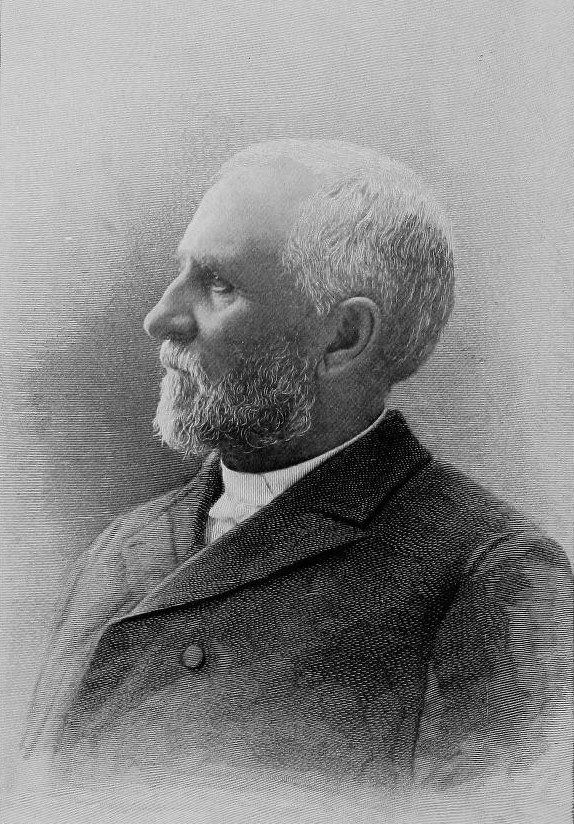
📖 Biography
John Livingston Nevius (1829–1893) was a missionary sent to China by the American Presbyterian Church (North).
Life
In 1829 Nevius was born on a farm between the villages of Lodi and Ovid in the “lake country” of western New York State. The farm lay in idyllic countryside surrounded by fields and meadows, with a clear spring nearby, and Seneca Lake, “gleaming through the trees,” was only 2 miles away. Nevius was the son of Benjamin Nevius, a Dutch American, and his wife Mary Denton. He studied at the academy in Ovid and was then educated at Union College in Schenectady; from 1850 he studied at Princeton Theological Seminary.
In 1853 Nevius married Helen Coan, and on June 15 of that year the couple set out as missionaries on a 6-month sea voyage to Ningbo, China, arriving in Ningbo in the spring of 1854. He and his wife began learning the language at once; later, through his language teacher, Mr. Tu (涂先生), he developed a strong interest in the supernatural phenomena of traditional Chinese folk religion.
In 1860, for health reasons, they went to Japan for a stay of about eight months, returning to Ningbo in 1861. Because Hangzhou was under threat from the Taiping forces, and the Treaty of Peking and other treaties had newly opened northern ports, in 1861 the couple moved to Dengzhou in Shandong, at first lodging in a Guanyin temple inside the North Gate. During the cholera epidemic of 1862 they prepared medicines for local people in Dengzhou. Nevius also trained missionaries and helped establish the Synod of China (the Presbyterian synod), and was chosen moderator of its first meeting, held in Shanghai in 1870. Nevius and his wife Helen took in several orphaned and abandoned girls on the spot and engaged a teacher to teach them to read and write. This was the forerunner of a girls' school, in the 1st year of Tongzhi, that is, 1862. Two years later the Reverend and Mrs. Nevius returned to the United States to raise funds and to seek treatment for Mrs. Nevius's illness.
In 1867 the couple returned to China. In 1871 they moved to Chefoo (Zhifu, now Yantai), where they built a house called “Nanlou” (South House). In 1873 Nevius began a 600-mile missionary journey on foot, finding rest and food wherever he went along the way. During the Great North China Famine of 1876–1879, Shandong was severely affected. In 1877 he went into the famine area and, together with Timothy Richard, raised funds, set up grain distribution points and organized relief teams, playing an important part. When famine struck again in 1889, his abilities were put to use once more.
Working from Chefoo as his base, he directed his work at the counties of the Jiaodong Peninsula. Seeing how poor the mountain land was and how hard the farmers' lives were, he concluded that unless their living conditions and incomes improved, the preaching of the gospel could not bear fruit. Noting also that the local climate was much like that of his home in New York State, he went back and personally selected large quantities of the most productive apple, pear and grape seedlings from his home region and brought them to Yantai. Having grown up on a farm, Nevius already had experience with the pests and cultivation of all kinds of fruit trees. Back in Yantai, he bought twelve and a half mu of land on the southeastern slope below Yuhuangding Hill and set up a demonstration farm, giving the seedlings he raised to farmers in the surrounding area.
By 1887 he had walked thousands of li on foot, often preaching under harsh conditions of terrain and weather. In 1890 he went to Korea; although he stayed only two weeks, his “Nevius Plan” (see below) was later adopted there and led to the rapid growth of the church.
In October 1893 he died suddenly at home, aged 64. He was buried in the cemetery at Chefoo.
His writings include China and the Chinese; Demon Possession and Allied Themes; Methods of Mission Work; Tianlu Zhinan (天路指南) [Guide to the Heavenly Way]; Sitian Bianmiu (祀天辩谬) [Errors in the Worship of Heaven Refuted]; Make Zhushi (马可注释) [Commentary on Mark]; and Shenxue Zonglun (神学总论) [Compendium of Theology].
Indigenous Mission
After questioning the methods of Western missionaries of his day, Nevius published a series of articles in The Chinese Recorder in 1885 setting out the Venn-Anderson principles of “self-propagation, self-government and self-support.” Then in 1886 he published Methods of Mission Work (retitled The Planting and Development of Missionary Churches in the 1899 edition), in which he called for abandoning the old missionary methods and adopting his new plan of cultivating independent, self-supporting local churches. He opposed paying the salaries of native church workers out of mission funds, holding that a healthy local church should be able to support its own local ministry.
The Nevius Plan
The missionary principles Nevius formulated later came to be called the “Nevius Plan,” a development of the existing ideas of Henry Venn and Rufus Anderson. When the American Presbyterians began work in Korea, the new missionaries invited Nevius to advise them. After adopting his methods the Korea mission achieved great success, but in China the plan did not meet with a similar welcome. The Nevius Plan set out the following points:
- Christians should continue to live in their own communities and follow their own occupations, supporting themselves and bearing witness to their co-workers and neighbors.
- The mission should develop only those programs and institutions that the local church wants and can support.
- The local church should call and support its own pastors.
- Churches should be built in the local style, with money and materials given by church members.
- Church leaders should be given further Bible and doctrinal instruction every year.