💬 Famous Quotes
📋 Basic Information
📖 Biography
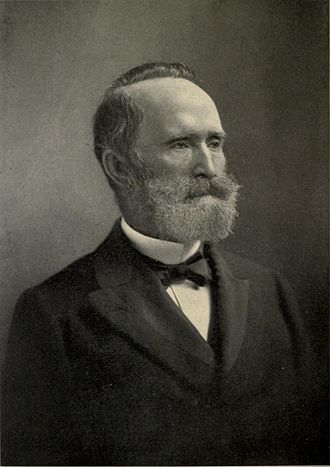
William Alexander Parsons Martin (10 April 1827 – 17 December 1916), Chinese name Ding Weiliang (丁韪良), courtesy name Guanxi (冠西), was a missionary sent to China by the American Presbyterian Church (North). He lived in China for 62 years (1850–1916, with 4 years spent away from China). For many years he headed the Tongwen Guan in Beijing, a well-known Chinese educational institution, and was one of the “China hands” of his time. In 1898 he was appointed by the Qing emperor as the first dean of Western learning (xixue zong jiaoxi) of the Imperial University of Peking.
Life
Martin was born on 10 April 1827 into a minister's family in Indiana, USA. He graduated from Indiana University in 1848. In 1850 he was sent to China by the American Presbyterian Church (North) and worked as a missionary in Ningbo for 10 years. He advocated developing secular education to influence China, intending to spread the Christian faith among the Chinese through education.
Martin was one of the 19th-century pioneers in experimenting with spelling Chinese dialects in the Latin alphabet. After arriving in Ningbo in 1850, he learned the Ningbo dialect in half a year and then designed a romanization scheme for it, creating a set of phonetic symbols from the Latin alphabet with slight modifications. This scheme was used for a long time by other missionaries and by foreigners who came to work in Ningbo, and it was a contribution to Chinese culture. Later, Martin's colleague and friend Henry Van Vleck Rankin, a missionary of the American Presbyterian Church (North) in Ningbo, compiled Christian doctrinal books such as Ningbo Tuhua Chuxue [Ningbo Dialect Primer], Lingjing Wenda [Catechism], Jiaohui Zhengzhi [Church Government] and Libai Mofan [Model of Worship], which were widely used in Ningbo's churches and mission schools; this was also the earliest teaching material for Ningbo dialect romanization. Martin's use of romanization to annotate the Ningbo dialect provided a reference for the teaching of Chinese pinyin and had a considerable influence on, and served as an example for, the modern movement to reform Chinese writing.
Translating Wanguo Gongfa (International Law)
After moving to Beijing in 1863, Martin, alongside his missionary work, translated the American Henry Wheaton's work on international law as Wanguo Gongfa. The book won the appreciation of Prince Gong (Yixin), and the Zongli Yamen allocated special funds for its printing and publication. The publication and circulation of Wanguo Gongfa helped the Qing government of the time to protect China's interests as far as possible. For example, Chinese diplomatic officials used the principles of international law set out in the book to settle a dispute successfully, the “Prusso-Danish ship incident at Dagu.” This first use of international law brought a diplomatic dispute that might have become serious to a smooth resolution, and convinced senior officials of the Zongli Yamen, and even the Qing court, that knowledge of Western international law was beneficial to the rule of the Qing dynasty, especially in foreign affairs. Martin's translation was, however, opposed by some foreign officials, who feared that if the Chinese understood international law they might use it to wage a reasoned and measured legal struggle against the Western powers, and might even cause the Western countries all kinds of trouble.
In Wanguo Gongfa Martin created Chinese legal terms such as: international law (万国公法), natural law (性法), public teacher (公师), legal teacher (法师), sovereignty (主权), rights (权利), responsibility (责任), court of law (法院), the people (人民), form of state (国体), compensation (赔偿), autonomy (自治), restriction (限制), regulations (章程), state (邦国), politics (政治), election (选举), judiciary (司法), dispute (争端), parliament (国会), constitution-making (制宪), consul (领事), interest (利益) and jurisdiction (管辖). Through these, the Chinese people, who had long lived under feudal autocracy, began to understand the Western world and such important political and legal systems and ideas as democracy, equality, freedom, rights, the rule of law and elections. The Chinese translation of Wanguo Gongfa later reached Japan, where it not only became an important tool for Japanese diplomats in their negotiations with the Western powers, but was also designated by the Japanese government as a required legal textbook for Japanese students. Because of its importance, Sakamoto Ryōma is said to have remarked that “a long sword is not as good as a short sword, a short sword is not as good as a pistol, and a pistol is not as good as Wanguo Gongfa,” and he did in fact win a lawsuit by using the articles and rules in the book.
The Tongwen Guan and the Imperial University
In 1869, on the recommendation of Robert Hart, Inspector General of Customs, Martin resigned from the American Presbyterian Church (North) and became dean (zong jiaoxi) of the Tongwen Guan in Beijing. He made active, pioneering efforts to adapt English teaching to Chinese conditions. Through his unremitting work, the Tongwen Guan took on the characteristics of a modern European or American school in its organization and management as well as in its curriculum and teaching methods, and trained modern China's first generation of bilingual diplomats, foreign-language teachers and translators. The new-style education practiced at the Tongwen Guan promoted the modernization of education and provided valuable experience for the abolition of the imperial examinations and the establishment of a new educational system after the Boxer Protocol.
On 31 December 1898 the Imperial University of Peking formally opened. On the recommendation of Li Hongzhang, the Guangxu Emperor appointed Martin the university's first dean of Western learning (xixue zong jiaoxi) and conferred on him the button of the second rank.
The Boxer Movement
In 1900, at the age of 73, Martin lived through the Boxer movement. He witnessed the Boxers' killing of Chinese Christians and foreign missionaries, and therefore loathed the Boxers, sharply condemning them as savages; from the standpoint of the rule of law he demanded that they be severely punished, in proportion to their acts of killing, looting and rape.
Because the Empress Dowager Cixi was a principal supporter of the Boxer movement, Martin proposed that she be exiled and suggested that Hainan be given to the United States as an indemnity; as a result, after the Boxer movement he gradually lost the trust of the Qing court. On 20 September 1901, as the situation had stabilized, Martin, as dean of Western learning, petitioned Prince Qing (Yikuang) to restore the Imperial University. In 1902, however, shortly after the university resumed classes, the new Minister of Education, Zhang Baixi, dismissed Martin and the other Western teachers as a group, citing a shortage of funds. Guo Weidong, a historian at Peking University, regards the “shortage of funds” as merely a pretext.
Death
Martin died in Beijing on 17 December 1916 and was buried in a cemetery outside Xizhimen.
Assessment
Martin has been accused of going out to loot during the occupation of Beijing by the Eight-Nation Alliance, but this is a malicious slander by certain people. The mainland historian Gu Changsheng, in Chuanjiaoshi yu Jindai Zhongguo [Missionaries and Modern China], deliberately altered the text of Martin's The Siege in Peking so as to smear him as having taken off his clerical robe to go looting, as a robber. Shen Hong, in the translator's preface to his Chinese translation of Martin's The Awakening of China, points out that because ordinary readers find it hard to consult Martin's original works, Gu Changsheng's claims and quotations have generally been treated as authoritative.
For a long time Martin has been heavily criticized, and especially after the founding of the People's Republic he has carried the labels of “imperialist” and “aggressor.” More recently, a still more terrible accusation appeared: in one episode of Tencent's history channel program Zhuanxing Zhongguo 1864-1949 [China in Transition, 1864-1949], an editorial of the San Francisco Examiner (旧金山号角报) was cited to attribute the following words to Martin: “For every woman missionary killed by the Boxers, 500 Chinese women must be executed; for every male missionary martyred, the lives of 1000 Chinese men must pay; for every missionary's child innocently killed, 100 Chinese children must be put to the Cossack bayonet; for every missionary building burned and plundered, 100 Chinese houses in Tianjin and Beijing must be looted in compensation.” Yet a search of all the editorials of the San Francisco Examiner from 1900-1922 shows no editorial mentioning that Martin said anything of the kind.
Works
- A Cycle of Cathay
- The Siege in Peking, China against the World: By an eye witness (1900)
- Zhongguo Gushi Gongfa Lunlüe [Outline of International Law in Ancient China]
- The Lore of Cathay
- Wanguo Gongfa [Elements of International Law]
- Gewu Rumen [Introduction to Natural Philosophy]
- Huaxue Zhinan [Guide to Chemistry] (a Tongwen Guan translation, published under Martin's direction and review)
- Faguo Lüli [Laws of France] (a Tongwen Guan translation, published under Martin's direction and review)
- Fuguo Ce [Political Economy] (translated by Wang Fengzao 汪凤藻, reviewed by Martin)
- Tiandao Suyuan [Evidences of Christianity]
- Xingyao Zhizhang [Guide for Diplomatic Envoys] (a Tongwen Guan translation, published under Martin's direction and review)
- Gongfa Bianlan [Handbook of International Law] (translated by Wang Fengzao 汪凤藻, reviewed by Martin)
- Xixue Kaolüe [Survey of Western Learning]
- Xingxue Juyu [Examples in Mental Philosophy]
- Tiandao Hejiao [Collated Writings on the Way of Heaven]
- Hanlin Papers
- Chinese Legends and Other Poems
- The Awakening of China
📚 Major Works





🎬 Videos
The Road to Peking: W.A.P. Martin in 1898
Missionaries to China: W. A. P. Martin (Philippians 4:8-9)
Reading with You: W. A. P. Martin and Modern Sino-Western Cultural Exchange
Videos are hosted on YouTube and uploaded by their original producers. YouTube loads only when you press play and may be unavailable in some regions.