← Back to Missionaries
Updated 2026-10-23
💬 Famous Quotes
"In the preceding imperfect sketch of Confucianism in relation to Christianity, I have tried to make it appear, that the former is in many important points defective rather than antagonistic, and one practical conclusion to which I come is, that missionaries should endeavour not to exhibit themselves as antagonistic to Confucius and Confucianism. … The judgment of Paul about the law contained in the Old Testament was, that "it was a schoolmaster to lead us to Christ," and I think that much in Confucianism may be made to serve a similar purpose with the Chinese. Let the missionary therefore show a willing appreciation of what is good in the system."
📋 Basic Information
👤 Gender
Male
🏴 Nationality
British
✝️ Religion
Christianity
⛪ Denomination
Congregationalist
🏛️ Order / Mission
London Missionary Society
🌍 Mission Region
China
🏯 Historical Era
Qing dynasty
1815
Born
Huntly, Aberdeenshire, Scotland
1839
Mission Began
Age 24
1897
Passed Away
Age 82
Oxford, England
🏷️ Tags
missionary
📖 Biography
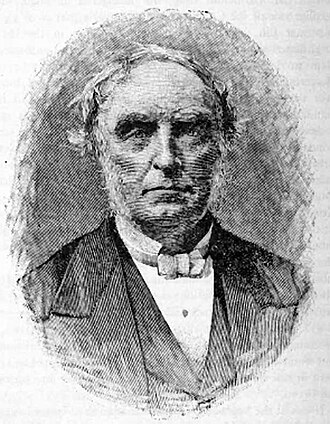
James Legge (20 December 1815 – 29 November 1897), Chinese name Li Yage (理雅各), was a British sinologist and professor at the University of Oxford. He headed the Anglo-Chinese College in Hong Kong and won the French Prix Stanislas Julien for sinology.
Life
- On 20 December 1815 James Legge was born in Huntly, Aberdeenshire, Scotland, into a well-to-do draper's family; he was the fourth of four brothers. Although Huntly was a small town, it had a fine tradition of missionary service: William Milne, another missionary to China, also came from Huntly.
- In 1839 he was posted to Malacca by the London Missionary Society, of the Congregational tradition of British Protestantism, to take charge of the Anglo-Chinese College.
- In 1843 the Anglo-Chinese College moved to Hong Kong, and Legge moved with it to Pok Fu Lam, becoming the first principal of the Anglo-Chinese College in Hong Kong.
- In 1841 Legge began translating the Chinese classics.
- From 1861 to 1872 he published The Chinese Classics in five volumes, eight books in all, including the Analects (Lunyu), the Great Learning (Daxue), the Doctrine of the Mean (Zhongyong), Mencius, the Book of Documents (Shujing), the Book of Poetry (Shijing) and the Chunqiu with the Zuo Zhuan.
- In 1862 he gained the help of Wang Tao (王韬) in translating the Chinese classics.
- In 1867 Legge left Hong Kong for his home at Dollar, Clackmannanshire, Scotland. Wang Tao later went to Dollar as well and continued to help Legge translate the Thirteen Classics.
- In 1870 he completed the translation of the Thirteen Classics and received a doctorate from the Faculty of Arts of the University of Aberdeen, Scotland. He returned to Hong Kong to head the Anglo-Chinese College.
- From 1870 to 1873 he was pastor of Union Church Hong Kong.
- In 1873 he visited China. Arriving in Shanghai in early April, he called on William Muirhead (慕维廉) and Alexander Wylie (伟烈亚力), went by ship to Tianjin and by ox cart to Beijing, where he stayed with the London Mission. He visited the Great Wall, the Summer Palace and the Temple of Heaven; he regarded the Circular Mound Altar of the Temple of Heaven as the holiest place in the world without idols, and could not help taking off his boots to worship. On 1 May, accompanied by Joseph Edkins (艾约瑟), he left Beijing for Shandong, passing through Dezhou to Mount Tai, where he hired four sedan-chair bearers to climb the mountain. On the 15th he left Mount Tai and travelled by horse cart to Qufu, where he visited the Temple of Confucius and the Cemetery of Confucius and climbed up to Confucius's tomb. He then returned to Shanghai by way of the Grand Canal, and went home to Britain via Japan and the United States.
- From 1876 to 1897 Legge was the first professor of Chinese at the University of Oxford.
- From 1879 to 1891 he published The Sacred Books of China in six volumes, including the Book of Documents, the Book of Poetry (the parts relating to religion), the Classic of Filial Piety (Xiaojing), the Book of Changes (Yijing), the Book of Rites (Liji), the Daodejing and the Zhuangzi.
- In 1886 he translated and published the monk Faxian's own record of his travels in India (Shamen Faxian zi ji you Tianzhu shi, 沙门法显自记游天竺事).
- In 1888 he translated the Nestorian Stele (Da Qin Jingjiao liuxing Zhongguo bei, 大秦景教流行中国碑) into English.
- In 1897 Legge died in Oxford.
Works
- A letter to the Chinese residents of Malacca on cholera (致马六甲中国侨民的一封关于霍乱的信), 1841, Malacca
- Yangxin Shenshi [Sacred Hymns for Nurturing the Heart] (养心神诗), 1842, Malacca
- Yesu Shan shang Chuixun [Jesus' Sermon on the Mount] (耶稣山上垂训), 1844, Hong Kong
- Yinghua Tongshu (英华通书), Anglo Chinese calendar, 1851, Hong Kong
- Yuese Lüeji [A Brief Account of Joseph] (约瑟略记), 1852, Hong Kong
- Chongxiu Libaitang Renji Yiguan Qidao Shangdi Zhuwen [Prayer to God on the Rebuilding of the Chapel and the Renji Hospital] (重修礼拜堂仁济医馆祈祷上帝祝文), 1852, Hong Kong
- Yesu Mentu Xinjing [The Creed of the Disciples of Jesus] (耶稣门徒信经), 1854, Hong Kong
- Xinyue Quanshu Zhushi [Commentary on the New Testament] (新约全书注释), 1854, Hong Kong
- Quan Chong Shengshu Lüeyan [A Brief Exhortation to Revere the Holy Scriptures] (劝崇圣书略言), Hong Kong
- Zhihuan Qimeng Shuke Chubu [Circle of Knowledge: Elementary School Lessons] (智环启蒙塾课初步), 1856, Hong Kong
- Shengshu Yaoshuo Xiyi [Essential Teachings of the Holy Scriptures Explained] (圣书要说祈义), Hong Kong
- Yabolahan Jilüe [A Brief Account of Abraham] (亚伯拉罕记略), 1857, Hong Kong
- Wang Jinshan Yaojue [Essential Advice for Those Going to the Gold Mountain] (往金山要诀), 1858, Hong Kong
- Shenghui Zhunsheng [Rules of the Holy Church] (圣会准绳), 1860, Hong Kong
- Xin Jinshan Shandai Tangke Lun [On Kind Treatment of Chinese Visitors in the New Gold Mountain] (新金山善待唐客论), 1862, Hong Kong
- Luo Lu Bu Shao [Cast into the Furnace yet Not Burned] (落炉不烧), Hong Kong
- Langzi Huigai [The Prodigal Son Repents] (浪子悔改), Hong Kong
- Life and Teaching of Confucius, 1867
- The Life and Teaching of Mencius, 1875
- The Religions of China, 1880
Translations from Chinese into English
- The monk Faxian's record of his travels in India (沙门法显自记游天竺事)
- Book of Changes (Yijing)
- Book of Poetry (Shijing)
- Book of Documents (Shujing)
- Book of Rites (Liji)
- Chunqiu with the Zuo Zhuan
- The Great Learning (Daxue)
- The Doctrine of the Mean (Zhongyong)
- The Analects (Lunyu)
- Mencius
- Classic of Filial Piety (Xiaojing)
- Daodejing
- Zhuangzi
- Yinfu Jing
- Yushu Jing
- The Nestorian Stele (大秦景教流行中国碑)
Commemoration of Dr. James Legge
To commemorate Dr. James Legge's contribution to Hong Kong, the Hong Kong government put up a memorial plaque to him in Sheung Wan, and on 5 October 1994 issued a Dr. James Legge commemorative stamp and first-day cover.
📚 Major Works

An annotated Chinese–English edition of the Confucian classics in five volumes, including the Analects, the Great Learning, the Doctrine of the Mean, Mencius, the Book of Documents, the Book of Poetry and the Chunqiu; a foundational work of Western sinology.
An English translation of the Yijing written for the “Sacred Books of the East” series edited by Max Müller; it is still an important reference translation today. The translation is Volume 16 of the Sacred Books of the East (Yî King); this link is to the complete 50-volume set.
A two-volume English translation of the Liji, introducing China's system of rites to the West in a systematic way. The translation is in Volumes 27 and 28 of the Sacred Books of the East edited by Müller (Parts III and IV of the Texts of Confucianism); this link is to the complete 50-volume set, which includes those two volumes.
A two-volume translation of Taoist classics, containing English translations of the Daodejing and the Zhuangzi.
A scholarly work giving a systematic account of Confucius's life and thought, which provided Western scholars with an important reference for understanding Confucianism.
A work of religious studies comparing Confucianism, Taoism and Buddhism; an important early reference for Westerners studying Chinese religion.

A commentary on the New Testament compiled by Ho Tsun-sheen (何进善), Legge's Chinese co-worker, and revised by Legge. Shidian Guji holds the 1868 Hong Kong edition of the Anglo-Chinese College, from the Japanese Cabinet Library (Naikaku Bunko).