💬 Famous Quotes
📋 Basic Information
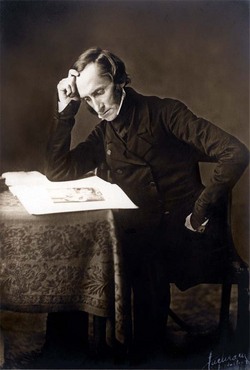
📖 Biography
David Abeel (Chinese name Ya Bili, 雅裨理; June 12, 1804 – September 4, 1846) was one of the early Protestant missionaries to mainland China in the 19th century. His exchanges with Xu Jiyu (徐继畬) during his time in mainland China (then under Qing rule) also influenced Xu’s geographical outlook. In Xu’s later work Yinghuan Zhilüe (A Brief Survey of the Maritime Circuit), the Chinese names for Western countries, such as Spain and Portugal, were set by transliterating Abeel’s Minnan pronunciation into Chinese characters.
Life
David Abeel was born on June 12, 1804, in New Brunswick, New Jersey, USA, and after his conversion to Christ began to study medicine. In 1826 he graduated from New Brunswick Theological Seminary, was ordained a minister of the Reformed Church in America, and served in Athens, New York. In the winter of 1828 he went to the West Indies to recover his health. In 1829, moved by a sense of missionary calling — and because the Reformed Church in America did not formally organize a foreign mission board until 1857 — he first joined the American Seamen’s Friend Society (the Seamen’s Friend Society), and in October 1829 he sailed for China on the same ship as Elijah Coleman Bridgman (裨治文), the first Congregational missionary to China, arriving in Canton (Guangzhou) in 1830. He first spent a year preaching to foreign sailors in Canton while learning Minnan (Hokkien), Malay, and Siamese, and after a year he entered the service of the American Board (ABCFM).
In 1831 Abeel went to Java to visit the Dutch Reformed Church there, then went on to Singapore and Bangkok to do exploratory work for the American Board. In 1833 he returned home for health reasons, passing through Britain, Switzerland, France, Germany, and the Netherlands and speaking at meetings on behalf of the China mission. In 1839 he returned to Canton; because the Opium War was about to break out, he went on to Borneo to visit the Dutch Reformed Church there. In 1841 he returned to China, and in 1842 he established a mission on Gulangyu in the newly opened treaty port of Xiamen (Amoy), becoming the first missionary to enter Xiamen. Together with the American physician Dr. Cumming (甘明) he opened a clinic for medical mission work; the clinic later became the Baochi Hospital. In 1845 he returned to the United States with severe tuberculosis, and he died the following year in Albany, New York.
Meetings with Xu Jiyu
In his work Yinghuan Zhilüe, Xu Jiyu cites Abeel’s explanations at least ten times. The exact dates are not given, but they can be learned from Abeel’s journal. On January 27, 1844, he wrote in his journal that a little earlier he and another missionary had met an official second only to the provincial governor, who might become the next governor. This official asked them many questions about foreign countries, so they spent an afternoon explaining to him the location of and information about various countries. The official was very pleased, and they gave him Christian books, the New Testament, and other books. On February 19 they called again on this official’s deputy, who said they had finished reading the whole New Testament and asked them about many foreign place names and personal names. Abeel prayed that this official would understand the true meaning of God.
The second record is from May 1844, when Abeel again called on the author of Yinghuan Zhilüe, a man from Wutai. Abeel said that this official, “Su Ki-Yu” (Xu Jiyu), was a friendly man; he again asked many questions about the agriculture, economies, and histories of foreign countries and was very interested in the pictures and texts they brought, and they spent another afternoon explaining general knowledge to him.
Works
- To the Bachelors of China, by a Bachelor (1833)
- Journal of a Residence in China and the Neighboring Countries (New York, 1834)
- The Claims of the World to the Gospel (1838)