💬 Famous Quotes
📋 Basic Information
📖 Biography
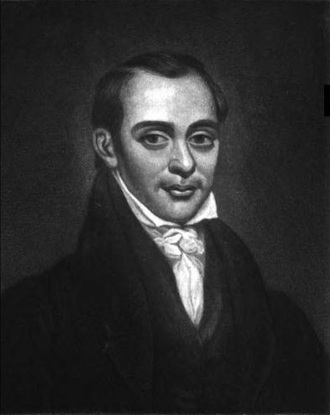
Karl Friedrich August Gützlaff (German: Karl Friedrich August Gützlaff, 8 July 1803 – 9 August 1851), Chinese name Guo Shilie (郭实猎; also rendered 郭士立, 郭士利, 㗥呭唎, 郭寔烈, 吴士利, 郭实腊, 郭实烈, 郭施拉, 居茨拉夫 and others), was a Prussian Protestant missionary, physician, explorer and translator. In 1826 he was sent to Java in the Nanyang (Southeast Asia) as a missionary. Studying under Chinese teachers, he became proficient in Chinese and in the Min, Cantonese, Teochew and Hakka dialects. He took “Guo” (郭) as his surname by transliteration, joined the Guo clan association of Tong'an, Fujian, in the Nanyang, and also took the pen name Ai Han Zhe (爱汉者, “Lover of the Chinese”). From 1827 he preached in coastal cities of mainland China, adopting local customs by wearing a false queue and Chinese dress, and using medicine to build relationships with the Chinese; he was a co-worker of Wilhelm Lobscheid. He founded in Canton (Guangzhou) the first modern Chinese-language periodical. As his Cantonese steadily improved, he replaced Robert Morrison, the first British missionary to China, as interpreter to the British Superintendent of Trade in China, and he took part in the changes that led to the opening of Shanghai and Hong Kong. During the First Opium War he served as interpreter, staff officer and guide to the British forces in the Far East. In the negotiations for the Treaty of Nanking he was the British interpreter and drafted the Chinese text of the treaty, a role for which later generations have criticized him.
It is sometimes said that he served as Registrar General (Protector of Chinese) in the British Hong Kong government. In fact the post he held was Chinese Secretary (appointed assistant Chinese Secretary in 1842 and promoted to Chinese Secretary in August 1843); the office of Registrar General (Protector of Chinese) was created in 1844 and held successively by Samuel Fearon, Andrew Inglis and others. Gützlaff never held it.
Life
Gützlaff was born on 8 July 1803 into a tailor's family in Pyritz (now Pyrzyce, Poland), Pomerania, Prussia. His mother died when he was four, and as a boy he was apprenticed to a coppersmith. At 15 he studied Arabic and Turkish. At 18 he entered a theological school in Berlin, and in 1823 went to Rotterdam to study with the Netherlands Missionary Society. He was ordained a minister in July 1826, and in September set out for Batavia (now Jakarta), where he learned Chinese and Malay from Walter Henry Medhurst. In 1828 he went to Singapore. In 1829 he left the Netherlands Missionary Society and took charge of the London Missionary Society in Malacca. In the same year he married an Englishwoman, Mary Newell. In 1830 he went with his wife to Siam.
In 1831 Gützlaff first sailed for China on a junk, landing in mid-June and reaching Tianjin in September; from there he went north to the Gulf of Liaodong and then south again, arriving in Macau in December. In Macau he practiced medicine, adopted local customs, wore Chinese clothes and took the Chinese name Guo Shilie, working as a physician and a missionary at the same time.
In February 1832 he accompanied Hugh Hamilton Lindsay, a commercial spy for the British East India Company, north on the merchant ship Lord Amherst, by way of Xiamen (Amoy), Fuzhou, Zhoushan, Ningbo, Weihaiwei and other places, reaching as far as Korea and Japan. He returned to Macau in September. In October of the same year he sailed north again on the Sylph, a ship of the opium merchant William Jardine, reaching Niuzhuang (now Yingkou) in the Northeast. From these three voyages he wrote Journal of Three Voyages along the Coast of China in 1831-1833.
Gützlaff's third voyage was in fact to help Jardine sell opium. To sell opium to the Chinese, Jardine needed an interpreter, and Gützlaff was the best candidate; but Jardine also knew that it would be hard to persuade a Christian missionary to help him sell opium. So he wrote Gützlaff an enthusiastic letter of invitation, promising him a generous reward and offering to fund for six months the periodical Gützlaff was about to edit. After an intense inner struggle Gützlaff finally accepted Jardine's invitation. In his journal of the three voyages he himself wrote (translated here from the Chinese): “After consulting with many people and a struggle in my mind, I boarded the Sylph.” But as a missionary Gützlaff clearly knew that what he was doing was wrong. Later, in the Dongxiyang Kao Meiyue Tongjizhuan (Eastern Western Monthly Magazine) which he edited, he wrote articles condemning the harm of opium; for example, in 1835 he wrote: “The evils of opium grow worse by the day; the people are impoverished and their means exhausted. With no way to make a living, gangs collude in wrongdoing. There is no evil they will not commit, no abuse they will not practice; how grave this is! Since the harm increases day by day and month by month, nothing is better than to give up opium quickly and put an end to these evils entirely.” This was printed again in the 2nd month issue of 1837. Gützlaff's articles condemning the opium trade were a repudiation of his own earlier help to Jardine in selling opium.
In the summer of 1833 Gützlaff settled in Macau and studied Cantonese and Hakka, and in August he founded in Canton the first modern Chinese-language periodical published within China, the Dongxiyang Kao Meiyue Tongjizhuan.
In 1834 he accompanied G. J. Gordon, secretary of the British East India Company's committee on tea cultivation, deep into the tea-growing district of the Wuyi Mountains in Fujian, seeking out experts in tea growing and tea processing and buying tea seeds and seedlings. As a result tea masters from Yazhou were engaged as instructors to teach tea-making methods, and many tea seeds were brought back and planted in Darjeeling, India. In the summer of the same year Gützlaff and his English wife opened a girls' school in Macau; Yung Wing, China's first student to study abroad, attended the boys' class attached to this girls' school.
During the Opium War (1840–1842) he served as interpreter and guide to the British commander, and as magistrate of Dinghai and prefect of Ningbo under British occupation. Afterwards he took part in drafting the Treaty of Nanking. While governing Ningbo he made a deep impression on the local people because he knew Chinese and could judge cases. Someone at the time wrote a poem describing Gützlaff hearing cases: “He mounts the high platform: Master Guo (Gützlaff) has come. If you have a matter, lay it out in full. A wrong done to you he will set right; a hard matter he will settle for you. His mouth speaks Chinese, his eyes read Chinese characters; Master Guo is truly a rare talent. A big case costs an ox, a small case a chicken; he judges for you with a brush that flies. The southern mountain may be moved, but this verdict cannot be shifted.”
After Hong Kong was opened as a port in 1843, he served as Chinese Secretary to Sir Henry Pottinger, the first Governor of Hong Kong. He urged churches in Germany, Switzerland and other countries to develop the Hakka areas of Guangdong as a gospel field. In 1844 he founded a mission organization in Hong Kong, the Chinese Union (Fuhan Hui); according to some records, Feng Yunshan, the “South King” and comrade of the Taiping Heavenly King Hong Xiuquan, was once a member. During his visit to Europe in 1849–1850 he also launched the Chinese Evangelization Society in London, which recruited missionaries for China. The Chinese Evangelization Society sent Hudson Taylor to China, and Hudson Taylor later succeeded in establishing the China Inland Mission.
Gützlaff died in Hong Kong on 9 August 1851.
Things Named after Him
Gutzlaff Street in Central, Hong Kong, is named after him. In addition, one of the houses of the Rhenish Church Pang Hok-ko Memorial College in Kowloon Tong is named the “Gutzlaff House.” The Gutzlaff Signal Tower on the Bund in Shanghai, China, is also named after him.
Contributions
Gützlaff took part in the revision of Robert Morrison's Bible translation together with Walter Henry Medhurst, Elijah Coleman Bridgman and John Robert Morrison. In this revision Medhurst and Gützlaff did the main work, while Bridgman and John Robert Morrison played secondary roles. Medhurst was mainly responsible for the New Testament and Gützlaff for the Old Testament. Later Gützlaff revised Medhurst's New Testament translation repeatedly, at least sixteen times. The Taiping Heavenly Kingdom's version of the Bible was based on Gützlaff's Old Testament translation and his revision of the New Testament.
The Dongxiyang Kao Meiyue Tongjizhuan, which he helped to found, was the earliest Chinese-language periodical published in modern China and was a pioneer in spreading modern science and culture. The knowledge of world geography it spread became an important reference for Haiguo Tuzhi [Illustrated Treatise on the Maritime Kingdoms] and Yinghuan Zhilüe [Brief Survey of the Maritime Circuit], and also influenced Haiguo Sishuo [Four Accounts of the Maritime Kingdoms], Lanlun Oushuo [Occasional Remarks on England] and other works.
Writings
In Chinese:
- Da Yingguo Tongzhi [A General Account of Great Britain], 1834
- Shangdi Zhenjiao Zhuan [The True Religion of God], 1834
- Yesu Shenji zhi Zhuan [The Miracles of Jesus], 1836
- Fuyin zhi Jiangui [Admonitions of the Gospel], 1836
- Dongxiyang Kao Meiyue Tongjizhuan (Eastern Western Monthly Magazine), 1833-1838, Canton (moved to Singapore after 1837).
- Moxi Yanxing Quanzhuan [Complete Life of Moses], 1836, Singapore
- Baoluo Yanxing Lu [Acts of Paul], 1837, Singapore
- Yuehan Yanxing Lu [Acts of John], 1837, Singapore
- Bideluo Yanxing Quanzhuan [Complete Life of Peter], 1838, Singapore
- Shengshu Liezu Quanzhuan [Lives of the Patriarchs of Scripture], 1838, Singapore
- Shiren Jiuzhu [Saviour of the World], 1838, Singapore
- Shengming Wuxian Wujiang [Life without Limit or Boundary], 1838, Singapore
- Gujin Wanguo Gangjian [Outline History of All Nations, Ancient and Modern], 1838, Singapore
- Wanguo Dili Quanji [Complete Geography of All Nations], 1838, Singapore
- Youtai Guo Shi [History of the Jewish Nation], 1839, Singapore
- Maoyi Tongzhi [General Account of Commerce], 1840, Singapore
- Yesu Biyu Zhushuo [Commentary on the Parables of Jesus], 1841, Singapore
- Jiushi Yesu Shousi Quanzhuan [Complete Account of the Death of Jesus the Saviour], 1843
- Jiu Yizhao Shengshu [Old Testament], 1855
- Jiushizhu Yanxing Quanzhuan [Complete Life of the Saviour], 1855
In Japanese:
- [The Gospel of John]
- [The Epistles of John]
In Thai: [The Gospels of Luke and John]
In English:
- The Journal of Two Voyages Along the Coast of China in 1831-1832. J.P. Haven. 1833.
- Journal of Three Voyages along the Coast of China in 1831, 1832 and 1833, with notices of Siam, Corea, and the Loo-Choo Islands (Desert Island Books, Westcliff-on-Sea, 2002)
- A Sketch of Chinese History, Ancient and Modern (London, 1834, German version in 1847)
- China Opened; Or, A Display of the Topography, History, Customs, Manners, Arts, Manufactures, Commerce, Literature, Religion, Jurisprudence, etc. of the Chinese Empire. London, Smith, Elder & Co. 1838.
- Life of Taou-Kwang, Late Emperor of China. London, Smith, Elder & Co. 1852.