📋 Basic Information
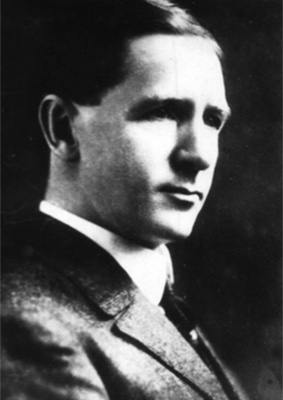
📖 Biography
Early Years
Joseph Beech was born on 3 October 1867 at Newbold, near Chesterfield in Derbyshire, England, and moved to the United States with his family as a young boy. According to an account by West China alumni, the family was not well off: after primary school he worked for some years, then finished his secondary schooling at Centenary Collegiate Institute in Hackettstown, New Jersey. In 1899 he graduated from Wesleyan University in Middletown, Connecticut, a Methodist foundation, with a Bachelor of Philosophy; as a student he was president of the YMCA. Wesleyan gave him an honorary Doctor of Divinity in 1911.
Schools in Sichuan
In 1899 the Methodist Episcopal Church sent Beech to Sichuan (the alumni account says he was appointed in 1898). From 1901 to 1904 he was principal of the Methodist mission school in Chongqing, known in Chinese as Qiujing (求精). In 1904, in Chongqing, he married Nellie Miriam Decker, also a missionary; his first wife, Mary, had died in 1890, leaving a son. He then moved to Chengdu to head the Methodist middle school there, known in Chinese as Huamei (华美).
Founding West China Union University
Several missions in Sichuan each hoped to start a college. Beech and the leaders of the Baptist, Canadian Methodist and Friends missions agreed that only by joining forces could they build a university of real standard. In 1905 the West China missions approved the plan and set up a Temporary Board of Management, of which Beech was a member. The home boards at first refused, citing money and the difficulty of cooperation, so the planners drew up an "Oxford system" in which each mission ran its own college while the university set common courses, admissions and examinations. Beech was sent to New York and Toronto to argue the case, and the plan was approved. In 1907 they chose a stretch of fields outside the south gate of Chengdu, later known as Huaxiba, and the university opened in March 1910 with eleven students.
First President
In 1913 Beech was elected the first president. He raised gifts from the Sichuan governor Hu Jingyi and, in 1914, from President Yuan Shikai, who also wrote an endorsement. Over the years he crossed the Pacific fifteen times to raise funds, and the university's history credits him with more than four million US dollars in gifts. Most of the dozens of buildings on the campus, blending Chinese and Western styles, went up while he was in office. The university added medicine, dentistry (China's first school of dentistry) and pharmacy, and in 1924 admitted its first eight women students. Alumni recall that he often told graduates that this was not the end of their studies but a beginning, playing on his Chinese name: bi means "to finish" and qi means "to begin."
Student Protests and Reform
In the movement of the 1920s to recover control of education, students went on strike more than once, demanding that the university register with the Chinese government and be led by Chinese. Beech at first opposed students taking part in outside movements, but later apologized to them, agreed to hire more Chinese teachers, and left registration to the university's board of managers in China. In May 1931 Zhang Linggao became the first Chinese president, and Beech became chancellor, still in charge of fundraising and outside relations. The Ministry of Education then approved the university's registration.
Last Years
In 1940, aged seventy-three, Beech retired to the United States. The Chinese government awarded him the Order of Brilliant Jade, previously given to only a few American scholars such as John Dewey, and Chiang Kai-shek presented him with an inscribed tablet. In reply Beech said he had been fortunate to have two countries. As he left, he sent word that West China Union University was a university run by Chinese people and established for Chinese people. On his eightieth birthday in 1947, the university unveiled a statue of him. He died in Chicago on 25 February 1954.
📚 Major Works
📚 References & Sources
- 金开泰《一生奉献给华大的毕启》(华西校友会网站,引李晓舫《教育家的毕启先生》、毕启《华西协合大学史话》、马俊之主编《华西医科大学》校史)
- Liping Yang, "An American Missionary with Two Motherlands: Joseph Beech and West China Union University", Gale Review, 2020
- Johanna Russ, "Beech, Joseph, Class of 1899"(耶鲁神学院图书馆 China Colleges Project)