💬 Famous Quotes
📋 Basic Information
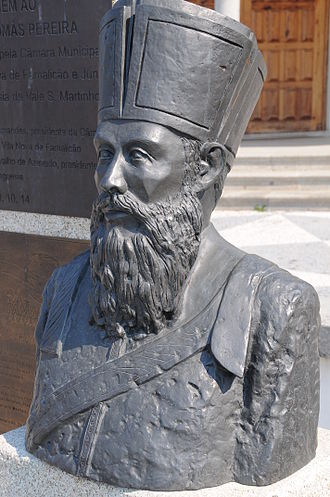
📖 Biography
Tomás Pereira (Chinese name Xu Risheng, 徐日升; November 1, 1645 – December 25, 1708; some sources give his birth date as November 5, 1646), courtesy name Yingong (寅公), was a Portuguese Catholic Jesuit missionary, born in São Martinho do Vale, Vila Nova de Famalicão, Portugal, who came to China during the Kangxi reign of the Qing dynasty.
Life
He first reached Macau in 1672 (the 11th year of Kangxi). In 1673, on the recommendation of Ferdinand Verbiest (南怀仁), he was able to enter Beijing, where he assisted Verbiest at court in revising the calendar and at the same time served as a court musician in Western music. In 1688 Verbiest died of illness, and Pereira became acting vice-director of the Imperial Astronomical Bureau. In the negotiations for the Sino-Russian Treaty of Nerchinsk in 1689 (the 28th year of Kangxi), he served as the Chinese side's Latin interpreter. In 1691, learning of the case in which a newly built church in Lanxi, Zhejiang, had been banned, he petitioned the Kangxi Emperor, setting out the services of the Western missionaries in diplomacy, the making of weapons, and other matters, and pleading for the ban to be lifted. In 1692 (the 31st year of Kangxi) the Kangxi Emperor issued an edict: “The Catholic churches everywhere are to be kept as before; those who come to offer incense and worship may come and go as usual and are not to be prohibited.” In 1705 he opposed the decree of Pope Clement XI (reigned 1700–1721) requiring Chinese Catholics to give up the Chinese rites. In 1706 he became vice-provincial of the Jesuit province of China, and in 1708 he died in Beijing.
Works and Legacy
His writings include Nan Xiansheng Xingshu [Account of the Life of Master Nan (Verbiest)] (printed 1688); Lülü Zuanyao [Essentials of Music Theory] (date of compilation unknown, generally placed in the 1680s; a manuscript copy was found in the Peiping Library in 1936); and the supplementary volume of Lülü Zhengyi [True Principles of Music] (on Western music theory, compiled from what he had taught and completed by Teodorico Pedrini; finished in 1713, after Pereira's death). A road in Taipa, Macau, is named after him: Avenida Padre Tomás Pereira (徐日昇寅公马路).
Profile
- Tomás Pereira, Jesuit missionary
- Born: November 1, 1645, Vila Nova de Famalicão, Kingdom of Portugal
- Died: December 25, 1708, the capital, Shuntian Prefecture, Great Qing
- Occupation: missionary