💬 Famous Quotes
📋 Basic Information
📖 Biography
A Farm Family and the Call to China
Josef Freinademetz was born in 1852 into a farming family in the mountain village of Oies in Tyrol, Austria (now South Tyrol, Italy). In 1875 he was ordained a Catholic priest in Brixen (Bressanone) and first served in a parish in his home region. In 1878 he joined the newly founded Society of the Divine Word (SVD), and in 1879 he and his fellow SVD priest Johann Baptist von Anzer were sent together to China. They first went to Hong Kong to learn the language, and in 1881 he and Anzer entered southern Shandong, beginning the work of the Society of the Divine Word in China.
Pioneering in Southern Shandong
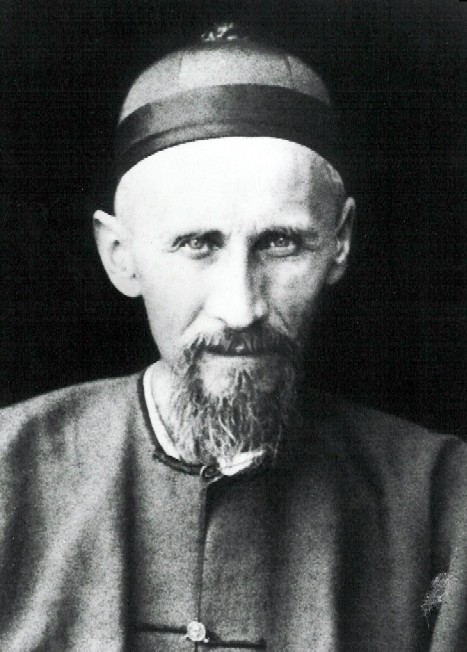
With Anzer he made Yanzhou Prefecture (now Yanzhou District, Jining) his base and went deep into the villages of southern Shandong, building communities of faith village by village. Freinademetz was known for "serving in silence, living with the people and eating with the people", and he held that a priest should become fully part of the local culture: he changed into a Chinese long gown, wore a queue, learned Mandarin and the southern Shandong dialect, and ate the same coarse grains as the local farmers. He also gave weight to training Chinese clergy, personally guiding local seminarians, and was the heart of the SVD's local seminary in southern Shandong.
Holding Firm through the Missionary Cases
Amid the tension between China and Germany over the sphere of influence in Shandong that followed the 1897 Caozhou Incident (the Juye Incident), he repeatedly urged the mission not to let the Christians become a power set against others, and he insisted that saving souls was the mission's only aim. During the Boxer Uprising the German authorities ordered all missionaries to withdraw to Qingdao for safety, but, knowing the danger, he chose to stay at the mission station of Poli, and afterwards he went on serving in southern Shandong. In 1908 typhus broke out in southern Shandong; he kept caring for sick seminarians and Christians, caught the disease himself and died. He was buried at Daijiazhuang.
Beatification and Canonisation
The Society of the Divine Word regards him as a model of the missionary who adapts to local culture. He was beatified by Pope Paul VI in 1975 and canonised by Pope John Paul II on 5 October 2003, one of the few missionaries to China formally canonised by the Roman Catholic Church.
📚 Major Works
📚 References & Sources
- Wikipedia: Joseph Freinademetz
- List of Catholic missionaries to China