💬 Famous Quotes
📋 Basic Information
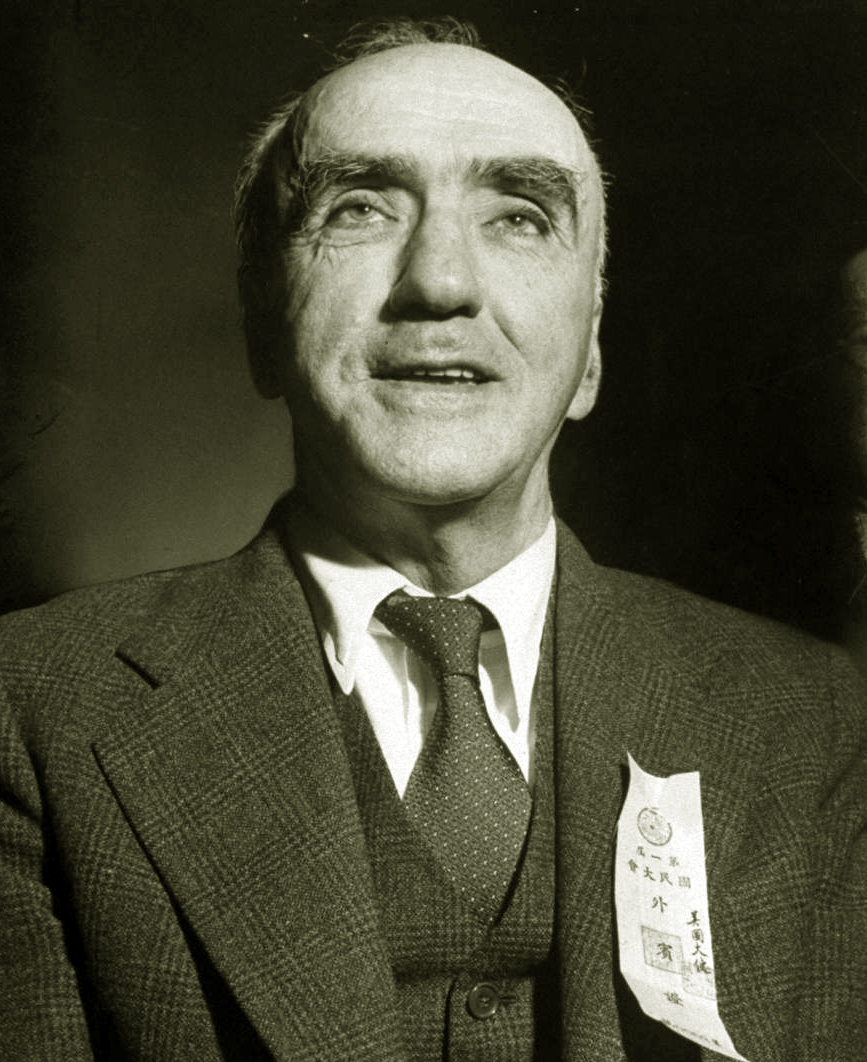
📖 Biography
Born in Hangzhou
John Leighton Stuart was born on 24 June 1876 on Yesutang Lane in Hangzhou, Zhejiang, into a family of Southern Presbyterian missionaries. He grew up alongside Chinese children, spoke fluent Hangzhou dialect and regarded China as his home. In 1887 he went back to the United States with his parents for schooling. He graduated from Hampden–Sydney College in 1896 and received a theology degree from Union Theological Seminary in Virginia in 1902. Ordained in 1904, he returned to China with his wife Aline Rodd. He first helped his father with evangelism in Hangzhou, then went to Nanjing Theological Seminary to teach Greek and the New Testament; from 1908 he served as dean of studies and became a mainstay of theological education in Nanjing.
Founding Yenching University
In January 1919 several mission colleges in Beijing, including Huiwen (Peking University) and North China Union College, merged to form Yenching University, and the missions jointly chose Stuart as its first president. He served at Yenching for twenty-seven years, giving himself wholeheartedly to the work, travelling to Europe and America to raise funds and recruiting distinguished Chinese and foreign teachers. In the 1920s he engaged the American architect Henry Murphy to plan a new campus in Haidian, blending the style of Chinese palaces with modern function; the university moved there formally in 1926 (today the Yan Yuan campus of Peking University). Taking “Freedom through Truth for Service” (因真理,得自由,以服务) as the university motto, he made Yenching a model of Sino-foreign higher education, and its graduates spread throughout Chinese academia and government.
Yenching and Harvard
In 1928 he brought about a partnership between Yenching University and Harvard University. Using the bequest of the aluminium magnate Charles M. Hall, they founded the Harvard-Yenching Institute to fund sinological research and Sino-foreign academic exchange; it has remained an influential cultural bridge to this day. His private secretary Fu Jingbo (傅泾波) followed him for more than forty years from his student days and was his most faithful assistant throughout his life. In 1926 his beloved wife Aline died of illness in Beijing and was buried at Yan Yuan.
House Arrest and Ambassadorship
After the Pacific War broke out in 1941, he was held under house arrest by the Japanese in Peiping (Beijing) for nearly four years and refused to yield. Released in 1945, he was appointed United States Ambassador to China by President Truman in July 1946 and worked with General Marshall to mediate between the Nationalists and the Communists. In August 1949 he left China for the United States in disappointment; Mao Zedong then wrote the article “Farewell, Leighton Stuart!”, which made his name known in every household in mainland China.
Return to Hangzhou
In his last years he lived in Washington, poor and in ill health, yet still devoted to China. He died of illness in September 1962 at the age of eighty-six. In 2008, in accordance with his wishes, his ashes were buried in Hangzhou, returning to his roots. Stuart’s life spanned three fields — Christian higher education, Sino-foreign cultural exchange and Sino-American diplomacy — and he was a figure without equal in the history of modern China.
📚 Major Works
🎬 Videos
The Road to Peking: The Principal
John Leighton Stuart, Who Could Not Leave China
Chinese Church History (11): John Leighton Stuart
The Gospel Comes to China, Episode 21: John Leighton Stuart
Videos are hosted on YouTube and uploaded by their original producers. YouTube loads only when you press play and may be unavailable in some regions.