💬 Famous Quotes
📋 Basic Information
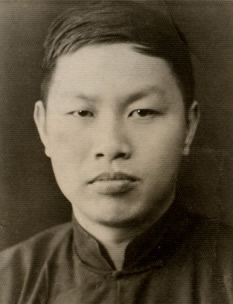
📖 Biography
Early Life and Conversion
Watchman Nee was born in 1903 in Shantou, Guangdong, into a Christian family of Fuzhou descent. His original name was Ni Shuzu (倪述祖), his courtesy name Tuosheng (柝声), and he chose the English name Watchman for himself. In 1920 in Fuzhou, influenced by revival meetings held by Dora Yu (余慈度), he was born again, came to the Lord, and resolved to serve full time. From 1922 he began meeting in Fuzhou with young believers such as Wang Zai (王载), Wang Zhi (王峙) and Miao Shaoxun (缪绍训). They stressed that “the church takes the locality as its unit, every believer serves, and the church leaves the denominational structures of the Western missions,” and this became the embryo of the “local church” movement (the Christian Assembly in China, 中国基督徒聚会处, commonly called the “Little Flock”).
The Shanghai Assembly
From 1928 he lived in Shanghai, where he established the assembly hall on Hardoon Road (now Tongren Road), and spread his teaching through periodicals such as The Revival (复兴报) and Tongwen Huikan (通问汇刊, Collected Newsletters). He read widely in Western spiritual writers such as J.N. Darby, Andrew Murray, F.B. Meyer, Jessie Penn-Lewis and T. Austin-Sparks, and digested them into a system of spiritual theology for Chinese readers. He wrote a series of works including The Spiritual Man (1928), The Normal Christian Life (from messages given in England and continental Europe in 1938–1939), Concerning Our Missions (工作的再思) and Church Affairs (教会的事务), which influenced Chinese churches in China and abroad for generations.
Travels Abroad
After the outbreak of the War of Resistance against Japan in 1937, he traveled to preach in Hong Kong, Singapore, India and Britain, and formed ties with the British Brethren and the inner-life movement. From 1939 he took over the management of his second elder brother's failing biochemical pharmaceutical factory, in order to support co-workers impoverished by the war; some elders of the church in Shanghai therefore questioned his involvement in business, and in 1942 he stopped preaching publicly. From 1948 he held “co-worker training” at Guling (鼓岭, Kuling) near Fuzhou, where he put forward the principles of “migration for the gospel” and “handing over one's assets.” After 1949 he insisted on not leaving the mainland; in 1952 he was arrested in Shanghai, and in 1956 he was sentenced to fifteen years for “counter-revolutionary crimes”; after his sentence ended he continued to be held. In May 1972 he died of illness at the Baimaoling labor-reform farm in Guangde, Anhui, leaving a final note: “Christ is the Son of God, who died to redeem man and rose again on the third day; this is the greatest fact in the universe.”
Writings and Legacy
His disciple Witness Lee (李常受) continued the “local church” work in Los Angeles in North America from 1962. Nee's writings were compiled and edited by Witness Lee and others into the English Collected Works of Watchman Nee in 62 volumes, and have been translated into many languages.