💬 Famous Quotes
📋 Basic Information
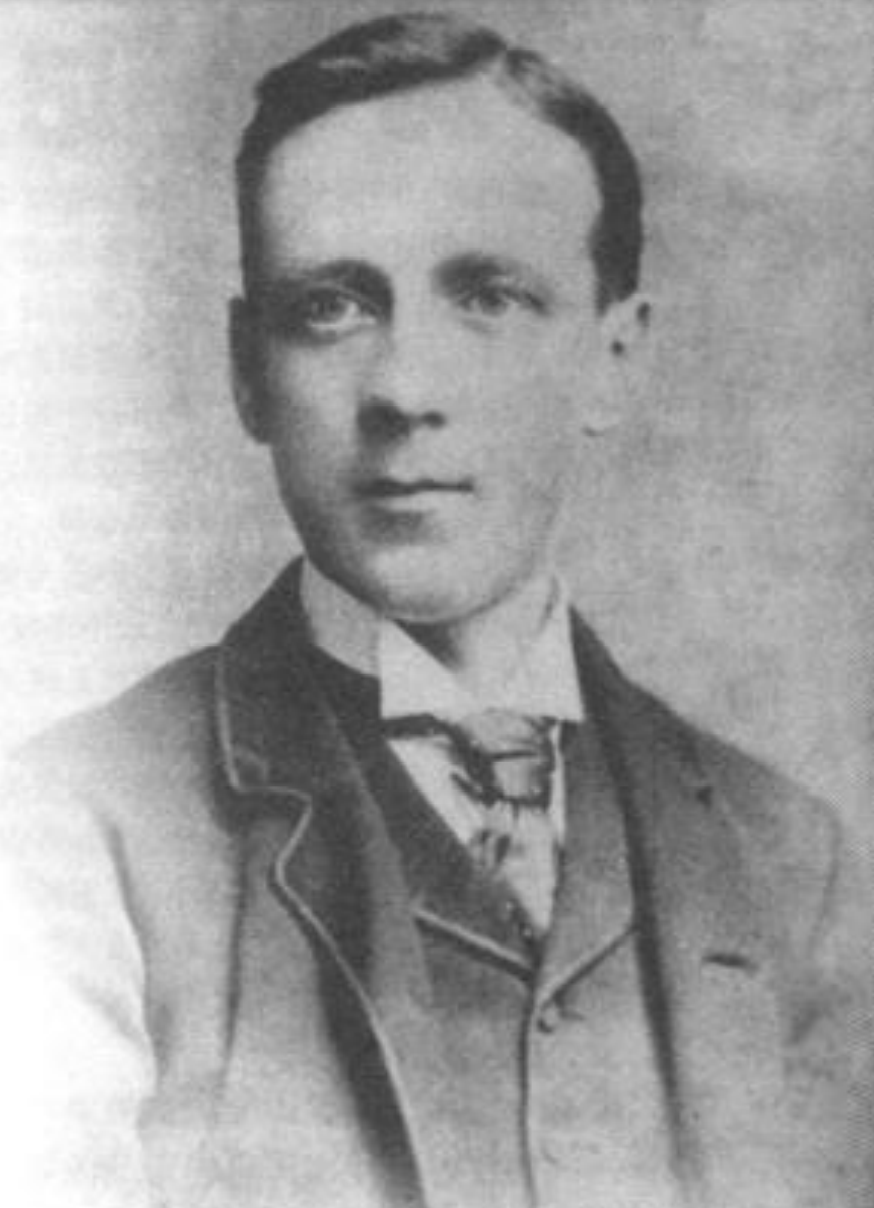
📖 Biography
Early Life and Coming to China
Samuel Pollard was born on 20 April 1864 in Camelford, Cornwall, England, into a family of the Bible Christian Church, and grew up in an atmosphere of piety and missionary zeal. A gifted young man, he passed the civil service examination in his youth and had good prospects, but in 1885 he answered the call to overseas missions and resolutely gave up a secure career. In 1886 he was accepted for service by the Bible Christians (the Bible Christian Church, later merged into the Methodist Church), and in 1887 he set out for China. He arrived first in Shanghai and then went on to Zhaotong in Yunnan, where he devoted himself to learning Chinese and began preaching in the city.
The Miao Turn to Christ
In 1904 several A-Hmao (Big Flowery Miao) people travelled hundreds of li over mountain paths to Zhaotong to ask him about the faith. Pollard was deeply moved by the suffering of the Miao, who had long been oppressed by Yi and Han native chieftains and had almost no dignity and no written language, and he resolutely shifted the focus of his work to this neglected mountain people. In 1905 a movement of the Miao to Christ spread like wildfire, with converts numbering in the thousands. Crossing the provincial border between Yunnan and Guizhou, he established a mission centre at Shimenkan in Weining, Guizhou. He went in person to Miao villages to preach, plant churches and train local leaders, and he repeatedly stood up for oppressed Miao before officials and landlords to seek justice.
Creating a Miao Script
Because the A-Hmao language had no writing system, Pollard worked with the Miao preacher Yang Yage (杨雅各) and the Han Chinese co-worker Li Sitifan (李司提反), drawing on the idea of the syllabic script that the earlier Methodist missionary James Evans had created for the Cree of North America. Taking the Latin alphabet loosely as a model and drawing on the patterns of Miao clothing, they devised a simple set of symbols: a large letter stands for the initial consonant, a small letter written beside it for the final, and the position of the small letter (above, beside or below) marks the tone. It became known as the “Pollard Script.” This script, still in use today, enabled the Miao for the first time to read the Bible, sing hymns and write letters in their own language. He also led the translation of the New Testament into A-Hmao, opening the door of literacy and education to the Miao.
The Light of Shimenkan
Under his leadership Shimenkan rose from a remote spot in the Miao mountains to become “the highest cultural area of the Miao in the Southwest.” The Guanghua primary school, a secondary school, a hospital, a leprosarium, dormitories and even the earliest football field in Southwest China were built one after another. The campaigns against opium and foot-binding and for public health enabled tens of thousands of Miao to learn to read, grow stronger and find new life. Pollard insisted on thorough indigenization: churches built in Miao style, Miao pastors shepherding Miao congregations, and bilingual teaching, so that the gospel truly took root in the soil of the Miao country.
Staying Behind and Giving His Life
In the summer of 1915 a typhoid epidemic swept through Shimenkan, and teachers and students fell ill one after another. Pollard refused to leave on his own and insisted on staying to care for the sick; at last he too was infected, and he died in September, only fifty-one years old. He was buried on the hillside at Shimenkan. For a hundred years his grave has remained a place where believers come in remembrance and pilgrimage. His life bore witness to the true meaning of “The good shepherd lays down his life for the sheep,” and generations of Miao have remembered him as “the saviour of the Miao.”