Select Language

简体中文 正體中文 English
Missionary Database

John Glasgow Kerr

嘉约翰  ·  1824 – 1901  ·  American

← Back to Missionaries Updated 2026-10-28

💬 Famous Quotes

"John Glasgow Kerr arrived in China in 1854 and, as successor to Peter Parker, was in charge of the Ophthalmic Hospital in Canton for 44 years; he is estimated to have treated 780,000 patients and performed 48,000 operations, translated 34 volumes of medical works into Chinese, taught 150 Chinese medical students, and in 1898 founded China's first Refuge for the Insane. Robert E. Speer wrote of him: "Vast as was his distinctly medical work, Dr. Kerr was above all things a missionary. He never lost an opportunity to preach Christ. ... He was a missionary first, and all his medical knowledge was used to commend the Gospel.""

📋 Basic Information

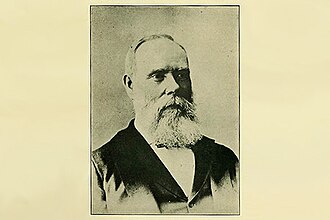
嘉约翰 John Glasgow Kerr portrait
👤 Gender
Male
🏴 Nationality
American
✝️ Religion
Christianity
⛪ Denomination
Presbyterian
🏛️ Order / Mission
Presbyterian Church in the U.S.A. Mission
🌍 Mission Region
China
🏯 Historical Era
Qing dynasty
1824
Born
Duncansville, Ohio, USA
1854
Mission Began
Age 30
1901
Passed Away
Age 77
Guangzhou, China
🏷️ Tags
missionary Christianity

📖 Biography

John Glasgow Kerr (1824–1901) was an American, a member of the American Presbyterian Church (North), and one of the earliest well-known missionary physicians to come to China. Born in Duncansville, Ohio, he graduated from Jefferson Medical College in Philadelphia in 1847. He first arrived in China in 1853, and in 1854 began medical missionary work in Guangzhou. In 1856, because of the Second Opium War, his clinic was destroyed and he was forced to return to the United States. In 1859 he returned to Guangzhou and took over the Canton Hospital (博济医院), founded in 1835 by Dr. Peter Parker of the American Board (美国公理会), and became its superintendent. In 1866 the hospital opened the Boji Medical School (博济医学堂), enrolling students to train medical workers; he served as its principal and himself compiled and translated textbooks.

In 1886 he helped found the first medical society in Greater China, the China Medical Missionary Association (博医会 in Chinese), serving as its first president and as editor of its journal, the China Medical Missionary Journal (博医传报). In 1898 he established in Guangzhou the first psychiatric hospital in Asia, the Refuge for the Insane (惠爱医癫院), and served as its superintendent. In the second half of 1901 Kerr contracted dysentery with other serious complications and died. He was buried in the Protestant cemetery on the south side of Erwanggang (二望岗) outside the city of Guangzhou, between Baiyun Mountain, Huanghuagang and Shougouling. After the founding of the People's Republic, the cemetery was requisitioned by the authorities at the end of the 1950s; Kerr's grave was destroyed on the spot, and its good-quality stone was taken away and reused. In 2013, after a joint proposal by 4 members of the Guangzhou municipal Political Consultative Conference, including Liu Mingyuan (刘明远), Kerr's grave was rebuilt at the Guangzhou Christian Cemetery in Huangzhuang. At the end of 2014 the remains of Kerr and of members of his family were formally reinterred, and the restored grave site was named Jia Yuan (嘉园, “Kerr Garden”).

Sun Yat-sen studied at the Boji Medical School in 1886.

📚 Major Works

Weisheng Yaozhi [Essentials of Hygiene] 1875
A Chinese-language medical work focusing on disease prevention and public health, promoting modern ideas of hygiene.
Yapian zhi Hai [The Harm of Opium] 1889
A work condemning the harm of opium smoking and exposing how opium corrupts moral character.
Guangzhou Fangyan Changyongyu Xuan [Selected Common Phrases in the Canton Dialect] 1888
A linguistic reference collecting common Cantonese words and phrases, for missionaries and other foreigners learning the Guangzhou dialect.
Translations of Western Medical Works into Chinese 1855-1898
Kerr translated more than 34 volumes of Western medical works, systematically introducing modern medical knowledge into China.
An introduction to chemistry translated orally by Kerr and written down by He Liaoran (何瞭然), published by the Canton Hospital; one of the earliest translations of modern chemistry into Chinese. Shidian Guji holds an 1873 Japanese reprint with reading marks, from the Japanese Cabinet Library (Naikaku Bunko).

📚 References & Sources

📖 Wikipedia (ZH)