💬 Famous Quotes
📋 Basic Information
📖 Biography
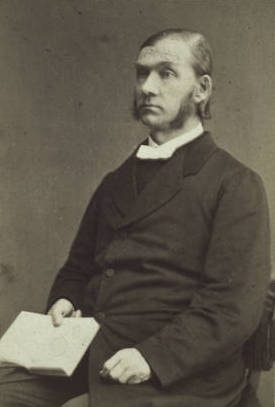
Rudolph Lechler (German: Rudolf Christian Friedrich Lechler; July 26, 1824 – March 29, 1908), Chinese name Li Liji (黎力基; Hakka: Lì Li̍t-kî), was a German Protestant missionary to China and the principal leader of the Basel Mission in China (today the Tsung Tsin Mission of Hong Kong, 基督教香港崇真会). He lived in China for 52 years (1847–1899). In 1874 he was elected head of the Basel Mission in China, and together with his co-workers he established 51 mission stations and 56 schools. More than 2,000 people were baptized. Under the Lechler–Medhurst Agreement he also helped Hakka Christians emigrate and settle in North Borneo (now Sabah, Malaysia), the beginning of today's Basel Christian Church of Malaysia (马来西亚巴色会). He studied Chinese culture and philosophy in depth, later came to speak Guangdong Hakka fluently, and translated the Gospel of Matthew and the Gospel of Luke into that language. Lechler made no small contribution to the early development of Hakka Christianity; Hakka Christians around the world today are estimated to number about 150,000.
Early Years
Lechler was born in 1824 in Hundersingen in the Danube valley, the third son of the Lechler family. His father, Gottlob Lechler, was a pastor in the Principality of Hohenzollern-Sigmaringen, so Lechler grew up in a devout home. His mother died when he was ten. He was educated at home from childhood, studying Latin, Greek, French, the Bible and church history. After finishing his schooling he became an apprentice to Ludwig Schmidgall (路德维希·施密德加仑), a merchant of Bulaisitan (布雷斯坦). In November 1842 Lechler completed his four-year apprenticeship and qualified as a merchant, but he fell seriously ill; after recovering he resolved to become a missionary.
To China
In 1849 Lechler went to Yanzao (盐灶) in Chenghai District, Shantou, Guangdong Province, rented the Peilan Xuan (佩兰轩) study house at Gangtou (港头) as a preaching hall, and began to preach there.
Last Years
Lechler served in China until the age of 75, returning to Germany only in 1899. Even after returning home he did not stop, but continued to preach, give lectures and write his autobiography. His heart, however, remained in China; even in his delirium on his deathbed he said, “We must go home, back to Hong Kong, back to Pingtang (坪塘)!”