💬 Famous Quotes
📋 Basic Information
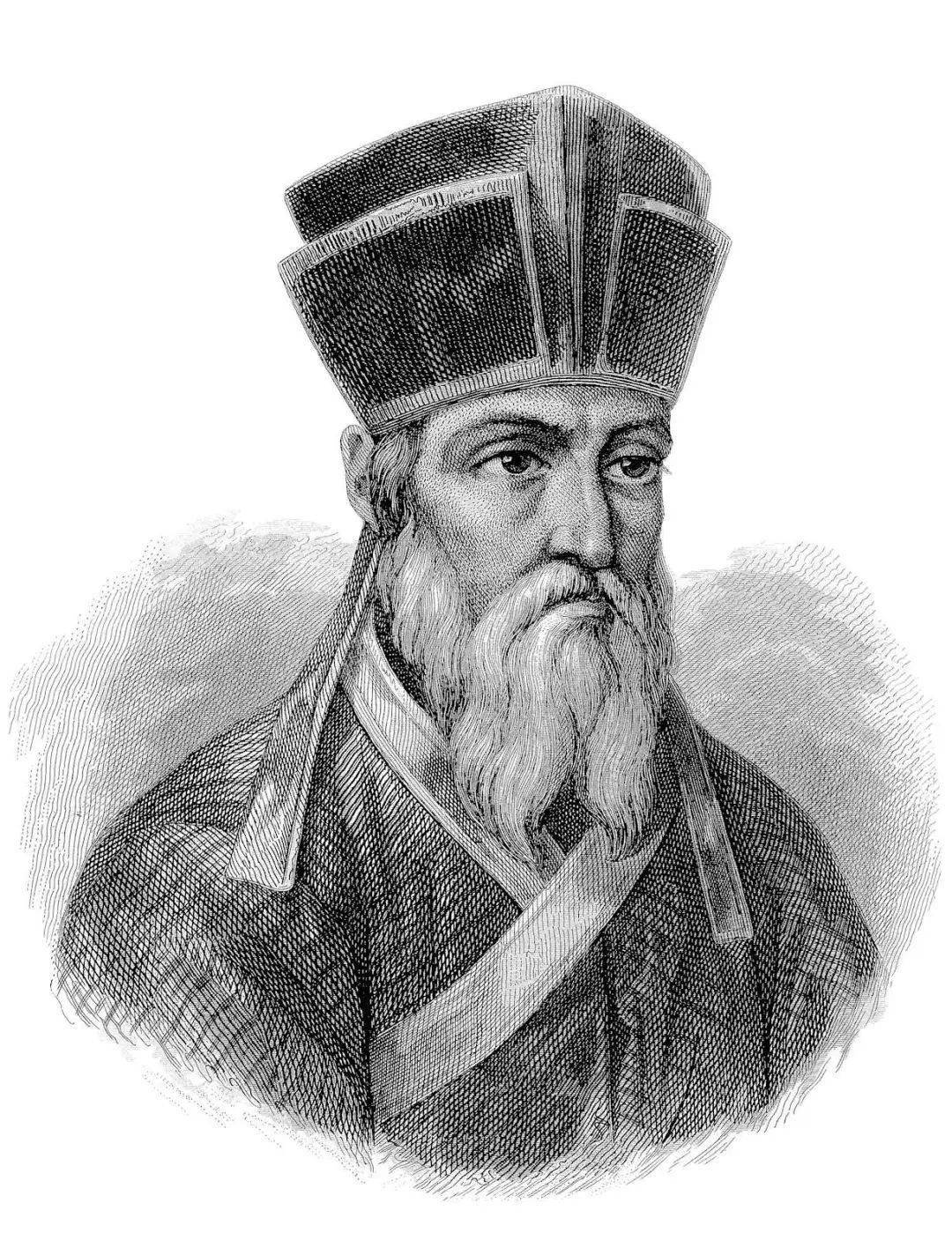
📖 Biography
Father Michele Ruggieri (Chinese name Luo Mingjian (罗明坚), courtesy name Fuchu (复初); 1543 – May 11, 1607) was an Italian Jesuit missionary, jurist and sinologist. He was the first Western missionary to enter mainland China since the beginning of the Ming dynasty, as well as a founder of European sinology, and a co-worker of Matteo Ricci. In his Tianzhu Shilu (天主实录; first printed in 1584 as Xinbian Xizhuguo Tianzhu Shilu 新编西竺国天主实录, and later revised as Tianzhu Shengjiao Shilu 天主圣教实录) he was the first to use the term Tianzhu (天主, “Lord of Heaven”).
Life
Ruggieri was born in 1543 in Spinazzola in the Kingdom of Naples (now part of Italy). He held two doctorates in law, in civil law and in canon law, and served at the court of Naples. In 1572, at the age of 29, he entered the Society of Jesus in Rome and volunteered for missionary work in the East; to prepare for it he completed courses in philosophy and theology at the University of Coimbra in Portugal.
In March 1578 he left Europe, sailing from Lisbon in the Kingdom of Portugal for Asia. In September of that year he reached Goa in India, and in July 1579 (the 6th month of the 7th year of Wanli) he arrived in Macau. Following the instructions of Father Alessandro Valignano, the Jesuit Visitor to the Far East, he worked hard at Chinese and in a very short time mastered a large Chinese vocabulary; in the course of his studies he began compiling, together with Matteo Ricci, the first Portuguese–Chinese dictionary (according to the caption of the manuscript, Zhong Baxiang (钟巴相), that is, Zhong Mingren (钟鸣仁), was also one of its compilers). In December 1580 (the 11th month of the 8th year of Wanli) he entered Guangzhou for the first time with Portuguese merchants and became acquainted with the vice-commissioner for maritime defense at Guangzhou and the regional commander of Guangdong. In December 1582 (the 11th month of the 10th year of Wanli), at the invitation of Chen Rui (陈瑞), viceroy of Guangdong and Guangxi, Ruggieri and Francesco Pasio (巴范济) went to Zhaoqing in Guangdong, then the seat of the viceroy; in September 1583, with the permission of Wang Pan (王泮), prefect of Zhaoqing, Ruggieri settled in Zhaoqing together with Matteo Ricci and there built the “Xianhua Temple” (仙花寺) for spreading the Catholic faith. In November 1585 (the 10th month of the 13th year of Wanli) he and Antonio de Almeida (麦安东) accompanied Wang Pan on a journey of inspection to Jiangxi, Shaoxing in Zhejiang and other places; in 1587 he traveled to Guangxi and Huguang. In 1588 (the 16th year of Wanli), carrying printing blocks of a prepared letter of state in Chinese, Ruggieri set out from Macau for Rome, planning to ask the pope to send an envoy to the King of China to request permission to preach in China.
In 1589 Ruggieri arrived back in Lisbon by sea and was warmly welcomed. But soon after he returned to Rome, Pope Sixtus V died, and so Father Ruggieri was unable to complete his mission or to return to China. In his later years in Europe he completed several important works: he translated the Great Learning (Daxue), one of the Four Books of the Chinese classics, into Latin, and he began drawing an atlas of China, introducing Chinese culture and geography to Europe, which had a far-reaching influence on Europe's understanding of China. He died in Salerno, Italy, on May 11, 1607.
Works
- Portuguese–Chinese Dictionary (葡汉辞典)
- Tianzhu Shilu (天主实录) (in Chinese, 1584)
- Atlas of China (中国地图集) (manuscript)
📚 Major Works

🎬 Videos
Prof. Tseng Ching-pao on Christ in Chinese History (4): Matteo Ricci and Michele Ruggieri
Saints and Sages: Mediating Christian and Chinese Concepts of Human Excellence in the Late Ming Dynasty
Videos are hosted on YouTube and uploaded by their original producers. YouTube loads only when you press play and may be unavailable in some regions.