💬 Famous Quotes
📋 Basic Information
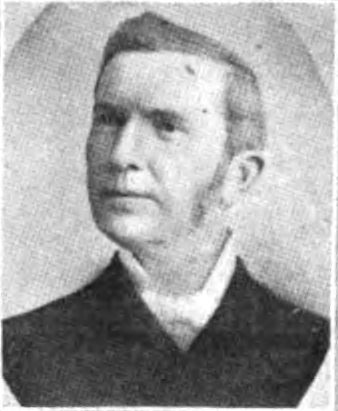
📖 Biography
Carl Frederick Kupfer (German: Karl Friedrich Kupfer; June 8, 1852 – November 20, 1925) was one of the representative figures among the missionaries sent to China by the German conferences of the Methodist Episcopal Church. He was born in 1852 in Katzendorf (卡岑多夫), in what is now Greiz District, Thuringia, Germany. As a child he emigrated to the United States with his parents and grew up in Wheeling, in what is now West Virginia. In 1881 he graduated from German Wallace College, a school for German Americans, and married Lydia Krill. That same year he was sent by the Methodist Episcopal Church to Jiujiang, Jiangxi, where he became principal of the Jiujiang Tongwen School. Around 1885 he moved the school to a site near the South Gate, where the school stands today. After 1888 he also did mission work in Zhenjiang, Nanjing and other places within the Central China Conference of the Methodist Episcopal Church. In 1896 he received a doctorate from Syracuse University.
In 1901, in memory of the German-American Methodist leader William Nast, the Tongwen School was renamed William Nast College (also called Tongwen College in Chinese), and Kupfer again became its principal. The school added higher-level courses, starting with two years of college courses; by 1905 it offered a full college curriculum, though it did not reach a true university standard. In 1918, against the background of the First World War, Kupfer was accused of sympathizing with Germany and being disloyal to the United States; the church ordered him to retire, and the other German staff working at William Nast College were also forced to leave. After the change in the school's leadership, its higher education was gradually reduced, and by 1920 it no longer had any college courses, though it kept the name of a college until 1927, after which it was renamed William Nast Academy (Tongwen Middle School).
Kupfer returned to China in 1921. He died in a hospital in Hankou in 1925 and was buried in Jiujiang.
Kupfer owned 4 adjoining villas on Guling (Kuling), Nos. 112, 113, 118 and 159. Between 1929 and 1934 they were all sold to Chinese owners.