💬 Famous Quotes
📋 Basic Information
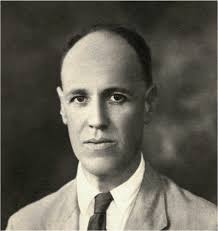
📖 Biography
James Outram Fraser (Chinese name Fu Nengren, 富能仁, also rendered Fu Leisai, 傅雷塞; 26 August 1886 – 25 September 1938) was a British missionary sent to China by the China Inland Mission. In the first half of the 20th century he worked for nearly 30 years among the Lisu people of northwestern Yunnan Province, and he is known for inventing a phonetic script for the Lisu language.
Arrival in Yunnan
Fraser was born in 1886 in London, England, into a wealthy family. His father was a Canadian of Scottish descent and president of the Royal College of Veterinary Surgeons; his mother came from a distinguished Moravian family; both were devout Methodists. Fraser was the third of 5 children. He was gifted in mathematics and music, and studied in the engineering department of the Royal College in London. In 1906, at the age of 20, he gave his first piano recital. That same year, at a Christian training camp, he met the China Inland Mission missionary C. T. Studd and came to admire the mission’s faith principle of neither soliciting funds nor appealing for support. After graduating, Fraser applied 3 times to join the China Inland Mission; the first 2 applications were rejected because he had an ear infection. Once it had been cured, he applied a third time and was finally accepted. In 1908 he went to China and first studied Chinese at the language school in Anqing. There he was chosen by Maiketi (麦克悌), a veteran China Inland Mission pioneer in Yunnan, to travel with him through Shanghai, Hong Kong and Burma to the mountains of Southwest China.
On 24 May 1909, after a long journey, Fraser rode by mule over the mountain roads from Burma into Tengyue (now Tengchong), a border town in western Yunnan. The China Inland Mission missionary W. J. Embery (安选生) was already stationed there. Soon afterwards Embery was transferred to Dali, and Fraser was left in sole charge of the Tengyue station. At first he preached to the local Han Chinese, but very few were converted. So he turned the focus of his work to the Lisu, a people little known until then. For many years after that he made a habit of travelling alone over high mountains to preach to the Lisu living in the great gorge of the upper Nu (Salween) River along the China–Burma border. The Lisu were glad to receive the missionary, and he lived in their mud houses. At first they could talk only in limited Chinese; then he began to learn the Lisu language, which belongs to the Tibeto-Burman family. Once he had mastered it, he at once began translating the Gospel of Mark and hymns into Lisu, making use of the Lisu gift for singing, and he also planned to write down the Lisu oral history songs in musical notation. In the first years of his work Fraser met with much doubt and many difficulties; it was not until 1916 that they succeeded in bringing 3 families to faith in Christ. By 1918 these believers were carrying on family evangelism on their own, and 600 believers had been baptized. Fraser was effective in building a strong indigenous church, which made his work a model for church growth among other minority peoples of Southwest China and in other countries.
Furlough and Marriage
Shortly before Christmas 1922 Fraser went home to England on his first furlough. When he returned to China in 1924, D. E. Hoste (何斯德), General Director of the China Inland Mission, appointed him principal of the mission’s secondary school in Lanzhou, Gansu. In 1928 Fraser was appointed superintendent of the China Inland Mission in Yunnan and was able to return to the Lisu hills. At that time he was also responsible for escorting 7 missionaries newly assigned to Yunnan: Mr and Mrs J. David Harrison (海教士) and John B. Kuhn (杨志英) to Yunnanfu (Kunming), and Mr and Mrs Francis J. Fitzwilliam (费教士) and Mr and Mrs J. Harold Casto (贾教士) to Tengyue. On 24 October 1929, at the age of 43, Fraser married Roxie Dymond (邰洛西) in Kunming. She was then 23, the daughter of the Methodist missionary F. J. Dymond (邰慕廉); she was born in China and had graduated in history from a university in England. After their marriage the couple spent four and a half months on a long journey of 1400 miles, visiting the mission districts throughout Yunnan.
Revival and the Fraser Alphabet
Around 1915 the Karen preacher from Burma Sara Ba Thaw (巴拖) first devised a Lisu script, which Fraser improved; with the help of the Lisu believer Moses (摩西) and others, he used it to prepare a catechism, translate the Gospels of Mark and John, and write a handbook of Lisu history and language. He then handed the translation work over to his young co-workers Mr and Mrs Allyn Cooke (杨志敬); later he came back to revise it, and finally in 1936 the translation of the whole New Testament was completed.
Fraser consistently carried out training for Lisu believers (usually whole families and whole villages took part). And, unlike other missionaries of the time, Fraser had the Lisu believers pay for their own books, build their own churches and support their own preachers. These practices later helped the Lisu church in times of persecution (especially during the Cultural Revolution), so that it was not set back by the loss of former outside support (although tens of thousands fled to neighbouring Burma and Thailand). Fraser handed the governance of the church to Lisu elders and left little imprint of the British mission on the area; at home, however, he organized a large prayer group to support his work among the Lisu.
Throughout the 1930s Fraser and other missionaries worked hard at evangelism, and most of the new believers came from the Lisu areas, including the Lisu as well as the Kachin and Yi peoples. A great revival took place. According to Western mission sources, by the 1990s a very high proportion of the Lisu in China were Christians, by one account as many as nine in ten.
Death and Legacy
On 25 September 1938 Fraser died of cerebral malaria at Yongchang Prefecture (Baoshan) in western Yunnan, China, leaving his wife and 3 young children; by then his missionary work had already achieved great success. In 1982 his daughter Eileen Crossman published a biography of him, Mountain Rain (山雨).
The following quotation is from the website of OMF International (formerly the China Inland Mission):
“On 25 September 1938 James Fraser died in Baoshan, Yunnan, China, aged only 52. He was first buried on a hillside in Baoshan; later, because of political reasons and soil erosion, his grave was moved several times, and he is now buried beside Qinghua Church (清华教会) in Baoshan. The Lisu church has put up a new gravestone expressing their deep remembrance of Fraser. Though Fraser at first sowed in tears, today there is a harvest with shouts of joy.
“The Lisu church in Baoshan plans to commemorate Fraser every 7 years with a special Eastern ceremony at the newly built Bible training centre. Lisu believers in Weixi County, in the far northwestern corner of Yunnan Province, have also held events in memory of Fraser.
“The Lisu church has seen enormous growth over the past few decades. In 1950 there were 14,800 Christians in the Nujiang Lisu Autonomous Prefecture. By 1995 the number of Christians had risen to more than 100,000, most of them Lisu. In the early 1980s the Yunnan Provincial Christian Council published several thousand copies of the Lisu Bible. By 1995, 45,000 copies of the Lisu Bible and 65,000 copies of the Lisu hymnal had been published. All of these used the Lisu script invented by Fraser. Yet the church also faces many difficulties: local poverty, high illiteracy and a lack of trained preachers; the rapid growth of tourism in Yunnan and the wave of young people moving from remote valleys to the cities to find work have also brought many changes to the Lisu church, not all of them positive.
The Lisu script improved by Fraser is known as Old Lisu. After 1949 its use was restricted to Christian circles, and the government of mainland China had linguists of the Chinese Academy of Social Sciences devise a separate New Lisu script. In 1992 the local authorities of Nujiang, Yunnan, officially recognized Old Lisu as a standard script for the Lisu language, used alongside New Lisu. Because Old Lisu had long been deeply rooted among the people, it is the more widely used. Today Fraser remains one of the most successful Christian missionaries in East Asia.
At present Fraser’s remains are buried in the hills of Baoshan, Yunnan, and in September 2007 Qinghua Church (清华教会) was built in front of his grave.