💬 Famous Quotes
📋 Basic Information
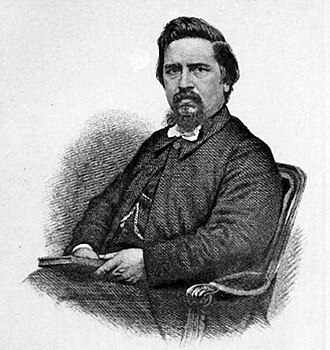
📖 Biography
Griffith John (1831–1912), whose Chinese name Yang Gefei (杨格非) is also rendered Yang Yuehan (杨约翰) and Yang Duxin (杨笃信), was one of the best-known missionaries sent to China by the London Missionary Society, and the pioneer of Protestant Christian work in Central China.
Early life
Griffith John was born on 14 December 1831 in Swansea, Wales, into a poor Congregationalist family. At the age of 8 he was received as a full member of a Congregational church; at 14 he preached his first sermon at a prayer meeting, and at 16 he began preaching regularly in church. He went on to study theology in Wales and England.
In 1850, having prepared himself by private study, he was admitted to college, where he later studied theology. In 1853 he joined the London Missionary Society, the earliest society to send missionaries to China. In 1855 he was ordained, and the same year he married Jane Griffith, the daughter of a missionary. He intended to go to Madagascar, but the Society persuaded him to go to China instead.
Arrival in China and the Taiping
In September 1855 the newly married couple arrived in China by sea and worked first in the area around Shanghai. In 1857 he visited Suzhou and set up preaching stations in the Songjiang area. In August 1860 he went to Suzhou, by then occupied by the Taiping, and met the Taiping Loyal King Li Xiucheng (李秀成), and later the Shield King Hong Rengan (洪仁玕); he then went on to Nanjing and obtained the right to preach freely within Taiping territory.
Hankou
In 1860 the Convention of Peking was signed, opening the interior of China (places other than the treaty ports) to missionaries. Griffith John was among the first missionaries to enter the inland provinces. In 1861 he set out from Shanghai and on 21 June arrived in Hankou, becoming the first Protestant missionary to enter Central China. He began preaching from a house at the Jintinggong inn (金庭公店) in Shenjiamiao (沈家庙). From then until he left in 1912, Hankou remained his base, and there he founded schools, hospitals and a training centre. Only in 1863 did he live in Wuchang, and in 1867 in Hanyang.
In 1862 the British Wesleyan Methodist missionary Josiah Cox (郭修理) came to Hankou from Guangdong. Griffith John handed over the Jintinggong premises and the Hanzheng Street area to the Methodists for their preaching, and himself bought land downstream on Hualou Street, where he built the Hualou central church (later moved to the model district and named Gefei Church (格非堂), today’s Rongguang Church (荣光堂) at the Huangshi Road junction), and founded the Renji Hospital (仁济医院), the forerunner of Hankou Union Hospital. In 1863 he built the first church in Central China, the Shou’en Church (首恩堂), on Jiajie Street in Hankou. In July 1864, in Wuchang, which was not yet a treaty port, he built at Gejiaying the first church in the provincial capital of Hubei (the Chongzhen Church (崇真堂), returned to use in 2000), and also built a Renji Hospital at nearby Tanhualin. Soon afterwards he established churches in Xiaogan, Tianmen, Zaoshi, Huangpi, Hanyang and elsewhere. He and his colleagues set up at least 100 mission stations in Hubei, and he was called a “street preacher”.
Griffith John was known for his preaching journeys across the vast interior of China, sometimes travelling more than 3000 miles. He was among the first Protestant missionaries to begin mission work in the three provinces of Hubei, Hunan and Sichuan.
Writing, translation and training
His other major contribution to the Chinese church was in writing and translation. Through hard work he came to use Chinese with great skill, speaking and writing it fluently. His eloquence made him very popular among the Chinese, and large crowds came to hear him preach. In 1876 he founded the Central China Tract Society in Hankou, which edited and printed gospel leaflets and tracts for distribution on preaching tours, to make up for foreign missionaries’ difficulties with the Chinese language (according to figures for 1899, more than 80% of the street-preaching literature used by Protestant churches across China was printed by this society). For many years he not only led the Tract Society but was himself a prolific tract writer, producing countless popular gospel tracts. He also worked on Bible translation: he translated the New Testament and parts of the Old Testament into more than one Chinese dialect, and translated the New Testament, Psalms and Proverbs into Easy Wenli, published in 1885. He also translated a Mandarin New Testament, published in 1889. In 1888 (some sources say 1889) he was elected chairman of the Congregational Union of England and Wales, but he declined the honour and stayed in Hankou, living among the Chinese people he loved. In 1889, in recognition of his missionary work in China, the University of Edinburgh awarded him the degree of Doctor of Divinity.
Griffith John was especially successful in training and guiding Chinese preachers, and in the Yangtze valley he founded a theological school bearing his name to train local preachers. In 1899 he founded the Boxue Academy (博学书院; English name Griffith John College), the forerunner of Wuhan No. 4 Middle School, in Juxiang Lane, Houhualou, Hankou (now Jiaotong Lane).
Last years
In 1905 he suffered a sudden stroke while preaching on a Sunday and was left paralysed on one side and bedridden. When the Wuchang Uprising broke out in October 1911, his son-in-law Shi Boheng (施伯珩) and others escorted him out of Hankou on a British steamer, and in January 1912 he returned to Britain. By then he had lived in China for 56 years, returning home only 3 times in all that time. He died in London, England, on 25 July 1912, and was buried at Sketty in his home town of Swansea.
📚 Major Works

🎬 Videos
Why Griffith John Refused to Give Bibles Away (Bibles Not Bombs, Day 9)
Lessons from 60 Years in China: Griffith John's A Voice in the Darkness
Videos are hosted on YouTube and uploaded by their original producers. YouTube loads only when you press play and may be unavailable in some regions.