💬 Famous Quotes
📋 Basic Information
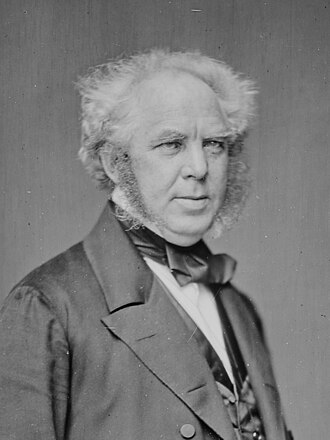
📖 Biography
Peter Parker (Chinese name Bo Jia, 伯驾; June 18, 1804 – January 10, 1888), from Massachusetts, USA, was an early American missionary to China, physician, and diplomat. During the Opium War period he took part in negotiating the Treaty of Wanghia, and he later served as United States Commissioner to China.
In 1831 Parker received his bachelor’s degree from Yale University, and in 1834 his Bachelor of Medicine; he then entered seminary and was appointed to mission work in China. Because of his outstanding medical skill, Parker became the first full-time medical missionary in China. Because the Thirteen Hongs of Canton did not allow foreigners to study Chinese, he first went to Singapore to study Chinese for a time, then returned to Canton in November 1835. He first opened a dispensary in the foreign quarter and began treating Chinese patients, most of them for eye diseases. Later his dispensary grew into an eye hospital, the Canton Hospital (Boji Hospital). This hospital gradually developed into today’s well-known Sun Yat-sen Memorial Hospital of Sun Yat-sen University and the Zhongshan Ophthalmic Center of Sun Yat-sen University, an important part of the university’s medical school. In addition, he briefly headed the Macau hospital of the Medical Missionary Society in China.
In 1840 the First Opium War broke out; Parker closed the Canton Hospital and returned to the United States. Two years later he came back to China, reopened the Canton Hospital, added staff, and enlarged it. Parker brought Western medical techniques to China; his medical skill was such that he was said to “spread the gospel with a lancet (that is, a surgical knife).”
In 1844 Parker was commissioned to take part in the negotiation and signing of the Treaty of Wanghia. From 1845 he served as secretary and interpreter of the American legation in China, acting as chargé d’affaires in the minister’s absence (several times from 1847 on). As representative of the American government, Parker took a hard line toward China and actively sought to expand American rights and interests there. A well-known saying of his was “Bend or Break” (rendered in Chinese as “if the Chinese do not submit, they will be destroyed”). During the Second Opium War he called for American forces, together with British and French forces, to occupy Zhoushan, Taiwan, and Korea. In 1855 he returned to the United States for health reasons, and the same year he was appointed United States Commissioner to China (then the highest American representative in China). He returned to China in 1856, charged with revising the Treaty of Wanghia, but did not succeed; in 1857 he was succeeded by William B. Reed (列卫廉) and, his health failing again, returned home.
After that he lived mostly in Washington, and died in 1888.
Related Facts
Parker set a number of firsts in the history of modern medicine in Greater China, such as removing tonsils (1836), removing bladder stones (1844), using ether anesthesia (1847), and using chloroform anesthesia (1848).
The well-known late-Qing export painter Lam Qua (Guan Qiaochang, 关乔昌), to thank the Canton Hospital for treating Chinese patients free of charge and to thank Parker for admitting his nephew to the medical school, painted at Parker’s request between 1836 and 1855 a series of portraits of patients, free of charge (he was paid for only one painting); these were used as teaching material for medical students. Portraits of these patients before and after surgery also hung in the waiting area of the old Canton Hospital, possibly to encourage patients.
At the request of Lin Zexu, Parker worked with Yuan Dehui (袁得辉) to translate parts of the Swiss jurist Emer de Vattel’s work, rendered in Chinese as Wanguo Lüli (The Law of Nations), to help Lin Zexu deal with cases involving Britain.
Chronology
- 1804: Born into a devout Christian family in Massachusetts.
- 1831: Graduated from Yale University, then entered seminary, during which time he was appointed to mission work in China.
- 1834: Received the Bachelor of Medicine degree and was ordained; arrived in Canton the same year.
- 1835: Parker founded the Canton Ophthalmic Hospital on New China Street (Xindoulan Street) within the Thirteen Hongs of Canton, known as the “Xindoulan Hospital,” treating patients free of charge; at first it mainly took in eye patients.
- 1844: As assistant and interpreter to the American envoy, took part in negotiating the Treaty of Wanghia.
- 1847: Became American chargé d’affaires in China, while continuing to practise medicine until 1855.
- 1855: The American government appointed him Commissioner to China. The “Xindoulan Hospital” was handed over to Dr. John G. Kerr (嘉约翰) of the American Presbyterian Mission (North); in 1859 it moved to a new site and was renamed the Canton Hospital (Boji Hospital; Canton Hospital, PokTsai).
- April 22, 1857: Succeeded as Commissioner to China by William B. Reed (列卫廉), he returned home, ending his diplomatic and missionary career.
📚 Major Works

🎬 Videos
Why Missionaries Brought Medical Kits to China: Peter Parker and the Canton Ophthalmic Hospital
Diplomat in China: Framingham's Peter Parker (1804–1888)
Videos are hosted on YouTube and uploaded by their original producers. YouTube loads only when you press play and may be unavailable in some regions.