💬 Famous Quotes
📋 Basic Information
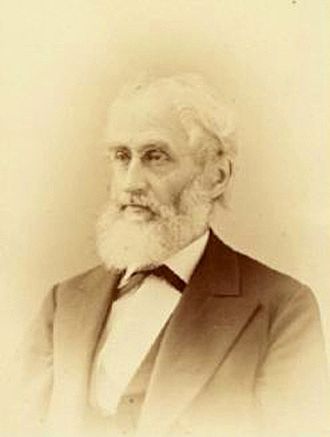
📖 Biography
Samuel Wells Williams (卫三畏; September 22, 1812 – February 16, 1884) was a 19th-century missionary, sinologist and linguist.
Williams was born in Utica, New York, and studied at Rensselaer Polytechnic Institute in Troy. On June 15, 1833, at the age of 20, he was sent by the American Board of Commissioners for Foreign Missions to Canton (Guangzhou), China, to take charge of printing. In 1837 he sailed to Japan on the ship Morrison; officially the voyage was only to return shipwrecked Japanese sailors, but it was an unofficial attempt to open trade between the United States and Japan. In Macau he learned Japanese from Japanese castaways and translated the Gospel of Matthew, and later completed a translation of Genesis as well; the manuscripts were sent to the Rev. S. R. Brown in Yokohama to be published, but in 1867 Brown's house burned down and the translations were destroyed before they could be printed. From 1848 to 1851 he edited The Chinese Repository. In 1848 he compiled the book The Middle Kingdom. In 1853 he took part as interpreter in Matthew Perry's expedition to Japan. In 1855 he became secretary of the office of the United States Commissioner to China (in Canton), and the following year he completed his English–Cantonese dictionary, A Tonic Dictionary of the Chinese Language in the Canton Dialect (英华分韵撮要). During the Second Opium War he was the American deputy representative in the Sino-American negotiations that produced the Treaty of Tianjin, and he pressed China to tolerate Christians. From 1860 he served as secretary and interpreter of the United States Legation in China, acting several times as chargé d'affaires, and later moved with the legation to reside in Beijing; he resigned on October 25, 1876.
In 1877 he returned to the United States and became professor of Chinese at Yale University, the first professor of Chinese studies in America. On February 3, 1881, he became president of the American Bible Society. He died of illness on February 16, 1884.