💬 Famous Quotes
📋 Basic Information
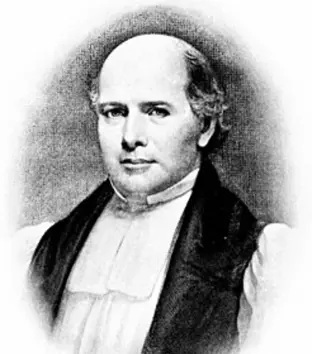
📖 Biography
William Jones Boone (文惠廉; 1 July 1811 – 17 July 1864) was a bishop of the American Episcopal Church and a pioneering figure in its mission in China. In 1837 he first worked among the Chinese in Java. In 1842 he entered Xiamen (Amoy). In 1843 he became a bishop. In 1845 he entered the newly opened port of Shanghai and began the Jiangsu missionary district, living at first inside the walled county town. At Easter, 12 April 1846, Boone personally baptized Huang Guangcai (黄光彩), who became the first Chinese Christian of the American Episcopal Church; at that same baptism service Boone preached and prayed in the Shanghai dialect for the first time. In 1848 he asked the Shanghai circuit intendant Lingui (麟桂) to open an American settlement and was granted Hongkou, on the north bank of Suzhou Creek. In 1853 the Church of Our Saviour (救主堂) was completed. Boone died in Shanghai on 17 July 1864, aged 53.
The main gate of the Church of Our Saviour opened south onto Broadway (now Daming Road), and the road along its east side was named after Boone — Wenjianshi Road or Boone Road (now Tanggu Road). The church became self-supporting in 1906; in 1918 it moved to the corner of Tiantong Road (Tianshui Road) and Dixwell Road (Liyang Road) in the Chinese part of the city; in 1937 it was bombed and destroyed in the Battle of Shanghai and moved again, to Route Père Robert (Wuyuan Road) in the French Concession. Religious activities stopped in 1966 during the Cultural Revolution, and in 1986 it was demolished and rebuilt as the East China Theological Seminary.
The university later founded by the American Episcopal Church in Wuchang was also named after him: Boone University (文华大学).
Boone's eldest son, Henry William Boone (文恒理; 1839–1925), was a medical missionary who founded St. Luke's Hospital (同仁医院) in Shanghai in 1880. His second son, William Jones Boone, Jr. (小文惠廉; 1846–1891), was born in Shanghai in 1846, succeeded as bishop of the American Episcopal Church's Jiangsu district in 1884, and died in Shanghai in 1891.
📚 Major Works