💬 Famous Quotes
📋 Basic Information
📖 Biography
A Heroine from Sweden
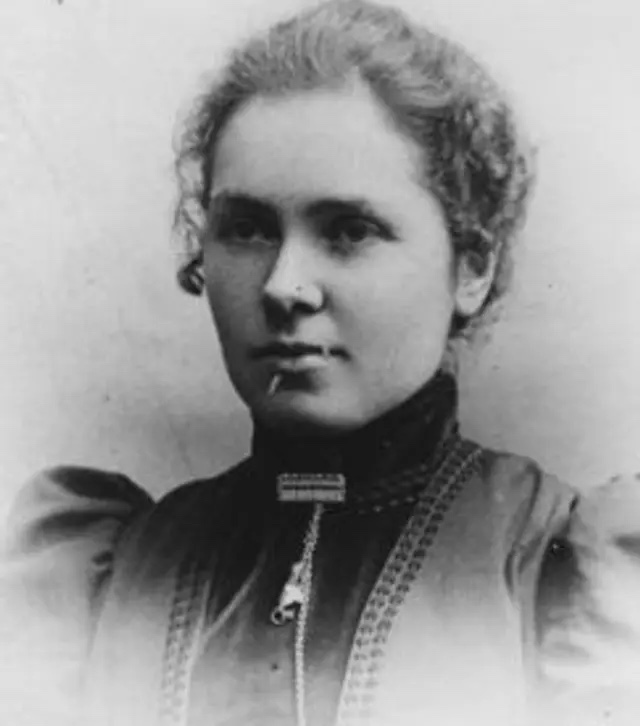
Emma Ekvall (艾瑞英), born Emma Charlotte Eck, was born on August 19, 1870, in Morlunda, Sweden. The place was only twelve miles from the hometown of her future husband, Martin Ekvall, but the two met in China. She repented and came to faith at eighteen, and soon afterwards, under the influence of James Hudson Taylor, she received a call and resolved to go to China as a missionary. In 1891, at twenty-one, she arrived in Shanghai as a missionary of the China Inland Mission. After a year of language study she was sent to the mission station at Baoning Prefecture (now Langzhong) in Sichuan. At that time the China Inland Mission's work in Sichuan was led by William Wharton Cassels (Bishop of Western China from 1895), one of the "Cambridge Seven", who has his own entry in this database. During these years in Sichuan she gave herself a Chinese name, Ai Ruiying (艾瑞英), meaning "a heroine from Sweden".
"Without Emma, Life Seemed Dark"
Martin Ekvall, a Christian and Missionary Alliance missionary pioneering in Minzhou, Gansu, met his fellow countrywoman. The two began to write to each other, and their affection grew. In Martin Ekvall's own words, "If I did not marry Emma, life seemed dark and I could not live." In September 1900 the two were married in the United States while on furlough. The following September, after the Boxer turmoil had subsided, the newly married couple sailed from San Francisco back to China. From then on she transferred to the field of the Christian and Missionary Alliance, serving in turn in Qingyang, Anhui, and Changsha, Hunan, and finally returning to Minzhou, where her husband had pioneered. At a time when the great majority of girls in Gansu had never been to school, she started a girls' school in Minzhou, teaching women of all ages to read and write. Running the school was education, and also a way to reach the people and preach the gospel.
The Three Children She Lost
In October 1911 the Xinhai Revolution broke out, and the fighting cut Gansu off from the outside world for several months. Two of their children caught scarlet fever at the same time; after day-and-night efforts to save them they came through, but their six-year-old daughter Elizabeth could not be saved. Years of fright from the bandits of the Gelaohui (Elder Brothers Society), rumours that the fighting was drawing near, and then the death of her beloved daughter: this series of blows left her completely broken. She could not sleep at night and was in a daze. When the family returned to the United States in July 1912, she could no longer look after herself, at times endangered the children, and had suicidal tendencies. Doctors, relatives and friends all urged her husband to send her to a mental hospital. Martin Ekvall refused. He was convinced that his wife was not mentally ill but had broken down emotionally under heavy pressure, and he insisted on caring for her daily needs himself, patiently helping her to eat and dress, without ever complaining. She improved day by day and had fully recovered by 1914.
In 1918 the Spanish flu swept through Wuhan, and their seven-year-old younger daughter, Irene, died on October 21, the second child they lost in China. Scripture says that "he learned obedience by the things which he suffered"; this time, though her heart was grieved, she was not crushed. On July 23, 1932, their only son, Henry, was shot dead outside Xi'an by a group of unidentified men; even his body was never found. He had turned twenty-four a little over three months earlier. Their three children, along with her husband and her husband's elder brother and sister, all ended up remaining in China.
The Child of February 1919
One day in early spring, in February 1919, a frail blind girl stumbled up to the compound of the Christian and Missionary Alliance in Wuchang to beg. Looking at the child, Emma Ekvall thought of Irene, who had died a few months earlier. Instead of sending her off with a few coins, she went up to her and talked with her. The ten-year-old blind girl had come from a well-off family: her father was a Manchu who had come to Wuhan as an official, and the flu had taken the lives of both her parents. She herself had lost her sight through an eye disease and ended up on the streets, where a cruel woman forced her to beg in the streets with other blind children; she had also been sold as a wife to a lame, violent-tempered male beggar. Having heard all this, Emma Ekvall remembered the words of the Bible: "who comforts us in all our affliction, that we may be able to comfort those who are in any affliction, through the comfort with which we ourselves are comforted by God." She resolved to give these children a home.
The Wuchang Ruiying School for the Blind
In 1921 she founded in Wuchang the first school for blind girls in Hubei, naming it the Wuchang Ruiying School for the Blind (武昌瑞英瞽目学校). (Some accounts date its founding to 1919, counting from when she took in the first blind child.) This work was not originally one of the Christian and Missionary Alliance's projects; the mission gave some support but no regular funding. She followed the spirit of the China Inland Mission and took the English philanthropist George Muller as her example, never asking anyone for donations but simply praying to the Lord. She would often say in faith, "If the Lord watches over a little sparrow, He will surely care for an abandoned blind child."
Every child in the school had been abandoned or abused. There were children born blind who had been picked up from the streets or beside the railway; there was a girl kidnapped by bandits whose eyes were gouged out when no ransom came; and there was a little girl whose eyes had been pierced with a needle by her enraged mother. From the day the school opened, not one blind child who came for help was turned away, and over twenty years it took in more than a hundred children. At first there were only primary classes; later junior middle school classes were added, with ages ranging from six to sixteen. The Bible was one of the core subjects, and singing hymns was the students' favourite after-class activity. Every Sunday morning the girls of the school for the blind, neatly dressed, lined up by height, each student resting one hand on the shoulder of the girl in front, and walked quietly and in good order out through the narrow, crowded lanes. This became a local sight, and many residents stopped to watch. Besides reading and writing Braille, the school offered Chinese (Guoyu), arithmetic, general knowledge, history, geography, music, physical education and civics, and its industrial department taught knitting. Three times a week the girls went with their teachers into hospitals or homes to share the gospel. After graduating, some became Bible women in mission hospitals, some were assigned to rural mission stations, and some earned a living with their domestic skills; no one was asked to leave the school before suitable work had been found.
Famine Relief and War
In November 1919 the couple visited Changde, Hunan, where the "Christian General" Feng Yuxiang (冯玉祥) was stationed with his troops. Martin Ekvall was invited to preach to the army for three weeks in a row, while Emma Ekvall visited the industrial school in the barracks, where officers' wives learned to operate sewing machines, knit towels and socks, and bind books. She shared the gospel with them and led thirteen of them to faith. In the great Yangtze–Huai flood of 1931, Wuhan was one of the worst-hit areas: 780,000 people in the city were affected, and every day more than a thousand died of hunger, epidemics and heatstroke. She and her husband rallied their daughter and son-in-law, who had only recently come to China, together with the students of the school for the blind, to throw themselves into relief work, distributing grain and rice and giving out porridge, and they saved many infants who had no one to look after them. When the disaster was over she reported to the mission: "We reached more than 8,000 flood victims. Many women who had never heard the gospel before began to pray in their distress, and we saw with our own eyes how God answered the cries of these people who once worshipped false gods." For her contribution to the relief work she was awarded a medal by Madame Chiang Kai-shek (Soong Mei-ling). When the War of Resistance against Japan broke out in 1937, the couple chose to stay in Wuchang and suffer together with the people; when Japanese aircraft began bombing Wuhan in February 1938, they prayed and opened the basement of the Christian and Missionary Alliance to shelter refugees.
A Sixth Journey to China
On January 6, 1939, her husband died of prostate cancer in Wuchang and was buried in the International Cemetery in Hankou; students of the school for the blind sang at the funeral. In 1940 Emma Ekvall, by then seventy years old, set out for the United States, entrusting the school to her co-workers before she left. During the Japanese occupation after Pearl Harbor, the school was run by a Miss Liu, a graduate of the Perkins School for the Blind. Back at the missionary home in Glendale, California, she found her eldest daughter's family preparing to go to Wuhu, Anhui, as missionaries, and her third daughter and son-in-law about to set off for Yueyang, Hunan: her children had all taken up the path of mission to China.
Japan surrendered in 1945. In February of the following year, at seventy-five, she set out once more, travelling alone to China for the sixth time. She hoped to finish her course in Wuhan and then be buried with her husband. She was among the passengers on one of the first ships to return to China, and she kept working until the end of 1948, when she was again ordered to evacuate. She said farewell to the land in which her husband, two daughters and two other relatives lay buried, and where her only son, Henry, had been lost. After that she continued to accept invitations everywhere to speak about China, and her concern for that land never lessened. On July 7, 1952, she died of heart disease in Honolulu, Hawaii, at the age of eighty-one, and was buried in Lihue Cemetery. Her gravestone is inscribed "Founder of the Wuchang School for the Blind, China", together with the same verse as on her husband's gravestone: "Because I live, you will live also." (John 14:19) In 2020 the local government set up a group of statues in front of the newly completed school building; among them is her figure, with a cross hanging around her neck.