Select Language

简体中文 正體中文 English
Missionary Database

Alopen

阿罗本  ·  Persian (some say Syrian; the Nestorian Stele says Daqin)

← Back to Missionaries Updated 2026-10-28

💬 Famous Quotes

"When Emperor Taizong began his glorious reign, ruling the people with enlightened wisdom, there was in the land of Da Qin a man of eminent virtue named Alopen. Guided by the azure clouds he bore the true scriptures, and watching the winds he braved hardship and danger. In the ninth year of Zhenguan (635) he arrived at Chang'an. The emperor sent his minister Duke Fang Xuanling with an honor guard to the western suburbs to receive him as a guest and bring him into the palace. The scriptures were translated in the imperial library, and the emperor inquired into the Way in his private apartments; deeply understanding its rightness and truth, he gave special orders for it to be taught and spread."

📋 Basic Information

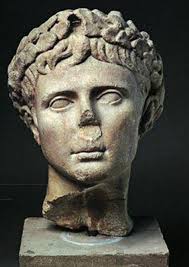
阿罗本 Alopen portrait
👤 Gender
Male
🏴 Nationality
Persian (some say Syrian; the Nestorian Stele says Daqin)
✝️ Religion
Christianity
⛪ Denomination
Church of the East (Nestorian)
🏛️ Order / Mission
Church of the East (Nestorian)
🌍 Mission Region
China
🏯 Historical Era
Tang dynasty
635
Mission Began
🏷️ Tags
Christianity bishop

📖 Biography

Alopen (the name may be a transliteration of the Semitic name Abraham, though scholars differ) is the earliest Jingjiao (景教, Church of the East) bishop recorded in history to have reached China. He was an envoy sent to China by the Assyrian Church of the East (the Nestorian branch of Christianity). In that period the Tang dynasty welcomed foreigners of every kind, from Syrian Christians and Turks to Persians of the Sasanian Empire.

In the 9th year of Zhenguan (635) of the Tang dynasty, the dade (大德, i.e. bishop) Alopen led a Nestorian mission from Persia to Chang'an, the Tang capital. Emperor Taizong of Tang ordered his chancellor Fang Xuanling (房玄龄) to welcome the mission in the western suburbs of Chang'an, and personally received Bishop Alopen. In the 12th year of Zhenguan (638) Jingjiao was recognized by the Tang court, and the Tang government funded the building of a monastery (church) in the Yining ward (义宁坊) of Chang'an. During the reign of Emperor Gaozong of Tang, Alopen was honoured as “Great Dharma Lord, Protector of the State” (镇国大法主).

Although Emperor Taizong, the reigning emperor, welcomed Bishop Alopen and funded the building of a church, he did not himself embrace Jingjiao. The Tang house honoured Laozi as its ancestor; Taizong favoured Daoism, while also giving support to Buddhism. Jingjiao eventually declined after the fall of the Tang dynasty, but it revived in the Middle Ages through the Khitans of Central Asia (the Western Liao) and China's Yuan dynasty.

📚 Major Works

Tang-dynasty Jingjiao texts in Chinese 7th–10th centuries
By imperial order Alopen translated scriptures in Chang'an. Of the surviving Tang-dynasty Jingjiao texts in Chinese, the Xu Ting Mishisuo Jing (序听迷诗所经) and the Yishen Lun (一神论) are generally assigned to Alopen's time (mid-7th century); the Zunjing (尊经), whose list of scriptures names Jingjing as translator, was compiled after Jingjing (some date it as late as the end of the Tang or the Five Dynasties). The two scrolls of the Xu Ting Mishisuo Jing and the Yishen Lun came from a Republican-era collector, and their authenticity is disputed among scholars.

📚 References & Sources

📖 Wikipedia (ZH)