💬 Famous Quotes
📋 Basic Information
📖 Biography
A Carpenter's Son
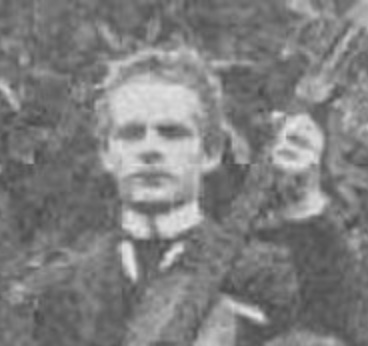
Theo Sørensen (Theodor August Christian Sørensen) was born on 25 May 1873 in Kristiansand, at the southern tip of Norway; his father was a carpenter. In 1891 he came to faith through a religious revival and soon afterwards joined the Salvation Army. From 1892 to 1894 he spent two years at a Bible school in England.
Shut Out of Tibet
He then joined Annie Taylor's Tibetan Pioneer Mission and went to British India, where he settled on the Tibetan border and studied the Tibetan language and the religion of the Tibetan lands together with Edvard Amundsen. This database also has an entry on Annie Taylor: she is generally regarded as the first Western woman to have travelled deep into the interior of Tibet, and after that journey she left the China Inland Mission and founded this mission of her own. Sørensen also wanted to enter Tibet proper, but the British colonial authorities would not allow it. With the door to the south closed, he took another road: in 1896 he moved to Chengdu, then under Qing rule. There he began to learn Chinese, and he left a remark that is often quoted: compared with Tibetan, learning Chinese was simply a "pleasure".
Twenty-Four Years in Tatsienlu
From 1899 to 1923 he worked for the China Inland Mission in Tatsienlu (打箭炉; Dartsedo in Tibetan; now Kangding, Sichuan). Tatsienlu was the gateway between Sichuan and Tibet; in 1897 five China Inland Mission missionaries, among them Cecil Polhill (宝耀庭), who has an entry in this database, began work here and made it their base for work into Tibet. In March 1904, in Jiading (now Leshan), he married his co-worker Cecilie "Cissi" Rasmussen (1870–1955). In 1905 James Huston Edgar, another China Inland Mission missionary in Tatsienlu, built a gospel hall here; he too has an entry in this same batch of the database.
The Tibetan Religious Tract Society
Early in 1918 Sørensen founded the Tibetan Religious Tract Society in Tatsienlu. At the end of the following year the organization was renamed the Tibetan Religious Literature Depot. What it did was something very concrete: it printed Christian tracts and reading matter in standard Tibetan for use in spreading the gospel throughout Tibet. In an age when the great majority of Tibetans could read only Tibetan, while Christian literature was almost all in Chinese or English, the significance of this work lay not in how many people read it at the time, but in putting the gospel into the Tibetans' own script.
332 Volumes
One assessment of him puts it bluntly: as a missionary he was not particularly successful. But he made many long journeys deep into Kham, and he became known for collecting Tibetan texts. Once, in the ruins of a monastery, he found a group of manuscript fragments. When he left China to return home in 1923, he donated a set of 332 volumes of Tibetan Buddhist scriptures (314 according to the English Wikipedia) to the University of Christiania, today the University of Oslo. The collection is especially notable for its Bön and Nyingma texts. A missionary who came to bring the gospel to Tibetans ended up leaving to scholarship the scriptures of the very religion he had hoped to replace; this is not an isolated case in the history of modern Tibetology, but it is still worth recording.
Later Years
For the reports he wrote on his long journeys in Kham, he was elected a Fellow of the Royal Anthropological Institute in Britain in 1922 and a Fellow of the Royal Geographical Society in 1923; in 1953 Norway made him a Knight First Class of the Order of St. Olav. In 1924 he returned to the Church of Norway. For most of the rest of his life he lived in Norway, except for the years 1925 to 1936, which he spent in Beijing. He died on 2 September 1959 in his hometown of Kristiansand. In 2009 his grandniece donated another collection of Tibetan texts to the University of Oslo, eighty-six years after he first brought books back to Norway. While in Tatsienlu he wrote a small book called Work in Tibet (1921), printed locally by the China Inland Mission.