💬 Famous Quotes
📋 Basic Information
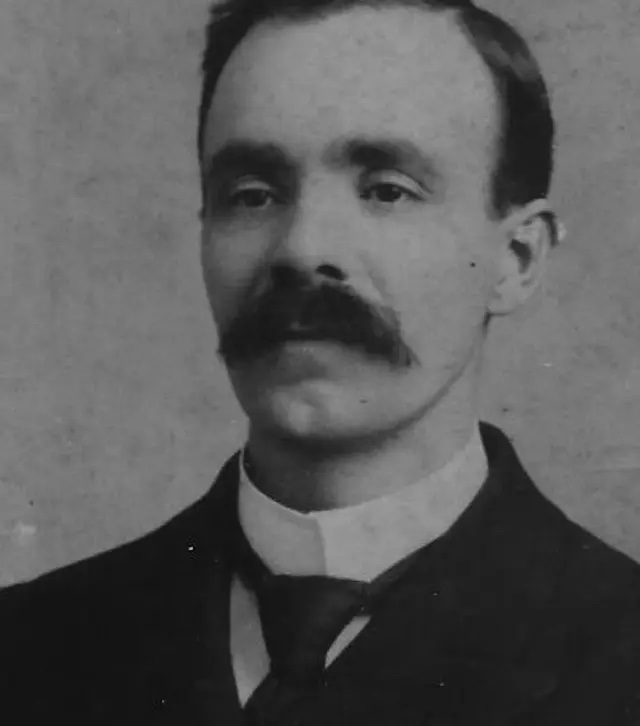
📖 Biography
Three Siblings
Martin Ekvall (艾克仁) was a Swedish-born American. He was born in 1866 in Kristdala, Småland, Sweden, the second of six children of Erik and Sofia. In 1882 he, his elder sister Otilia and his younger brother David Paul Ekvall (艾自新) emigrated to the United States with their parents, who bought a farm in Deerfield, New Hampshire. Their mother was devout; she often prayed that her children would turn to God, and asked the Lord to use them to extend his kingdom. Later the well-known evangelist Rev. A. B. Simpson (宣信) held evangelistic meetings in their part of New England, and the three siblings answered the call together, resolving to carry the gospel to the ends of the earth.
In 1891 all three entered the Christian and Missionary Alliance's missionary training college in New York. In the autumn of 1892 Martin and his sister arrived in Shanghai and went on to Wuhan, where the Alliance's Central China mission headquarters was located, to study Chinese. In 1893 Simpson, who had come to the Far East to see the work for himself, guided him in opening a church in the center of Wuchang. In 1894 his brother David arrived to work with him. Otilia was sent to the old city of Taozhou in the Gansu–Tibetan borderlands; in 1895 she married W. W. Simpson (席儒珍), who had been working as a missionary there for some time.
Minzhou
When the Wuchang station was founded, the Alliance already planned to set up an intermediate base between Wuchang and Gansu, and this task fell to the Ekvall brothers. In January 1896 the two set out from Hankou, sailing west up the Han River by junk and committing the choice of a site to the Lord. On the way they happened to meet George Parker (巴格道) of the China Inland Mission, who also has an entry in this database. Parker had by then served in northwest China for nearly twenty years and was one of the first two missionaries to bring Christianity into Gansu. From this senior missionary the brothers first heard the name "Minzhou" (now Min County, Gansu), and learned that Gansu was even more barren of the gospel than Shaanxi.
In June 1896 the brothers entered the city of Minzhou and, overcoming intense local hostility, established the first mission station in a Han Chinese area of the Gansu–Tibetan borderlands. Martin soon saw the importance of the place. In an article for the Alliance weekly he wrote: "Taking Minzhou as the center, the nearest mission station to the north is Lanzhou, 170 miles away; to the east, Qinzhou, 180 miles away; to the southeast, Wuchang, 350 miles away; and to the south, Guangyuan, 326 miles away. In this vast region there are 16 cities, but not a single mission station. … This is the present state of northwest China." They faced an intensely anti-foreign population, widespread superstition and rampant bandit gangs. His co-worker W. M. Christie (克省悟) described him this way: "Few people are as eager to preach the gospel as he was; he went to new towns with great zeal to proclaim the gospel. His missionary zeal grew day by day and never diminished. Working and traveling with him, I saw a fire burning in his soul."
Wang Qishiba
From the autumn of 1897 a young carpenter named Wang Qishiba (王七十八, "Wang Seventy-Eight") often came to the gospel hall to talk about the faith with David Ekvall, and also attended Sunday meetings. His business did well, but every Sunday he closed his shop to go to worship. At his own wedding he not only refused the superstitious rites but insisted that no liquor be served at the banquet. In the autumn of 1899 the Ekvall brothers baptized him in the Tao River at Minzhou. He was the first person in the Gansu–Tibetan borderlands to be baptized into the name of Jesus.
Emma Ekvall (艾瑞英)
During his years in Minzhou, Martin met a fellow Swede, Emma Charlotte Eck, then a China Inland Mission missionary in Sichuan. Emma was born on August 19, 1870, in Morlunda, Sweden, only twelve miles from Martin's home village. She was converted at eighteen and soon afterwards, under the influence of Hudson Taylor (戴德生), received her call. In 1891, at twenty-one, she arrived in Shanghai as a China Inland Mission missionary, and after a year of language study was sent to Baoning Prefecture (now Langzhong), Sichuan. The China Inland Mission's work in Sichuan was then led by William Wharton Cassels (盖士利; Bishop of Western China from 1895), one of the "Cambridge Seven." In Sichuan she took the Chinese name Ai Ruiying (艾瑞英), meaning "a heroine from Sweden." Martin fell deeply in love with this "heroine"; in his own words, "if I did not marry Emma, life would seem dark and I could not go on living." In September 1900 the two were married in the United States while on furlough, and in September of the following year, after the Boxer upheaval had subsided, the newlyweds sailed from San Francisco back to China.
Because the situation in Gansu was still unsettled, they first worked in Central China while they waited, being sent to Qingyang in Anhui and then to Changsha in Hunan. In March 1902 their eldest daughter, Gertrude, was born in Qingyang; according to the records, that year Martin preached 162 sermons in the local church and preached in the streets 62 times. Once things had calmed down, the couple were sent back to Minzhou. Martin often rode out into the countryside on horseback to preach, wearing a queue and Chinese clothes. The Gelaohui and other secret societies and bandit gangs, who then held sway in Minzhou, frequently robbed and kidnapped, and repeatedly threatened to kill the foreign missionaries; Minzhou was besieged more than once by bandits and rebels. The couple stayed on. In 1905, at last, 5 young men were baptized; together with the 4 who had believed earlier, the Minzhou church had 9 Chinese believers. This was a remarkable number, since the China Inland Mission, after more than thirty years of work in Qinzhou, had only a few dozen Chinese believers. In September of the same year they built a church that could hold 200 people. Emma started a girls' school in Minzhou, teaching women of all ages to read and write.
The Loss of Three Children
The Xinhai Revolution broke out in October 1911, and the fighting cut Gansu off from the outside world for several months. Two of their children caught scarlet fever at the same time; with care day and night they pulled through, but their six-year-old daughter Elizabeth could not be saved. Years of terror from bandits, rumors of approaching fighting and grief over her daughter brought Emma to a complete mental breakdown, and she could not sleep at night. Martin had to take the family back to the United States for her recovery. When they landed in San Francisco in July 1912, Emma could no longer take care of herself; she was at times a danger to the children and had suicidal tendencies. Doctors, relatives and friends all urged Martin to commit his wife to a mental hospital, but he held throughout that she was not mentally ill but had suffered an emotional collapse under heavy strain. He insisted on looking after her meals and daily needs himself, patiently helping her eat and dress, without complaint. Emma improved day by day and had fully recovered by 1914.
At the end of 1915 the couple came to China for the third time with their four children, this time assigned to Wuhan. Martin was appointed pastor of the Wuchang Alliance church he had founded twenty years earlier, beginning more than twenty years of ministry in Wuhan; he also served as chairman of the Central China district, taught Bible classes, governed churches and trained newly arrived missionaries. In 1918 Spanish influenza swept through Wuhan, and their youngest daughter, Erin, only seven, died in Wuchang on October 21, the second child they lost in China. On July 23, 1932, their only son, Henry, together with the Swedish missionary Gustaf Tornval (多福寿), who worked in Pingliang, and two other companions, was shot dead outside Xi'an by unidentified men while on the way back. Order in the northwest was then extremely chaotic; the case was never solved, and even the bodies were never found. On April 10 the couple had just celebrated Henry's twenty-fourth birthday. Their daughter Gertrude recalled: "God gave peace and made them victorious, so that they could go on serving among the Chinese people they loved all their lives, even though these people had repeatedly reviled and attacked them, and finally took their son's life." In their grief the couple still stood with their Chinese co-workers at the entrances of the refugee sheds, bringing the gospel of peace to people in suffering. In April 1933 alone, Martin baptized 79 people in the refugee sheds.
The Ruiying School for the Blind, Wuchang
One day in February, in the early spring of 1919, a thin blind girl stumbled up to the gate of the Wuchang Alliance compound to beg. Looking at the child, Emma thought of Erin, who had died a few months earlier. Instead of handing her a few coins and sending her away, she went over and talked with her. She learned that this ten-year-old blind girl had come from a comfortable family; her father was a Manchu who had come to Wuhan as an official, and influenza had taken both her parents. She herself had lost her sight through an eye disease, ended up on the streets, and was forced by a cruel woman to beg along the streets with other blind children; she had also been sold as a wife to a lame, violent-tempered male beggar. Moved with compassion, Emma resolved to give these children a home.
In 1921 she founded the first school for blind girls in Hubei in Wuchang, named the Wuchang Ruiying School for the Blind (武昌瑞英瞽目学校). (Some accounts date its founding to 1919, counting from when she took in the first blind child.) The work was not originally one of the Alliance's projects; the mission gave some support but no fixed funding. Following the spirit of the China Inland Mission, and taking the British philanthropist George Muller (慕勒) as her model, Emma never solicited donations from anyone but devoted herself to asking the Lord. She often said in faith: "If the Lord cares for a little sparrow, he will surely take care of an abandoned blind child." Every child in the school had been abandoned or abused: there were children born blind who had been picked up from the streets or beside the railway; one girl had been kidnapped by bandits and had her eyes gouged out when no ransom came; another girl had been blinded by her enraged mother with a needle. From the day the school opened, no blind child who came for help was turned away, and over twenty years it took in more than a hundred children. Every Sunday morning the girls of the school, neatly dressed, formed a line by height, each with one hand on the shoulder of the girl in front, and walked quietly and in order through the narrow, crowded lanes, a sight that became well known locally. The school taught them to read and write Braille and also offered Mandarin, arithmetic, general knowledge, history, geography, music, physical education and civics; its industrial department taught knitting. Three times a week the girls went with their teachers into hospitals or homes to share the gospel. After graduating, some became Bible women in mission hospitals, some were placed at rural mission stations, and some earned a living with their household skills; no one was asked to leave the school before finding suitable work.
January 6, 1939
In November 1919 the couple visited Changde, Hunan, just when Feng Yuxiang (冯玉祥) was stationed there with his troops. Feng had earlier been baptized under the influence of a missionary doctor who had treated him; after his conversion his faith was earnest, and he paid to build churches and engaged pastors to preach to his officers and men, which earned him the name "the Christian General." At Feng's invitation Martin preached to the troops for three weeks in a row, with Feng himself presiding; at the end of the preaching Feng led the singing of the hymn "Room in My Heart for Thee" (在我心有空处为你). Emma visited the vocational school in the camp and shared the gospel with the officers' wives, thirteen of whom came to faith. On this trip to Changde Martin baptized 13 women and 210 men, a new record for the Alliance's overseas work. In 1921 Martin had to return to America for treatment of severe sprue; after his recovery the whole family came to China for the fourth time. The 1920s were the high point of his ministry: his fluent Chinese and his reputation as a preacher brought repeated invitations to preach among Feng Yuxiang's troops. In 1924 he also interpreted for the Australian evangelist Rev. T. B. Davis, who preached to more than five thousand officers and men outside Beijing and distributed Bibles.
After the Northern Expedition began in 1926, the family lived through the siege of Wuchang, which lasted about forty days and in which many of the hungry in the city starved to death; with the support of the Red Cross the couple protected Chinese civilians from looting. In 1927, with anti-foreign agitation rising across the country and repeated urging from the American consulate, the whole family left China. In 1930 they came to China for the fifth time. When the War of Resistance against Japan broke out in 1937, the couple chose to stay in Wuchang and suffer with the people. In February 1938 Japanese aircraft began bombing Wuhan; while praying, they opened the basement of the Alliance premises to shelter refugees, and both their residence and the mission premises were badly damaged in air raids. In the second half of 1938 Martin was diagnosed with prostate cancer, but he remained optimistic to the end. He spent the last five months of his life in the Lutheran clinic in Hankou and died at the Lutheran mission station on January 6, 1939, aged seventy-two; by then the Wuchang Alliance buildings had been severely damaged in air raids. He, his brother David, his sister Otilia and three of his children all gave their lives to China. Emma buried her husband in the International Cemetery in Hankou, and the students of the school for the blind sang at the funeral. In his memorial tribute W. M. Christie of the Alliance called him "a faithful pioneer, a man faithful to the Bible; a model of truth, a loyal friend of the Chinese people; a man full of love for his Savior, for his family and for the Chinese church."
Emma's Later Years
In 1940 Emma, by then seventy years old, set out for the United States, entrusting the school to her co-workers before she left. Japan surrendered in 1945, and in February of the following year, at seventy-five, she packed up alone and went to China for the sixth time, hoping to finish her life's course in Wuhan and be buried with her husband. But at the end of 1948 she was forced to evacuate with the mission's other missionaries, saying goodbye to the land where her husband, two daughters and two other relatives lay buried, and where her only son, Henry, had been lost. She died of heart disease in Honolulu, Hawaii, on July 7, 1952, aged eighty-one, and was buried in Lihue Cemetery. Her gravestone reads "Founder of the School for the Blind, Wuchang, China," together with the same verse as on her husband's gravestone: "Because I live, you will live also." (John 14:19)