💬 Famous Quotes
📋 Basic Information
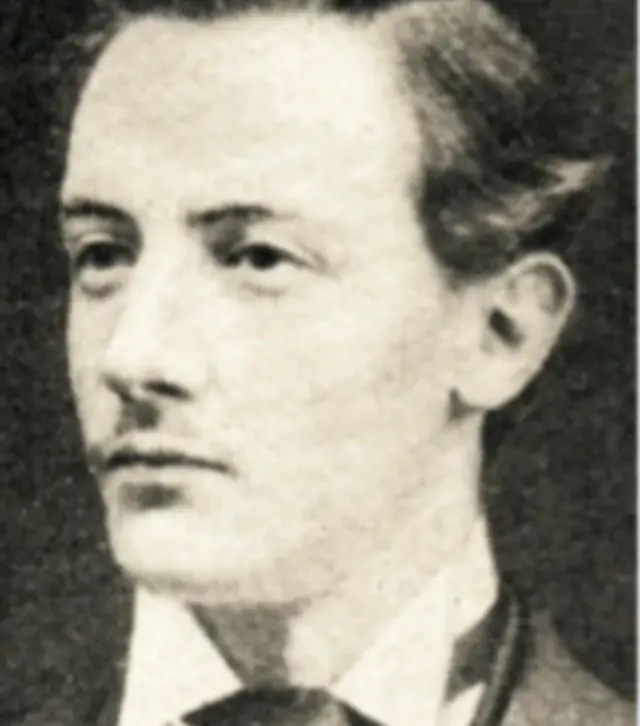
📖 Biography
"The Eighteen"
Hudson Taylor and his co-workers had prayed for more than a year for one thing: that God would raise up "eighteen" men to go and break new ground in the nine provinces of China that still had no gospel at all. George Parker was one of these eighteen. At the time the plan seemed to go against almost every rule of prudence, yet Hudson Taylor pressed on with his vision of sending missionaries into every province of China. Early in 1876 Parker sailed from Britain with several others and arrived in China in May.
The Two Men Who Brought the Gospel into Gansu
At the end of that year he set out with George F. Easton, George King and Charles Budd, accompanied by two Chinese Christians from Zhenjiang. King was to preach widely through Shaanxi, while Easton and Parker headed straight for Lanzhou in Gansu, together with a man from Zhenjiang and an evangelist surnamed Zhang. They left the Han River above Laohekou and hired mules to carry their baggage and to ride, crossing the mountains toward Xi'an, preaching and selling books in every town and every market they passed. "The roads were unbelievably bad," Easton wrote; "we walked the whole of this stretch of about twenty-two miles." Everywhere along the way they saw imperial proclamations guaranteeing safe passage to foreigners. At Xi'an the party divided, and those bound for Gansu continued west. The audiences they met were large and friendly, but found the gospel they preached, and even the common words for "God" and for religious ideas, entirely strange; yet the number of books they bought showed that people were interested. In one town "they were almost mobbed by people wanting books." In Lanzhou they found that the Catholics already had two places of worship there and at least one priest. Reading their report, Hudson Taylor lamented that no one there yet preached the gospel of "justification by faith in Christ and in the propitiation He made for all sinners who believe."
Chinese sources record that in 1877 two missionaries of the China Inland Mission brought the gospel into Gansu, and that in 1878 they set up the first mission headquarters station in Gansu Province at Qinzhou (now Tianshui). These two were Easton and Parker.
The two traveled through Shaanxi and Gansu and returned to Wuhan in January 1878, only to find that they truly could not get along, and each said he could no longer work with the other. Fortunately, by September the two had resolved their differences and set out together again for the northwest. After five months on the road they reached Lanzhou, and then settled at Qinzhou; judging from their itinerary, this would have been in late 1878 or early 1879. In 1881 Parker took over from Easton at Qinzhou, a city in an important position on the trade route between Lanzhou and Xi'an.
A Marriage That Caused an Uproar
Parker had joined the China Inland Mission as a single man. While studying Chinese at the mission's language school for men, he came to know a Chinese girl at the mission's girls' school, surnamed Shao (Shao Mianzi in English sources). Over time the two fell in love and made known their wish to marry. Hudson Taylor was then in Britain, and letters opposing the marriage arrived one after another. The letters said the girl was "of good ability, intelligent and earnest in her faith, and in a year or two would make a very suitable pastor's wife. But Parker must have her," and there was no sign that the feeling was not mutual. Parker's mother wrote to him in tears, urging him to change his mind and giving several practical reasons: in that era China and Europe were far apart in culture, outlook and family relations, and many marriages between races had failed because the two sides could not adjust. Marriage was hard enough in itself, without adding the barrier of culture.
The objection was not to marriage between races as such. The real difficulty was that Hudson Taylor had solemnly promised the girl's father that she would one day be given in marriage to a Chinese Christian, not to a foreigner. To break that promise would destroy the credibility of the whole mission. But the young couple would not give way, and a storm arose within the mission. Some feared that if the marriage were allowed, Chinese parents would no longer dare to send their daughters to mission schools. Letters and heated discussions went on for a long time, until at last the girl's father proposed a compromise: he would accept a sum to cover the cost of raising his daughter, and at the same time sign a document consenting to the marriage. The wedding took place in 1881. "Minnie" Shao Parker thus became the first Asian to join the China Inland Mission, and after her many more would follow. It should be said here that although some Chinese later read racial discrimination into this affair, at the time no one ever questioned whether it was proper to marry a Chinese woman; the only problem was how to settle a promise that had already been solemnly made.
Lanzhou
The young couple made their home in Qinzhou, where an older single woman missionary of the China Inland Mission, Elizabeth Wilson, also lived. "She and 'Minnie' made great inroads in Qinzhou, visiting women from house to house, especially after the birth of Minnie's first child, 'Johnny'." Wilson later had to leave and was replaced by Miss Hannah Jones. Once she arrived, Parker was free to spend five months traveling throughout northeastern Gansu and Ningxia. Pioneering was in his nature. Not long after returning home, he set off again with his wife and Miss Jones, to "take the gospel to the Tibetan women and officials' wives on the borders of Qinghai."
In 1883 "the Parkers made a two-thousand-mile survey journey through southern Gansu and the lands under the Tibetan chieftain of Jone (Zhuoni). Minnie was a great help in the work; her darker complexion let her mix easily with the local Tibetan women." He left his wife and his co-worker Miss Jones at Jone and went on alone. "At Jone, Mrs. Parker and Miss Jones moved freely among the Tibetan women and also visited the wives of several local dignitaries," telling the gospel to people who had never heard of Jesus. That same year he at last succeeded in renting premises in Lanzhou, the provincial capital of Gansu, and later two more China Inland Mission workers came to live there. Chinese sources record that in 1885 he built a church in Lanzhou and preached there, buying land first at Wuquan Mountain and then on the west side of the Shanzishi intersection on Zhangye Road, where he put up the "China Inland Mission Gospel Hall," the forerunner of today's Shanzishi Church in Lanzhou.
Fifty-Five Years
These long journeys served several purposes: to become familiar with the provinces not yet opened, and to find suitable places for missionaries to settle in the future; to distribute literature, so that the gospel could reach farther than human strength and voices could go; and to sow seed widely, preparing the people to receive the missionaries in every province that Hudson Taylor hoped soon to "occupy," that is, to live in. Incidentally, Hudson Taylor did not advocate the "blitz evangelism" for which later critics mocked him; his strategy was to work inward in circles from the edges of a city, first letting people become familiar with the gospel and with Western missionaries, and only then establishing resident work in the larger towns.
In the years that followed, Parker concentrated his efforts on Northwest China. His wife traveled with him throughout, preaching and selling Bibles along the way. They arrived in London on 11 March 1890, at the end of a journey that had taken a full year. In their later years the couple turned to work among the Muslims of Henan. He returned to Britain only twice in his life, in 1890 and 1907, and lost all his possessions in unrest at least twice (in 1900 and 1914). During the Boxer Uprising, when the Empress Dowager Cixi ordered all foreigners killed, Parker "was shown the order for his execution, and escaped only one step ahead of his pursuers." In 1931, not long after the couple celebrated their golden wedding anniversary, Parker died, having served in China for fifty-five years in all. He was then the senior member of the China Inland Mission still in active service, and after his death his wife became the most senior. She bore eight children in all and died in Yantai, Shandong, in 1940. One of their sons returned to Britain and became chief engineer of a London railway; another son served on the London County Council; and their daughter, "Mrs. Mason, became as good a missionary as her mother." "How great the influence of the work done by the Parkers and other early missionaries among the Amdo Tibetans only eternity will reveal. Jone, the town they often visited, decades later gave rise to a strong church, which to this day remains one of the largest evangelical fellowships among Tibetan believers anywhere in the world."