💬 Famous Quotes
📋 Basic Information
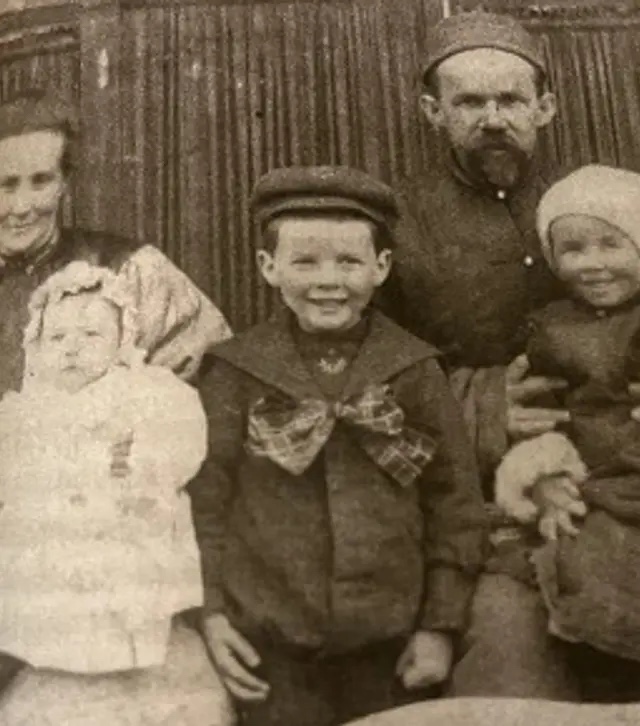
📖 Biography
A Stonemason in New York
William M. Christie (克省悟) was born in 1870 in Turriff, in the northeast of Scotland. At nineteen he emigrated to the United States. A trained stonemason, he soon made a name for himself in New York through his craft and earned what was, for the time, a considerable sum of money. In October 1891 he went to a missionary convention at the Gospel Tabernacle; he was then only twenty-one, and already a young man of property. After the convention he did something few people do: he handed all his savings to the treasurer of the Christian and Missionary Alliance and asked the mission to use the money to pay his future expenses on the field. For many years afterwards his missionary expenses were paid out of the money he himself had handed over.
"Like Going into a Cave to Take the Cubs from a Lioness"
The Alliance paired him with another new recruit, W. W. Simpson (席儒珍), who came from the mountains of Tennessee. Before setting out in March 1892, Christie wrote: "By the grace of God I will spend all I have, until I am spent out, for my Saviour and for those who sit in dreadful darkness, sin and misery." When their ship docked at Shanghai, Hudson Taylor (戴德生) met the two recruits in person. Hearing that their goal was Tibet, the veteran said the words that were later often quoted: "Winning converts in Tibet is like going into a cave to take the cubs from a lioness."
1,700 Miles in a Year
After studying Chinese for a time, the two were sent to the Amdo region on the northern edge of Tibet. Christie travelled all over the area, sowing the seed of the gospel in hundreds of Tibetan villages where no one had gone before. An annual report from 1907 can stand for a typical year of his: "This year I was away from home 166 days, of which 69 full days were spent on horseback, and I rode 1,700 miles in the year." Danger followed him from the very beginning. Once a crowd of Tibetans stormed the gate of the mission station at Bao'an (now Jishishan, Gansu), intent on killing. Christie used his exceptional command of the language to deal with them, calling the people inside to safety while trying to get help; in the end he persuaded a Tibetan who years before had given him lodging to step in on the strength of the Tibetan rules of hospitality, and so their lives were saved. Scenes like this happened more than once in his missionary career.
The "Haunted House" at Zhuoni and Luba Monastery
On June 17, 1901, Christie, whose wedding had been postponed by the Boxer Uprising, at last married Jessie MacBeth, who had come to China as a medical worker, in Shanghai. As soon as she arrived she began treating sick and injured Tibetans, and before long even the missionaries often came to her, since there was neither hospital nor doctor in the region. They had three sons and a daughter: the eldest son, Robert; the second son, William (born December 1903, who had cerebral palsy that affected both his body and his speech, but whose mind was very clear; he later served as an Alliance missionary in the Philippines until his death); the third son, Peter (born in Zhuoni (卓尼), who later contracted polio in the United States and was left with both legs completely paralysed); and a daughter, Hazel. They also took in a girl who had been abandoned by her parents and whose eyes were badly injured; Jessie healed her, and the couple formally adopted her so that her birth family would have no right to claim her back later. This child, called Man Ying (满英), later became a living stone in the church at Luba (录巴).
The tusi (native chieftain) of Zhuoni had at first been unwilling to let missionaries live in his territory, and only after a long time did he relent, allowing them to buy a house that everyone said was haunted. After they moved in, they did indeed find a skeleton inside the house. The couple prayed over the house, casting out the hold of every evil spirit, and turned it into a secure and joyful home; for many years afterwards it was the base of their work among the Tibetans. In 1907, through an unusual turn of events, Christie bought at a very low price an old Tibetan Buddhist monastery five miles west of Lintan, Luba Monastery (录巴寺), together with its "monastery buildings, fields, timber and pasture," and it became a foothold for the gospel. He later described what happened there: "Blessing came to the Tibetans of the area and to the villages where Tibetans and Han Chinese lived together. The sick were healed, demons were cast out, and Tibetan homes were cleared of every trace of idols. Salvation flowed into the village of Luba. Idols were burned, scroll images of the gods were destroyed, and charms and the remains of shrines were thrown into the Tao River; the river carried away this rubble, and it also became the water in which those who openly confessed the Lord were baptized."
The Ship in 1918
He was not a Pentecostal missionary, but he believed in the God of the Bible and saw that God's word is full of accounts of miracles. He understood that to reach the deepest needs of the people he was to serve, he had to pray against the powers of darkness that held Tibetan men and women in bondage; otherwise his witness would have little effect. As many accounts of people delivered from demons spread, the gospel advanced with them: Tibetans had always known that lamas and sorcerers had the power to curse people, but they had never heard of a power that could set the demon-possessed free. Because of this, the name of Jesus Christ came to be held in great awe in parts of Amdo.
His advice to the mission on recruiting new workers was blunt: "When sending missionaries among the Tibetans, choose those who are physically strong; the work in Tibet is harder than in most places. Those who are afraid of hardship, or even afraid of risk, should not be sent." During their third furlough in 1918 the couple made a heart-rending decision: to leave their four children with friends in Montana to continue their schooling, while the two of them returned alone to Tibet for another term. Once on board the ship, the couple sat down and wept for a long time in front of others. This calling cost them everything they had; but through their tears they gave themselves to the Lord again. In 1920 his wife went back to the United States to be with the children, and Christie stayed on alone in the Tibetan region.
After Thirty-Three Years
When he left the region for the last time in 1924, many believers wept openly: this "Apostle of Tibet" rode away with nearly thirty-three years of service behind him, in a field that was one of the hardest places on earth to work. Back with his family, he continued to serve with the Alliance, and for the next twenty years preached almost every weekend. He retired at seventy-seven and died in January 1955, at the age of eighty-four. According to a 2020 estimate, there were still three to four hundred Tibetan believers in the Zhuoni area, and even more Han Chinese believers locally and in the surrounding areas; in the whole Tibetan-speaking world, Zhuoni may have more Tibetans who have turned to the Lord than any other evangelical outpost.
About His Chinese Name
The Chinese name Ke Xingwu (克省悟) is attested in several sources. An article on Chinese Social Sciences Net examining the plant collecting in China of the Englishman Bo'erdeng (波尔登) explicitly writes "the missionary Ke Xingwu (William M. Christie)," and records that in 1914, on arriving at Labrang, Bo'erdeng at once visited Christie, who had been living there for several years. Local historical sources for Lintan record that around 1891 "the missionaries Ke Xingwu, Fei Wenguang (斐文光), Xi Ruzhen (席儒珍) and others, sent by the American Christian and Missionary Alliance, came from Xi'an to the Old City" (of Taozhou, now Lintan). The article "The Influence of Church Schools in the Late Qing and Early Republic on the Eastward Transmission of Western Music into Gansu" records that in 1894 the Alliance missionaries Ke Xingwu and Xi Ruzhen (席儒珍; the article writes 席如珍) entered Gansu, first establishing a base at Taozhou and then, in 1896, opening a station at Minxian. The Chinese church periodical Zhenli Bao (真理報) [Truth] once serialized a partial translation of his biography under the title Zangzuren de Shitu: Ke Xingwu [The Apostle of the Tibetans: Ke Xingwu]. The entry on Martin Ekvall (艾克仁) also included in this database (written in Chinese by Li Yading, 李亚丁) twice refers to him as "Ke Xingwu (W. M. Christie)." The sources differ over the year he entered Gansu (around 1891, or 1894), and neither fits well with his setting out for the East only in March 1892, but they agree on his Chinese name.