💬 Famous Quotes
📋 Basic Information
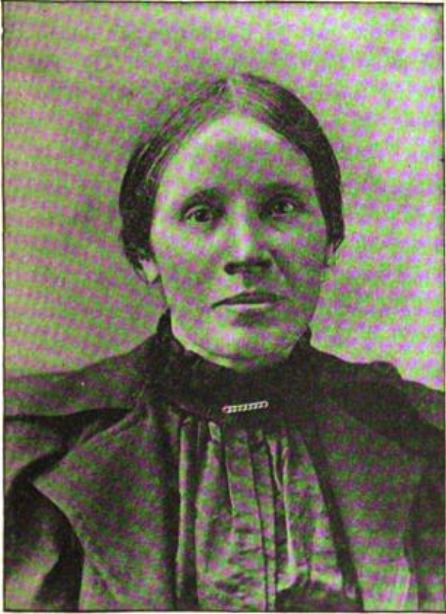
📖 Biography
Against Her Parents' Wishes
Annie Royle Taylor (born Hannah Royle Taylor) was born in England on 7 October 1855. Her father, John Taylor, was one of the directors of the Black Ball Line shipping company. At thirteen she was converted to evangelical Christianity, and from then on, despite her parents' opposition, she resolved to become a missionary. She studied medicine and worked in the slums of London and Brighton, and then joined the China Inland Mission. (Incidentally, she was not related to the mission's founder, James Hudson Taylor; they simply shared a surname.) In 1884 she set out for Shanghai.
“Lone Wolf”
In 1886 she was posted to Lanzhou, a city near the Tibetan areas. In 1888 she was recalled because of poor health, and while recuperating in Australia she set herself a larger goal: to enter Tibet with the gospel. She called herself a “troublesome and unhealthy child”; her contemporaries were far blunter: she was a “lone wolf” who “got on so badly with her colleagues that she had either to be sent back to Britain or pushed to her own limits.” In 1890 Hudson Taylor wrote that she was “having a very hard time.” Fortunately, her father's wealth allowed her to act independently, without relying on financial support from the China Inland Mission, a freedom that was rare among women missionaries of the time.
Learning Tibetan in a Buddhist Monastery
In 1889 she went to Darjeeling in India and then to Sikkim, where she studied Tibetan in a Buddhist monastery. There she led a Tibetan youth of about nineteen, Pontso, to faith; this young man later became her companion for the whole of her journey into Tibet. In March 1891 she and Pontso left Sikkim for China and made their way to Taozhou (Tau-chau, present-day Lintan) in Gansu, where she set up a mission station. Taozhou lay on the Chinese-Tibetan border and was then a trading post for commerce with the Tibetan regions.
2 September 1892
On 2 September 1892, Annie Taylor and Pontso set out from Taozhou, accompanied by 3 Chinese assistants (one of whom died on the way and another of whom soon left the party), 16 horses, and two months' supply of food and equipment. Their goal was Lhasa, the Tibetan capital, which was closed to foreigners. This journey is generally regarded as having made her the first Western woman to travel deep into the interior of Tibet. She never reached Lhasa; she was turned back by the Tibetan authorities not far from the city. But no Western woman had been before to the places she reached.
Tibetan Pioneer Mission
After this journey she left the China Inland Mission and founded her own Tibetan Pioneer Mission, and from 1894 to 1907 she was based at Yadong, a trading post in southern Tibet. She died on 9 September 1922. Her name later appeared in Western books on the exploration of Tibet; in mission history she is the kind of person who is hard to fit into the standard narrative: unsociable, unwilling to be managed, acting on her family's money, and yet precisely for that reason she went where others could not. Susie Rijnhart and her husband, also included in this collection, resolved to go into Tibet while in Lanzhou, influenced by her and by Cecil Polhill.