💬 Famous Quotes
📋 Basic Information
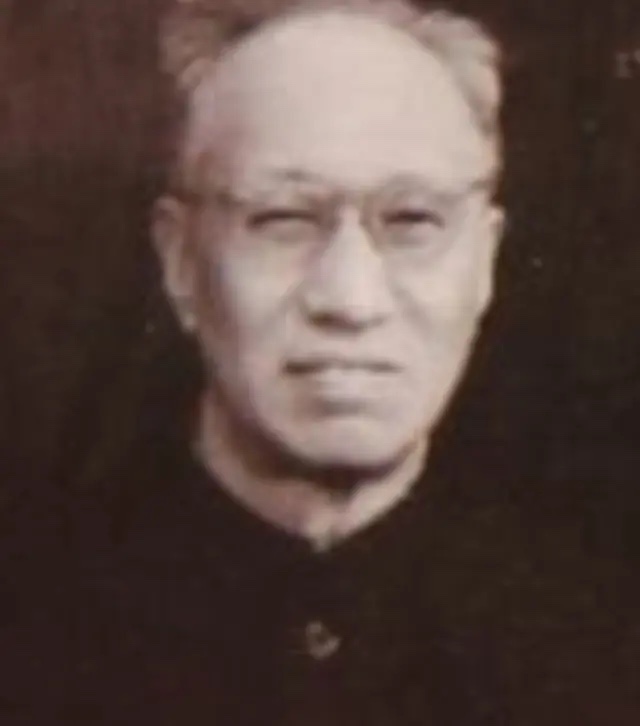
📖 Biography
From Quwo to Tengxian
Yang Shaotang (杨绍唐) was born in 1900 in Yangjiazhuang, Quwo County, Shanxi, the very year the Boxer Uprising swept through Shanxi. As a boy he studied at a church-run primary school, and in 1912 he went on to the Christian middle school in neighboring Hongdong, whose principal was the British missionary He Qingyuan (何清原). The school often used holidays to send students out to preach; he took an active part and received good training in mission work. In high school he had already resolved to become a pastor. After finishing high school in 1923 he entered North China Theological Seminary, founded by the Presbyterians at Tengxian, Shandong, to study theology. His studies coincided with the rising New Culture Movement and May Fourth Movement, and Christianity in China came under heavy attack. As a young Christian he too was at times confused and uncertain, but he soon broke out of the maze of rationalism and became rooted in the faith; in particular, at a summer spiritual-life retreat at Guling in 1924, he experienced renewal of life in the fundamental truths of redemption through Jesus Christ and forgiveness of sins through his precious blood.
Staying in Shanxi
After graduating in 1925 he returned to Quwo, Shanxi, to pastor the church of his home area. There were 13 churches in the Quwo area at the time; with Yangjiazhuang as his base he traveled constantly among them, working in partnership with missionaries of the China Inland Mission, and the churches there grew steadily. In 1926 the Anti-Christian Movement turned violent, and Western missionaries withdrew one after another, either returning home or fleeing to coastal cities for refuge. The survival of the Chinese church faced a severe challenge. In 1928, after the crisis had passed, far-sighted Chinese and Western church leaders pressed hard for the Chinese church to become independent, but this was far from easy. Yang Shaotang took on the difficulty: he stayed on in Shanxi and, together with China Inland Mission colleagues, pursued the course of self-government, self-support and self-propagation, so that independent churches were gradually established across Shanxi. He was spiritually mature yet approachable; his Bible teaching was profound yet plain, so that old and young, women and children could all understand it, and believers loved him for it.
The Spiritual Work Band
In the 1930s the fire of the great revival in the Chinese church reached Shanxi. First Ba Ruolan (巴若兰), a woman missionary of the China Inland Mission, brought the revival back from Shandong to Quwo; she was the sister of Dr. Ba Fuxi (巴富羲), who later died at his post in Xinjiang. Then the Bethel Worldwide Evangelistic Band of Andrew Gih and John Sung came in April 1933 to preach in Taiyuan, Pingyao, Hongdong and other places. The Quwo church under Yang Shaotang's leadership benefited greatly. He poured out his heart to build a church governed, supported and propagated by Chinese believers themselves. Faced with a shortage of workers, he first formed a team of co-workers, who were equipped through hard work in the Bible, and then went out as a band to churches in various places to preach, hold spiritual-life meetings and give pastoral care, joining knowledge with practice. On this foundation, in the summer of 1934 he bought land and built premises in Houma, Shanxi, and founded the Spiritual Work Band (Ling Gong Tuan, 灵工团). The first group of trainees numbered 20; he led and taught them himself, studying the Bible together and learning the life of fellowship.
Wounded Soldiers, Flight and Kaige Tang
After the Marco Polo Bridge Incident in 1937, the region where he served became a main battlefield of the War of Resistance against Japan. After the Japanese army invaded Quwo in 1938, his church took in a number of wounded Chinese soldiers one after another, and once they had recovered dressed them in civilian clothes and sent them away. This was reported by a collaborator. The wife of the Quwo county magistrate at the time was a Christian, and when she heard of it she hurried to warn him to flee. He had to take his whole family to Salaqi in Suiyuan, where they took refuge with the local church for a year; during that time he also started a Bible study class and trained a good number of workers for the church there. In 1939 the Spiritual Work Band's headquarters buildings in Houma were all burned down by the Japanese army, and the Band was forced to disband. After that his family moved from place to place, to Taiyuan, Tianjin and Peiping (Beijing). He spent most of the war years in Peiping and had close contact with Wang Mingdao (王明道) and John Sung. In 1946 he was invited south to become a professor at Tai Tung Theological Seminary in Nanjing and to pastor the newly founded Huangnigang Church. In 1948 he was invited to preach at Kaige Tang (Triumph Chapel), where Chiang Kai-shek and senior officials worshiped. Quoting the Bible, he rebuked the darkness and corruption of society and urged his hearers to repent and turn from evil. After the service Chiang Kai-shek came over and shook his hand: "We do indeed have many sins and ought to repent before God. Thank you for the reminder today!"
Faithful Servant of God
In 1949 he declined invitations from several pastor friends overseas and insisted on staying in the country. He said: "As a shepherd I must never abandon the flock the Lord has given me and go elsewhere; I ought to stay in the country in this time of danger." He then continued teaching and pastoring in Nanjing and Shanghai. After the Three-Self Reform Movement was launched, the Urumqi Road Church that he led joined it, and he himself became one of the members of the national Three-Self committee. But in the accusation campaign of 1952 he was denounced and slandered as "a running dog who takes no American dollars, and more deceptive than those who do", and was driven out of the Huangnigang Church in Nanjing. After returning to Shanghai he was still allowed to preach, until in the Anti-Rightist Campaign of 1957 he again faced cruel accusation and struggle, was secretly classified as a rightist, and was ordered to stop preaching and undergo supervised reform. In 1964 he went back to Shanxi to visit the churches and was escorted back to Shanghai by local militia; by then he already had coronary heart disease. After the Cultural Revolution began he was labeled a "counter-revolutionary" and put to labor under the supervision of the masses. Every day he did heavy physical work, and he was often subjected to struggle sessions, house searches and detention; body, soul and spirit suffered enormous damage, yet he never gave up his faith. In 1969, after the Spring Festival, a cold wave left the ground of his lane covered in ice, and he was ordered out to clear it. As he bent over, his heart failed; he collapsed and died, aged 69. Following his wishes, his children buried him in his home of Quwo, Shanxi. His gravestone bears seven characters: "Pastor Yang Shaotang, Faithful Servant of God". His writings, Shen de Gongren (God's Workers), Desheng yu Deshang (Victory and Reward), Jiaohui Gongren (Church Workers) and Jiaohui Luxian (The Path of the Church), have circulated in China and abroad and have benefited countless believers.