💬 Famous Quotes
📋 Basic Information
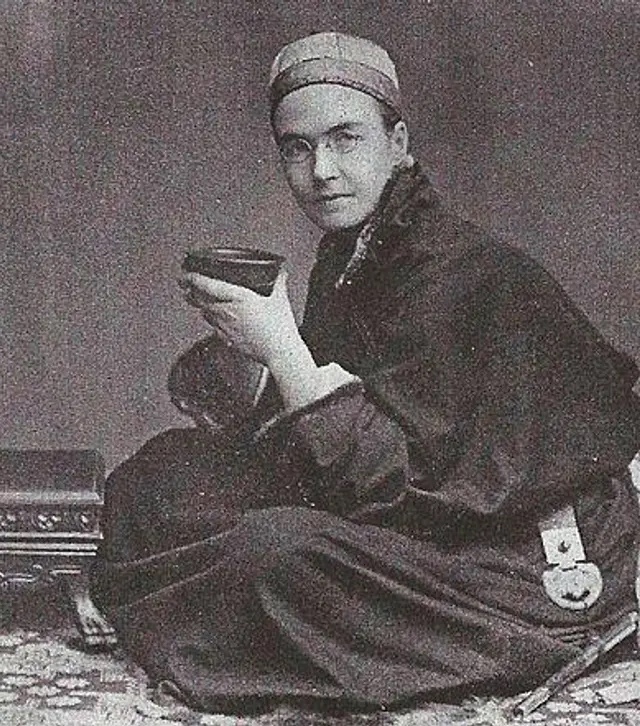
📖 Biography
Resolved to Study Medicine
Susanna Carson was born in 1868 in Chatham, Ontario, Canada. When she was eleven (1879), her father, a public-school inspector, already hoped that his daughter would one day study medicine; five years later she entered the Woman's Medical College, Toronto. In 1888 she graduated from the college, as one of its second class of students. In the late nineteenth century it was in itself unusual for a woman to earn a medical degree.
Lanzhou, at the End of the Silk Road
In 1894 she married Petrus Rijnhart, who had joined the China Inland Mission in 1890 and had been dismissed by the mission in 1893 as a "fraud". The couple were stationed in Lanzhou, Gansu, the last Chinese city on the Silk Road before Central Asia. There they were influenced by two people: Annie Taylor, called "the lone wolf of Tibet" and generally regarded as the first Western woman to travel deep into the interior of Tibet; and Cecil Polhill-Turner, one of the Cambridge Seven. With the support of the Disciples of Christ in Toronto, they travelled for six months into Qinghai, then known as "Outer Tibet". At a Tibetan Buddhist monastery they became friends with a living Buddha, and they also witnessed a war between Tibetans and Muslims.
The Road to Lhasa
After four years on the Tibetan border, in 1898 the couple set out on foot for Lhasa with their infant son and enough provisions for a year. It was a nightmarish journey: the baby died on the way, and then her husband walked toward a group of herdsmen to seek help and never came back. She was left alone on the Qinghai-Tibet Plateau.
Two Months Later, She Reached Tatsienlu
Two months later, Susanna stumbled into Tatsienlu (now Kangding) in Sichuan. She had travelled alone more than a thousand li, through what was then the most dangerous Tibetan territory. She returned to Toronto to recover and wrote of those four years and that journey in With the Tibetans in Tent and Temple (1901). In the book she wrote that her husband had a "burning ambition to have a share in bringing the gospel to Tibet; whether by his life or by his death, he said, did not matter".
She Went Back
In 1902 she returned to Tatsienlu with several fellow workers of the Disciples of Christ, back to the city she had once walked into alone. There she married James Moyes of the China Inland Mission. In 1907, as her health declined, the couple returned to Chatham, Canada; a year later she died in her hometown, possibly of complications after childbirth, at only forty. Her name appears in later books on the exploration of Tibet, such as Peter Hopkirk's Trespassers on the Roof of the World: The Race for Lhasa. Among the people in this database, she is one of very few women who went deep into the Qinghai-Tibet Plateau and came out of it alive on her own.