💬 Famous Quotes
📋 Basic Information
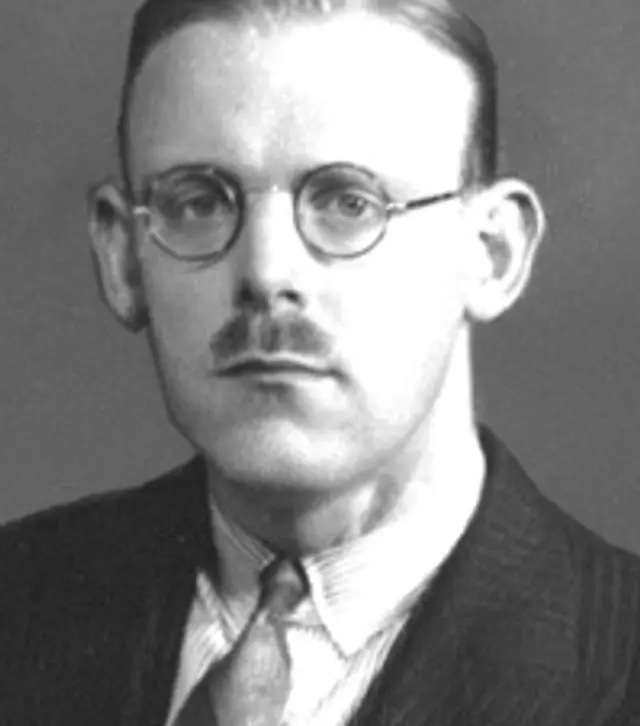
📖 Biography
An Answer at Twelve
Emil Fischbacher was born on 9 August 1903 into a business family in Glasgow, Scotland. His parents were devout and loved the Lord; they had eight children, and he was the sixth. The children attended Sunday school and meetings from an early age and were baptized. When he was twelve and was asked what he wanted to do when he grew up, he answered without hesitation: "Be a missionary." His father, successful in business and zealous for overseas missions, hoped that five of his children would become missionaries, and was willing to bear the cost himself so that no mission society would need to support them. The family did produce more than one: his eldest sister, Elizabeth Fischbacher (巴若兰), served thirteen years as a missionary with the China Inland Mission. In Shanxi she worked alongside the noted Chinese pastor Yang Shaotang at the Hongtong seminary; she later became an independent missionary, influenced Watchman Nee in his faith, and also worked with him in literature and translation.
A Doctor with a Bright Future
After secondary school he entered medical school and obtained qualifications to practise medicine from both Edinburgh and Glasgow. After working in several hospitals he set up his own practice in Manchester, healing the sick, with a bright future ahead of him. In May 1931 he read, in the English edition of China's Millions, an open letter from a missionary "to young people," one passage of which moved him deeply: "We have appealed for 200 missionaries, and after nearly two years this goal has not yet been reached. How do you respond to this appeal? Perhaps you object because of differing views, but have you considered: if you object, how will you answer Him on the day the Lord returns?" He had originally planned to go to Africa. After reading the letter he immediately wrote to the editor, explaining that he felt called to go to China. He later wrote: "I thought it over again and again: did I study medicine in order to preach the gospel, or in order to be a doctor?" In this way he became one of the China Inland Mission's "Two Hundred."
Declining His Father's Money
After joining the China Inland Mission he, like the other missionaries, lived by faith, and declined his father's financial support. He wrote to his father: "... Now I have joined a faith mission, and in everything I look to the Lord in prayer for provision. I hope you will understand that my not accepting your kindness is not due to the influence of others, but rests on my relationship with God." He left Britain on 31 December 1931 and reached Shanghai on 1 February 1932, just as the January 28 Incident broke out. The group was held up in Shanghai and could not go on to Anqing for language study, so he helped treat wounded Nationalist soldiers on the spot. When language training was over, he was sent to Dihua (now Ürümqi) in Xinjiang together with five others, six in all: Zhao Lide (赵立德), He Renzhi (何仁志) and Zhu Peiru (朱佩儒) from Britain, Otto F. Schoerner from the United States, and Bai Aisheng (柏爱生) from Australia.
Driving Trucks Across the Gobi
The journey to Xinjiang was long and war had cut the routes, so in the end they decided to drive themselves. The senior missionary George William Hunter came to Beijing specially, and he and Fischbacher bought two Ford trucks in Tianjin; the group assembled in Beijing, divided the work, and laid in ample spare parts and supplies. They set out formally on 13 September 1932, leaving from Zhangjiakou and passing through the Great Wall into Inner Mongolia. The 1,800-mile journey was rough, in some places there was no road at all, and along the way they were repeatedly caught in sandstorms, thunder and rain. They crossed mountains and rivers and the vast Gobi, entered Xinjiang on 14 October, and reached Hami on the 17th—and just as their destination came within reach, they ran into the rebellion of the Hui leader Ma Zhongying.
The Last Letter Home
In 1933 the fighting brought large numbers of wounded soldiers into Dihua. Fischbacher took the lead in caring for them: the three hospitals held more than 400 wounded in all, and the special hospital he was responsible for alone had 125 seriously wounded. He wrote in a letter: "The first time I went into the hospital I saw a wounded soldier whose thigh bone was broken in five places—truly horrifying! ... The whole hospital is really filthy and foul-smelling ... I myself cannot keep up; there are no instruments, not even medicines—perhaps I must learn miraculous healing." On 6 May he wrote his last letter home: one night there was an emergency, and he rode out with a White Russian leader, an officer and two soldiers, and in the rush forgot to bring a heavy coat; on the way back, because of martial law, they waited outside the city gate for more than half an hour. The days were hot but the nights turned cold, and when he got home he had caught a chill. "In the three hospitals there are more than 400 wounded soldiers in all ... many of these wounded have not bathed for two or three months and are unspeakably filthy ... so that all the work falls on us overworked foreigners." At the end of the letter he said: "These three months have brought me into the most real life of the Chinese people; otherwise it might have taken many years to have such an opportunity." On 11 May, at the hospital, he suddenly felt a gripping pain in his chest; he went home to rest and developed a high fever, which came and went for two weeks. On the night of the 26th his condition suddenly worsened, and he died early on the morning of the 27th, not yet thirty years old. Counting from his arrival in Shanghai on 1 February 1932, he had spent in all one year, three months and twenty-six days in China, and only six months and eighteen days in Xinjiang. His co-worker Percy Cunningham Mather had died of the same typhus only three days earlier. On the memorial scroll mourning him, the government inscribed four characters: "Gave himself to save others" (舍己救人). Marshall Broomhall, for many years the China Inland Mission's editorial secretary, soon wrote his biography under the title To What Purpose? (published in 1933 or 1934).