💬 Famous Quotes
📋 Basic Information
📖 Biography
Resolved Never to Go to China
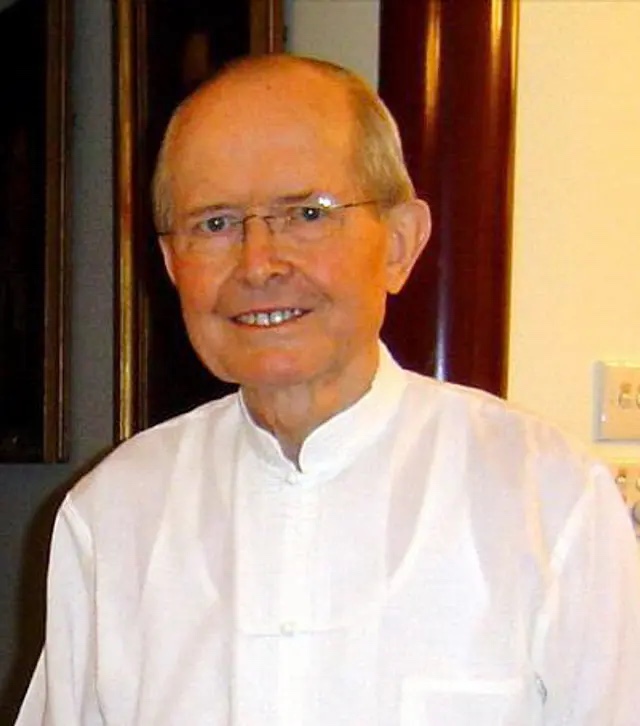
James Hudson Taylor III (戴绍曾) was born on 12 August 1929 at Songmenguan, Kaifeng, Henan. A fourth-generation great-grandson of James Hudson Taylor, founder of the China Inland Mission, he was the eldest son of James Hudson Taylor II (戴永冕) and his wife (戴永和). In 1936 he entered the China Inland Mission school for missionaries' children at Yantai (Chefoo), Shandong. As a boy he was mischievous and rebellious; having had little contact with Chinese children, he harboured a sense of racial superiority. His parents were constantly away travelling and seldom had heart-to-heart talks with their children, and inwardly he held a hidden hostility toward both the Chinese and God. During the war against Japan, from 1939 to 1945, he was forcibly separated from his parents and, together with his grandfather Herbert Hudson Taylor (戴存仁) and his elder sister, younger brother and younger sister, was held in a Japanese internment camp for three and a half years. The hardship and suffering of his early years led him to resolve that he would never become a preacher, and that even if he did, he would never go to China.
The Meeting in Anhui
When the war ended in 1945, he and his siblings rejoined their parents at Fengxiang, Shaanxi, on 11 September. On one occasion he reluctantly accompanied his father on a preaching trip to Anhui, and during the meeting he saw a young Chinese man kneeling at the front in tears, repenting. At that moment the Holy Spirit rebuked him: so many people had lost their lives in the war, and you deserved to die, yet God preserved your life. This illumination made him realise that his hatred of the Chinese was in fact directed against God; it also showed him that he had been living in a sense of racial superiority, and at the same time he understood how deep the love of God is. At that meeting he repented and confessed his sin, and his life was renewed.
Back Among the Chinese
In 1946, at the age of seventeen, he went to the United States to study as a new creation, attending Spring Arbor College and then Greenville College, majoring in philosophy and religion. During these years he was fervent in spirit: every Saturday he went out to preach in the open air, and in the summers he organised his own evangelistic team and led summer camps. In 1951 he married Leone Tjepkema, who shared his burden for serving the Chinese. After their marriage he went on to Asbury Theological Seminary, receiving a Bachelor of Divinity in 1954, and then pastored for one year in Kentucky. The following year he faced the major decision of whether to return to China; through his wife's confirmation he became clear about God's will. On 26 June 1955, nervous and excited, he set foot in Taiwan as a missionary of the Free Methodist Church. From then on he helped his parents teach at Holy Light Theological Seminary, led summer youth Bible study camps, did evangelism in the mountain areas and established the Wutai church; from 1960 to 1970 he served as president of Holy Light Theological Seminary. During this period he also studied Chinese history and literature at the Yale graduate school.
"Where Are You, Chinese People?"
In 1970 he founded China Evangelical Seminary and became its first president. In an article titled "Where Are You, Chinese People?" (中国人,您在哪里?), published in the school's second year, he explained his purpose in founding the school and serving as its president: "My heart longs to see the Chinese church grow, and longs for CES to have a Chinese president... That I have become president of CES today is God using me as a temporary bridge; the real masters are the Chinese." He went on to write: "The mistakes of the missions and the shortcomings of the missionaries are waiting for the Chinese themselves to correct and make up for. Pondering deeply at my desk, I cannot help asking again: 'Where are you, Chinese people?'" Coming from a great-grandson of Hudson Taylor, these words carried a particular weight: he was the person with the strongest claim to regard himself as a missionary, yet he cast himself as a temporary bridge. In 1978 he wrote again, proposing that a research centre for Chinese church history be set up in the new campus buildings, because "after 170 years in China, Christianity has still not taken root in the culture"; he hoped the gospel would truly take root in Chinese culture.
The Fifth and Sixth Generations
He later became General Director of OMF International (Overseas Missionary Fellowship), and in his later years founded MSI (Medical Services International), returning to mainland China for medical and educational service, the very place he had resolved as a child never to go back to. He died in Hong Kong in 2009. He and his wife had two daughters and one son; his son, James Hudson Taylor IV (戴继宗), continues to serve in the Chinese church, and his grandchildren are the sixth generation of the Taylor family. For more than 230 years, beginning with Hudson Taylor's father James Taylor (戴雅各), the verse the Taylor family has held to together is Joshua 24:15: "As for me and my house, we will serve Yahweh."