💬 Famous Quotes
📋 Basic Information
📖 Biography
A Five-Year-Old on the Lammermuir
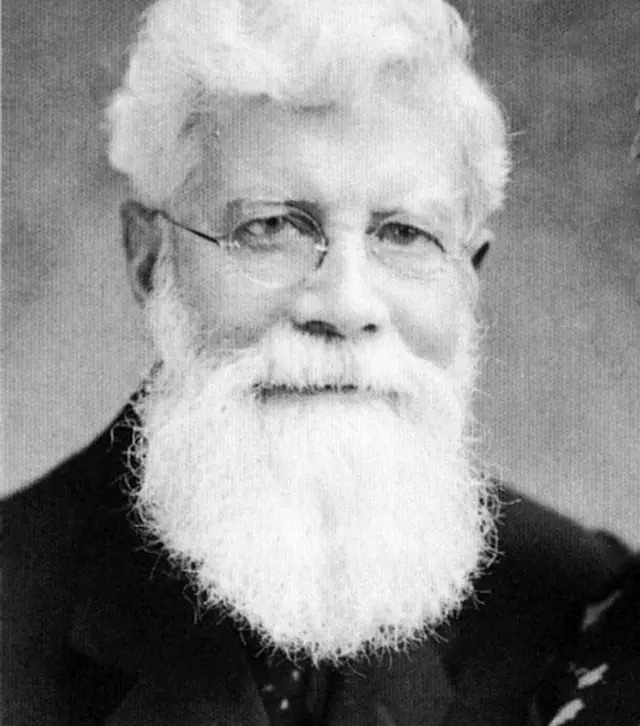
Herbert Hudson Taylor (戴存仁) was born in London on 3 April 1861, during the first home leave his father Hudson Taylor took to recover his health, seven years after beginning missionary work in China. When he was four, his father founded the China Inland Mission in England. On 26 May 1866, five-year-old Herbert boarded the Lammermuir for China with his parents and three siblings, together with sixteen other missionaries. During the four-month voyage the ship met typhoons twice and was nearly wrecked.
Terrible News at Nine
On 22 August 1868 the Yangzhou riot broke out, and he and his parents went through great danger together. So that they would not lose their lives in such disturbances, he and his younger siblings were sent back to England for schooling. In 1870 he received the news that his mother Maria had died in China; he had just turned nine. No one understood more deeply than he the pain of missionary families torn apart.
His Father's Letter
Like his father, at seventeen he was admitted to the Royal London Medical College. He had just completed two years of foundational courses when a letter came from his father: "Son, it is good that you have begun studying medicine in London, but there is very important work waiting for you now. Would you pray and seek God? I hope you can give up medicine and come to Yantai in Shandong to found a school for missionaries' children together with our co-workers." Hudson Taylor was planning a school in Yantai to meet two needs that had grown pressing as the mission expanded: rest for the missionaries, and education for their children. At the time this was a pioneering undertaking. After a period of prayer, Herbert decided to follow his father's example of earlier years and gave up his medical studies.
The Best English School East of the Suez Canal
Yantai was known in earlier times as Chefoo. The Chefoo School that he founded with his co-workers came to be called "the best English school east of the Suez Canal," and it held more than fifty years of quiet labour by him and his wife. Unlike his father, he never again had the chance to return to England to finish his degree; his service in China was all behind the scenes, and lacked the sense of accomplishment that comes from directly winning souls for the Lord. In a sense, he chose a path that cost more. Because he loved China deeply, he decided to stay and settle there.
Hymns in the Internment Camp
After the Pacific War broke out in 1941, the foreign teachers and pupils of the Chefoo School in Yantai and elsewhere were first detained by the Japanese, and from March 1943 they were moved in stages to the Weixian internment camp (the Chefoo teachers and pupils arrived there that September). Herbert Hudson Taylor, over eighty years old, was interned in the Weixian camp at the same time as four of his grandchildren. He was the only person in the whole camp excused from labour because of old age, but the harsh living conditions and food reduced his weight to eighty pounds, his thin frame hidden in loose, worn clothes. Someone said to him, "Old Mr Taylor, let me alter your clothes so they fit you, shall I?" He would always smile, his face shining: "The Lord will surely deliver me from this place, and by then my clothes will fit again." Every morning he sang hymns loudly in praise of the Lord's grace, and his singing stayed in everyone's heart. He was right: he was still alive when the war against Japan was won, and he was released and returned home with honour. He died in England in 1950 at the age of eighty-nine, having spent sixty-four years in China in all. He and his wife had nine children; one of them, James Hudson Taylor II (戴永冕), later also became a missionary and followed in his father's footsteps back to China.