💬 Famous Quotes
📋 Basic Information
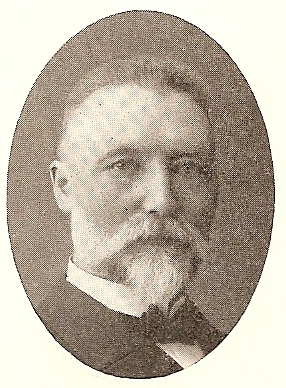
📖 Biography
Russia, Persia, then Xinjiang
Lars Erik Högberg was born in Sweden on 18 December 1858. His missionary career began in the East, but not in China: in August 1880 he first went to serve in Russia, and later moved on to Persia. This experience made him familiar with the Muslim world and with the Turkic languages, which later became his foundation for settling in Xinjiang.
3 May 1894
On 3 May 1894 he first entered Chinese Turkestan, today's Xinjiang. He belonged to the Mission Covenant Church of Sweden (Svenska Missionsförbundet) and worked in the Kashgar area, on and off, for more than twenty years after that (1894–1916, with several periods back home). This mission should not be confused with the Swedish Mission in China, whose Chinese name is similar: the Mission Covenant Church of Sweden had its fields in Hubei and Xinjiang, while the Swedish Mission in China worked in Shaanxi, Shanxi and Henan. Kashgar lies at the far western end of China, where the southern and northern Silk Road routes meet, and it was one of the most remote mission stations in China at the time.
The Yotkan Site
In 1897 he visited Yotkan, the site of the capital of the ancient kingdom of Khotan. The artifacts he collected there are now held in the Museum of Ethnography in Stockholm. For a missionary this was not part of his proper work; but in Xinjiang in that era, missionaries were often also the first Westerners to systematically record the local languages, customs and antiquities. In 1905 he also took part in medical mission work in Kashgar.
Loss of His Wife
On 15 August 1882 he married Eva Eriksson. On 3 August 1892 Eva died of cholera in Tabriz, Iran, while they were still in Persia. On 26 March 1894, two months before he first entered Xinjiang, he remarried, to Sigrid Johanna Adelaide Braune.
East Turkestan in His Writings
He left a body of works written in Swedish describing the land and people of East Turkestan, the mission work and his own experiences: Ett och annat från Kinesiska Turkestan (Some Things from Chinese Turkestan, 1907), Jolbas: En kaschgargosses levnad (Jolbas: The Life of a Kashgar Boy, 1913), Ruts besök i Ost-Turkestan (Ruth's Visit to East Turkestan, 1919), När man börjar (When One Begins: Some Experiences of Establishing a New Mission Station in East Turkestan, 1919), Bland Persiens Muhammedaner (Among the Muslims of Persia, 1920), and the posthumously published Kultur- och missionsarbete: Ost-Turkestan (Cultural and Mission Work: East Turkestan, 1925). He also compiled The Way of Life in Turkic, published in 1914 by the mission press in Kashgar. He died in Stockholm in 1924. In this database he is one of the very few who gave half their lives to the far western end of China.