💬 Famous Quotes
📋 Basic Information
📖 Biography
The Sixth Daughter
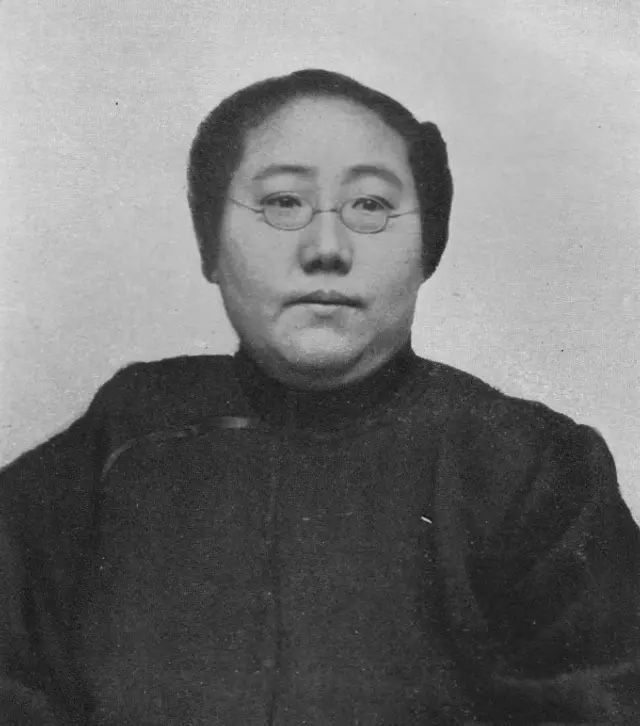
Ida Kahn (康成, also known as 康爱德, Kang Aide) was born in 1873 into a poor family in Jiujiang, Jiangxi. Her parents held the traditional view that sons mattered more than daughters; there were already five girls in the family before she was born, and she came into the world just when the whole family was eagerly hoping for a boy. From the day of her birth she was unwanted, and she added to the burden of a family that was already poor. At this point Gertrude Howe (昊格矩), an American woman missionary in Jiujiang, stepped in and adopted the baby girl; her parents were glad to give the child away. So Ida Kahn became Gertrude Howe's adopted daughter.
With Mary Stone
A few years later Ida Kahn entered the Rulison Girls' School in Jiujiang, founded by her adoptive mother, and there she met Mary Stone (石美玉, Shi Meiyu). The two became friends, and from then on lifelong close friends and co-workers. In 1882, at the age of nine, she went to America with her adoptive mother and studied for a while at a primary school in San Francisco; two years later she returned to China. Because Gertrude Howe was sent to West China to open up the work of the Methodist Episcopal Church, Ida Kahn lived with her in Chongqing for two years, and only at thirteen did she return to Jiujiang and re-enter the Rulison Girls' School. In 1892 Gertrude Howe took Ida Kahn and Mary Stone to America to study. Both were admitted to the medical school of the University of Michigan, studied hard for four years, and graduated together in the spring of 1896.
Ten Months, Two Thousand Three Hundred Patients
After a six-month internship at a hospital in Chicago, the two were sent that autumn by the Woman's Foreign Missionary Society of the Methodist Episcopal Church and returned to Jiujiang as medical missionaries. At first they had only a single consulting room, and in this small clinic the two young women doctors treated more than 2,300 patients in ten months, besides making more than 300 house calls. Their skill and compassion quickly won the trust of the local people. In 1898 Dr. Danforth (但福德), a well-known physician in Chicago and a good friend of Mary Stone, generously gave money to help them build a hospital for women and children in Jiujiang. As the building neared completion the Boxer Uprising broke out, and they were forced to take refuge in Japan for nearly a year, during which time Mary Stone's father died. In 1901, when the unrest had ended, they returned to China, and on 7 December the Jiujiang Women's and Children's Hospital formally opened.
Nanchang
Having laid a good foundation for the medical work in Jiujiang, Ida Kahn left Jiujiang with her adoptive mother in 1903 to open a new field in Nanchang. She first set up a clinic, and in 1905 a new medical facility was completed; after years of hard work the work expanded greatly. According to statistics from 1911, more than 8,000 patients had been treated at her clinic. Besides medical work she also took part in mission and social reform, and was especially devoted to medical education in China: in 1905 she attended the fifth conference of the Educational Association of China in Shanghai and gave a special lecture on medical education. In 1908 she used a long leave to go to America again and studied literature at Northwestern University; in the spring of 1910 she attended the conference in Berlin as a representative of the YWCA, then went on to Britain, where she studied tropical diseases while completing her thesis. In January 1911 she received a Bachelor of Arts degree, and in March she returned to Nanchang.
Three Years to Pay Off a Hospital's Debt
In 1911 the women's and children's hospital of more than forty beds that she had planned for years was completed. In October that year the Wuchang Uprising broke out; the hospital kept running and, true to its purpose of relieving the suffering and saving lives, treated wounded soldiers from both sides. Out of compassion she often treated poor people free of charge, and as a result the hospital ran at a loss and fell into financial crisis. To pay off the debt she made a self-sacrificing decision: she went far away to Tianjin to work as a physician, where the pay was generous. Only after three full years of toil, when the debt had been cleared, did she return to Nanchang and take charge of the hospital again. To honour her contribution, the local government granted two funds, enabling the hospital to continue developing. Long years of overwork finally wore her down, and in 1931 Ida Kahn died suddenly in Shanghai, aged only fifty-seven.