💬 Famous Quotes
📋 Basic Information
📖 Biography
A Missionary's Daughter
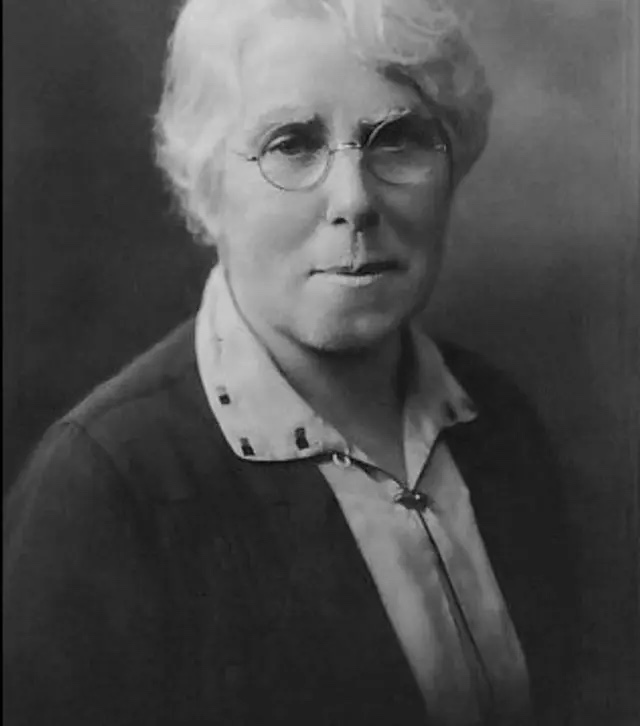
Luella Miner (Sarah Luella Miner) was born on October 30, 1861, in Oberlin, Ohio, in the United States. Her father had been a missionary to the Chippewa Indians and, after serving in the Civil War, became a teacher at a school for freed Black people; she grew up in a family that saw faith and education as one. She graduated from Oberlin College in 1884 and then taught for three years at American Missionary Association schools in the South, before being sent to China by the American Board of Commissioners for Foreign Missions (Congregational), supported by its affiliated Woman's Board of Missions of the Interior.
Writing Geology in Chinese
She sailed for China in 1887, first studying Chinese at Baoding in Zhili, and then teaching at the North China College in Tongzhou, near Beijing. There she did something rare among women missionaries in China at the time: she wrote a geology textbook in Chinese (the surviving edition is the one printed by the Union Women's College in Beijing in 1911). This was not a side branch of evangelism but her understanding of education itself: Chinese students needed to learn modern science in their own language.
Turning to Women's Education
In the Boxer Uprising of 1900, the church's work in North China suffered heavy damage. In the rebuilding period that followed, Miner shifted her focus to women's education. In 1903 she moved to Beijing to take charge of rebuilding the Bridgman Academy, and she led the school for ten years. Bridgman was a school of the Congregational mission; it should be noted that it and the Methodist Episcopal Mujen Girls' School (慕贞女校) were two different schools, with two different people at their heads, and later accounts often confuse them.
North China Union Women's College
In 1905 she founded the North China Women's College, and she served as its dean (the head of the college) until 1922. The Presbyterians, the Methodist Episcopal mission and the London Missionary Society later joined in one after another, and the word "Union" was added to the school's name as a result. In 1920 the school became the women's college of Yenching University; one of the earliest institutions of higher education for women in China grew in this way out of the foundation of the Bridgman Academy. In 1914 Oberlin College awarded her an honorary Doctor of Letters degree.
The Last Posts
In 1922 Miner resigned as dean of the North China Women's College and went south to Jinan to join Cheeloo University (Shantung Christian University), first as dean of women and later teaching in the school of theology, until 1932. In 1928 she attended an international missionary conference as a delegate. She died in China on December 2, 1935, at the age of seventy-four; counting from her sailing in 1887, she had spent forty-eight years in that land.