💬 Famous Quotes
📋 Basic Information
📖 Biography
A Principal at Twenty
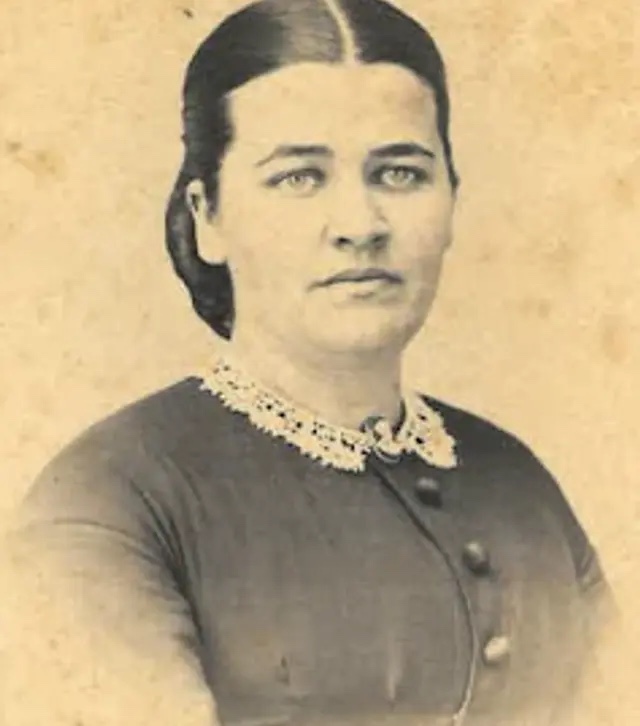
Laura Askew Haygood (海淑德) was born on October 14, 1845, in Watkinsville, Georgia, in the United States. Her father was a practising lawyer and her mother a teacher. The couple had five children; they were all keen in church work, and they valued their children's education and the affection between family members. In 1865 she graduated from Wesleyan College in Macon, Georgia, with a Bachelor of Arts degree, and that same year she opened a high school in Atlanta and began her career in education. The school later merged with a girls' high school, where she served as teacher and principal; her work won the approval of the board, the students and her friends alike. She also organised a home mission society that provided food and lodging for the disadvantaged of Atlanta.
Two Invitations
In 1878 Young John Allen, a missionary of the Methodist Episcopal Church, South in Shanghai, came home on furlough and invited her to go with him to work in China; at the time she did not accept. In 1882 Allen founded the Anglo-Chinese College in Shanghai, which took in the sons of the upper classes, and planned a girls' school of the same kind; while he was looking for a suitable principal, he wrote to Haygood again. By this time she had heard missionaries from abroad preach in Atlanta, had been deeply moved, and had resolved to go to China. In 1884 she was sent by the Methodist Episcopal Church, South and arrived in Shanghai.
Eight Years of Letters for One School
After reaching Shanghai she gave herself wholly to Allen's plan, and at the same time wrote home again and again, explaining to the churches of the American South the importance of opening a girls' school and pleading for their full support. This was the period after the Civil War when the economy of the South was at its most difficult, and raising money was not easy. On March 26, 1892, McTyeire Home and School (中西女塾) held its opening ceremony at the western end of Hankou Road in Shanghai, on the west side of Moore Memorial Church, and Haygood became its first principal. The words "Home and School" in the name were deliberate: home and school were to be given equal weight, influencing each other in education while each remaining independent. The school was marked by a liberal education taught in both Chinese and English, with emphasis on giving Chinese women a healthy spiritual and moral influence, and, above all, on teaching the students the truth and principles of Christ.
"To Me to Live Is Christ"
She met many challenges in China: Chinese attitudes towards the education of women, political unrest, and the sciatica that afflicted her. What sustained her was the saying "to me to live is Christ." In a letter to her sister she wrote: "...if I had a hundred other lives to give, ... I would be very glad to give every one of them to China." Young John Allen, who worked alongside her, described her thus: "Laura Haygood had firm convictions, a single-minded pursuit of faith and a compassionate heart; added to this were her self-reliance, the way she wove the thought of preaching into her work, and an astonishing capacity to endure suffering."
Looking Up to Haygood
She never married and gave herself entirely to education. She spent sixteen years in China until her death: she died of illness in Shanghai on April 29, 1900, at the age of fifty-four, and was buried in the Bubbling Well Road Cemetery (now Jing'an Park). In 1902 the Woman's Board of Missions of the Methodist Episcopal Church, South founded the Laura Haygood Home and School (景海女中) in Suzhou and named it after her; the two characters "Jinghai" in its Chinese name mean "looking up to Haygood." The campus of Soochow University today still has a red building in her memory, with "THE LAURA HAYGOOD MEMORIAL 1903" carved over its door. In 1926 the Methodist Episcopal Church, South built a memorial in the Morningside neighbourhood of Atlanta in memory of her and her brother, Bishop Atticus. She was also inducted into Georgia Women of Achievement.