💬 Famous Quotes
📋 Basic Information
📖 Biography
An Administrator in a Wartime Hospital
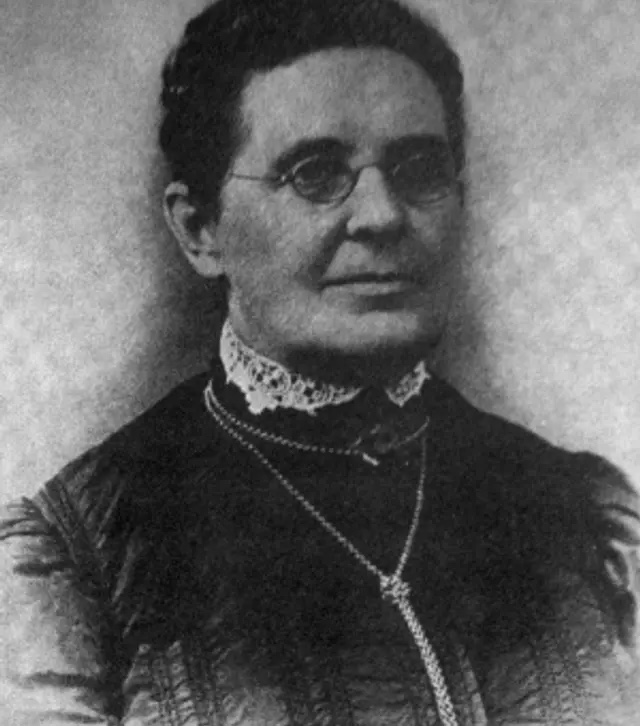
Harriet Newell Noyes (那夏理) was born on March 5, 1844, in Guilford, Ohio, in the United States. Her father was a Presbyterian minister and her mother a devout believer; she was the sixth of ten children. At thirteen she learned from a woman missionary's report that the people of distant heathen lands worshipped idols and did not know the true God, and she resolved that when she grew up she would go to those places to preach the gospel. During the American Civil War she reportedly took part in field-hospital nursing and managed, in an orderly way, a hospital that could hold more than a thousand people; looking back later, this was the administrative ability God had prepared in her in advance. In 1867 she was sent to Guangzhou (Canton) by the Presbyterian Church in the U.S.A. (Northern Presbyterian).
Four Years of Closed Doors
In November 1867 she set out with Dr. John Glasgow Kerr (嘉约翰) and his wife, and after nearly three months of rough sea travel she arrived in Guangzhou on January 14, 1868. At first she did not know the local dialect; she studied Chinese six hours a day and within a few months could speak fluent Cantonese. Mission work, however, was extremely hard. Every day she and her co-workers walked up and down the streets, knocking on door after door in the hope that someone would open and receive them; but as soon as the local people saw a foreigner they would shout, "The foreign devil woman is coming!" and shut their doors in a great commotion. They met these closed doors for four full years.
A Different Approach
She realised that going door to door to preach was of limited effect, so she changed course. She invited women to come to the school, let them look around the buildings, listen to the organ being played and look at pictures and books, first arousing their curiosity and then answering the questions they raised. Only after gaining their trust did she open day schools for girls and small chapels for married women. Some time later, she reasoned that if the students could board at the school, the women missionaries would have more time to spend with them. In April 1871 she wrote to the headquarters of the Presbyterian Church in the U.S.A. mission board, proposing a girls' boarding school in Guangzhou to serve as a college for training women teachers and Bible women. The Presbyterian Woman's Foreign Missionary Society had just been founded; it prayed specifically for this, raised the funds to build the school, and agreed to give 1,000 US dollars a year toward its running costs.
True Light Seminary
The site chosen was Jinlibu (金利埠) in Guangzhou, and she designed the plans for the school building herself. On June 16, 1872, True Light Seminary (真光书院) was completed and opened. It had a class for girls and a class for women, with room for 20 girls and 10 married women. Only 6 students enrolled in the first intake, and 3 of them were married women. The name was taken from Matthew chapter 5 and John chapter 8; the school motto was "You are the light of the world," and the school emblem was a silver star, like the star of Bethlehem leading people to God. Besides their studies, students learned household skills—cleaning, laundry, needlework and embroidery—so that they could later support themselves. It was one of the earliest girls' schools in Guangdong.
Running a School Against the Tide
Resistance came from the whole of society. At the time it was held that "for a woman, lack of learning is a virtue," and most women were illiterate. Polygamy and foot-binding were widespread, and few parents were willing to send their daughters out in public to attend school, fearing that once they had received a Western education they would choose their own husbands and no longer obey their fathers, brothers and husbands. If a student came to faith and was baptised, her family would often stop her or even persecute her, and a married woman might be driven out by her husband's family. In addition, after the Tianjin Incident of 1870, rumours spread everywhere that foreigners poisoned people and killed infants, and in the school's early years there were also many rumours in the neighbourhood of the seminary. Harriet Noyes persevered in Guangzhou for more than half a century, until she died there in January 1924. Her elder brother, the Rev. Henry Varnum Noyes (那夏礼), came to China in 1866 and founded Pui Ying Academy (培英书院) in 1879; her elder sister Martha Noyes (那大姑) came to China in 1873 to help with the work of True Light and later married Dr. John Glasgow Kerr, head of the Canton Hospital (博济医院). The three siblings all gave their lives to China. In May 1923 Eugene Chen (陈友仁), secretary to Sun Yat-sen, wrote to thank her for educating more than six thousand students at True Light over the years.